A discerning buyer’s framework for evaluating South Florida wellness residences, from treatment availability and reservation rights to filtration coverage, clinical access, and contractual protections.
For a South Florida buyer in 2026, the most persuasive wellness proposition is not necessarily the longest treatment menu. It is the ability to use the right facilities at the right time, understand which systems serve the residence, and know who is responsible when a system or service needs attention.
A beautifully appointed recovery suite may suit an occasional visit yet leave a daily routine dependent on reservations. A promise of purified water may describe a kitchen feature, a residence-wide installation, or a scope that needs clarification. Those distinctions deserve the same scrutiny as a floor plan or the terms of ownership.
The essential questions fall into five categories: usable capacity, booking rights, air quality, water treatment, and medical access. Evaluate each separately before treating wellness as part of the purchase premium.
The advertised wellness club at The Well Bay Harbor Islands spans 22,000 square feet within the condominium base. Its described facilities include a Caldarium, Saunarium, halotherapy steam room, cold plunge, infrared sound dome, and Mindful Movement studio. That establishes breadth-not how many people can comfortably use the club at once.
Ask for treatment-room counts, simultaneous-user limits, operating hours, and staffing by shift. Distinguish facilities that accommodate shared use from services requiring a dedicated room and practitioner. A substantial footprint alone does not establish usable capacity.
The comparison should reflect your actual schedule. Ask whether your preferred sequence of movement, recovery, and treatment can be accommodated during the hours you expect to attend. Establish whether public members, guests, or other users share the facilities, and request the demand assumptions behind the operating plan. Do not assume that a club integrated into a condominium is exclusively for owners.
At 619 Residences by Foster + Partners + Nobu Hospitality, the advertised plan includes a $25 million, residents-only Wellness and Longevity Center by Nobu. Planned offerings include cryotherapy, hyperbaric oxygen, infrared sauna, red-light therapy, and IV/peptide therapies, with an on-site wellness concierge.
Residents-only access is a meaningful distinction, but it does not establish appointment priority, unlimited use, or included treatments. Nor is a concierge a reservation guarantee. Request a written schedule of booking windows, advance-reservation limits, cancellation charges, guest allowances, and restrictions on repeated bookings.
Address peak-season availability explicitly. Ask how waitlists work, whether owners receive priority over other eligible users, and what happens when a practitioner is unavailable. The advertised offerings do not establish those project-specific rules. Where an operating policy is still being developed, identify who may change it and whether any access commitments appear in the purchase documents.
Air quality warrants a systems discussion, not a single promotional adjective. Edge House Miami’s planned specification is marketed as medical-grade purified air in shared corridors and common areas. That description should not be extended automatically to every room inside a residence.
At 619 Brickell, planned residential features are advertised to include medical-grade HEPA air filtration and circadian lighting. THE WELL’s advertised residential features include built-in air purification and in-unit aromatherapy. These are distinct specifications, not interchangeable measures of filtration performance.
Request a coverage diagram distinguishing residence systems from shared systems, along with filter grades, ventilation specifications, humidity targets, and methods for controlling volatile organic compounds. Clarify who replaces filters, how often servicing is required, and whether the owner or association bears the expense.
Ask for testing and commissioning documentation where available. Treat medical-grade as a promotional description unless supported by precise specifications and relevant performance evidence. Evaluate aromatherapy separately from purification; it is not evidence of cleaner air.
Edge House Miami’s planned CLEAR water purification system is advertised to deliver sterilized water to every residence. Fixture-level coverage remains a separate question: the claim does not establish which individual outlets receive treatment.
Similarly, 619 Brickell’s planned ozone-enhanced whole-home water specification warrants a technical explanation of treatment methods, coverage, testing, and maintenance. A whole-home description should prompt a fixture schedule, not end the inquiry.
THE WELL’s advertised kitchen specifications include Kore workstation sinks and faucets with filtered cold and carbonated water options. That is a defined kitchen feature, not proof that showers, bathroom faucets, or ice makers receive equivalent treatment.
For each property, request a diagram showing centralized and point-of-use equipment. Confirm replacement-filter costs, servicing responsibilities, water-testing schedules, and the documentation supporting advertised treatment claims. If shower water or ice quality matters to your routine, have those outlets addressed expressly rather than infer their coverage from broader language.
The planned offering at Cora Merrick Park in Coral Gables combines advanced air and water purification with noise-reducing acoustic design and building and cleaning materials advertised as non-toxic. Its planned fitness center includes a dedicated recovery zone, while the spa offering includes infrared sauna, steam room, contrast hydrotherapy pools, and red-light therapy.
This combination calls for two parallel reviews. One concerns the residence itself: system coverage, material specifications, acoustic details, and ongoing cleaning protocols. The other concerns shared facilities: operating hours, capacity, staffing, reservations, and charges.
Do not let an extensive spa menu substitute for environmental specifications. Equally, do not assume that thoughtful residential systems establish convenient access to every recovery service.
The functional medicine and acupuncture rooms described for THE WELL do not, by their presence, establish emergency care or guaranteed appointments. Likewise, an advertised treatment menu at any residence does not establish suitability for an individual buyer or prove clinical benefit.
Confirm the licensed operator, physician oversight, practitioner availability, eligibility requirements, fees, and insurance acceptance. Ask separately whether urgent or emergency care is available. A wellness concierge is not a substitute for that answer.
Historical proposals also require care. An August 2021 proposal for Legacy Tower included a $100 million, 120,000-square-foot medical facility at Miami Worldcenter. Those figures describe a proposal, not evidence of an operating medical facility in 2026. Require current operational confirmation before factoring on-site medical access into a buying decision.
Before committing, have counsel distinguish contractual inclusions from optional services, separately charged treatments, and features subject to substitution. Request the relevant specifications, access policies, fee schedules, maintenance obligations, and delivery status in writing.
The strongest wellness purchase is one whose documented systems and operating commitments fit your life-not one whose vocabulary sounds most advanced.
For a considered approach to South Florida wellness residences, explore MILLION.
If branded residences are on your mind — as a home or as an allocation — we would be glad to share what we are seeing, privately.
Begin a quiet conversationNo. Square footage does not establish simultaneous-user capacity, staffing, treatment availability, or demand during your preferred hours.
Request written booking windows, reservation limits, cancellation charges, guest allowances, waitlist procedures, and peak-season priorities. Establish who can change those policies.
The advertised plan includes a $25 million, residents-only Wellness and Longevity Center by Nobu. Planned modalities include cryotherapy, hyperbaric oxygen, infrared sauna, red-light therapy, and IV/peptide therapies.
No. Residents-only describes an access restriction, not a guarantee of included treatments, unlimited use, or appointment availability.
Request filter grades, ventilation specifications, coverage diagrams, humidity targets, and performance documentation. The promotional term alone does not establish independently verified performance.
The planned CLEAR system is advertised to deliver sterilized water to every residence. That does not establish which individual fixtures receive treatment.
Advertised specifications include Kore workstation sinks and faucets with filtered cold and carbonated water options. Those features do not establish equivalent treatment at showers or ice makers.
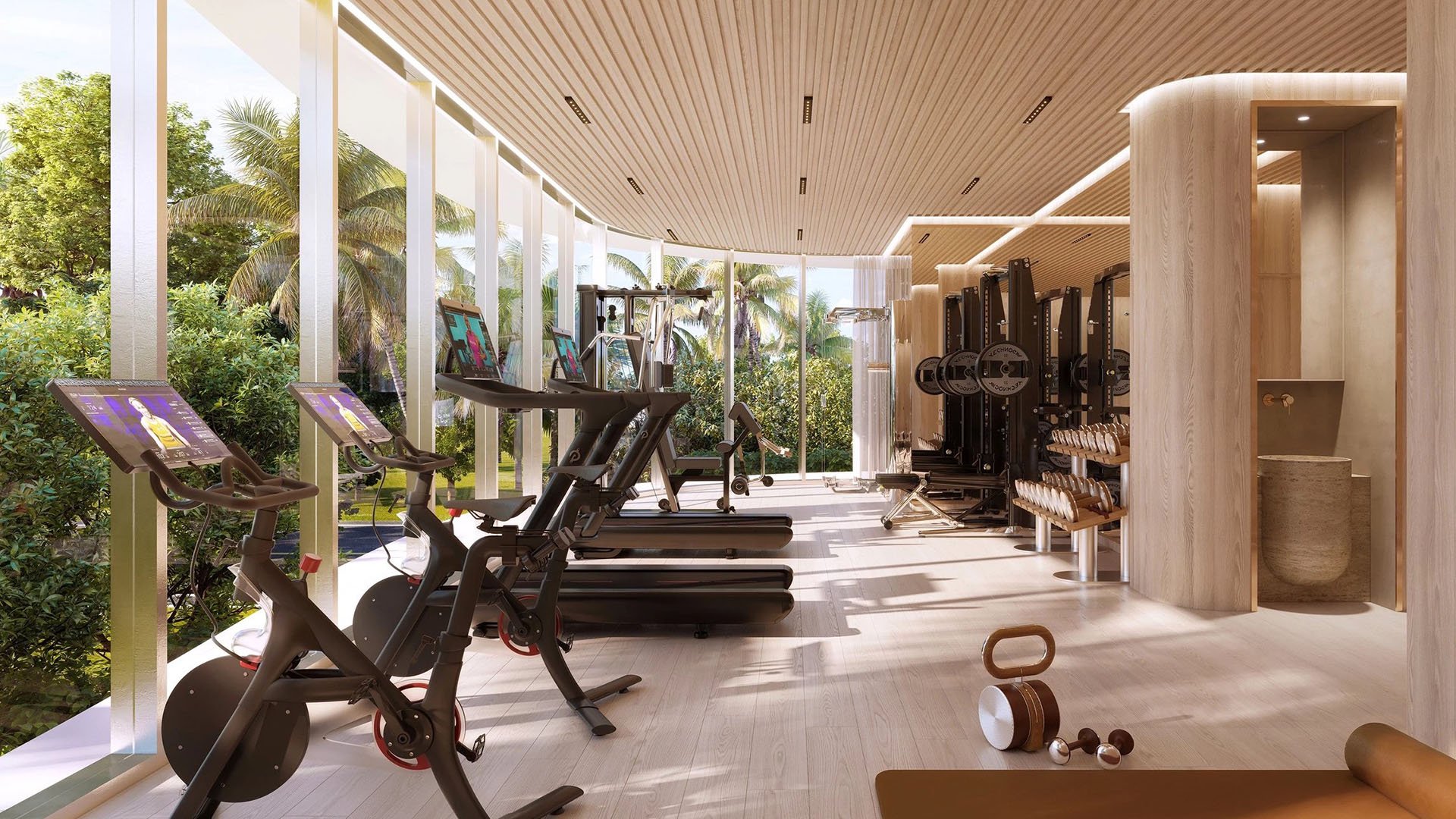
Plans include a fitness center with a dedicated recovery zone and a spa with infrared sauna, steam room, contrast hydrotherapy pools, and red-light therapy.
No. Confirm the licensed operator, physician oversight, appointment eligibility, and whether urgent or emergency care is actually available.
The historical announcement of a proposed $100 million, 120,000-square-foot facility does not establish operation in 2026. Buyers should obtain current operational confirmation.