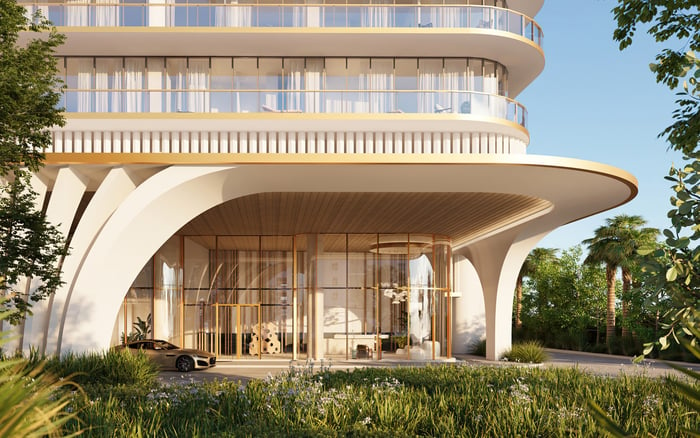
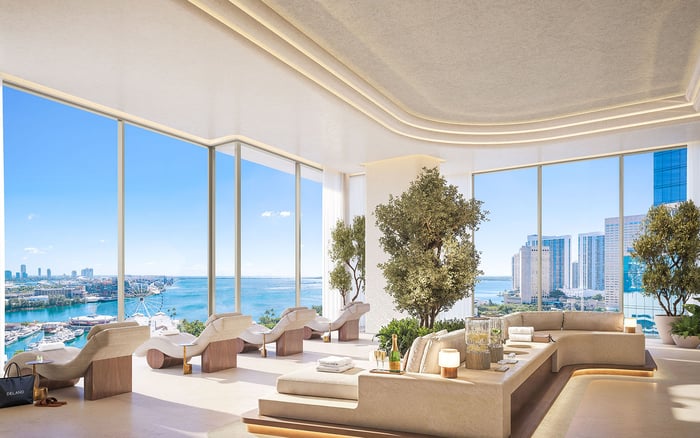
Cipriani and ORA by Casa Tua propose two distinct approaches to dining-led living in Brickell: resident-exclusive hospitality and a varied culinary program connected to the wider city.
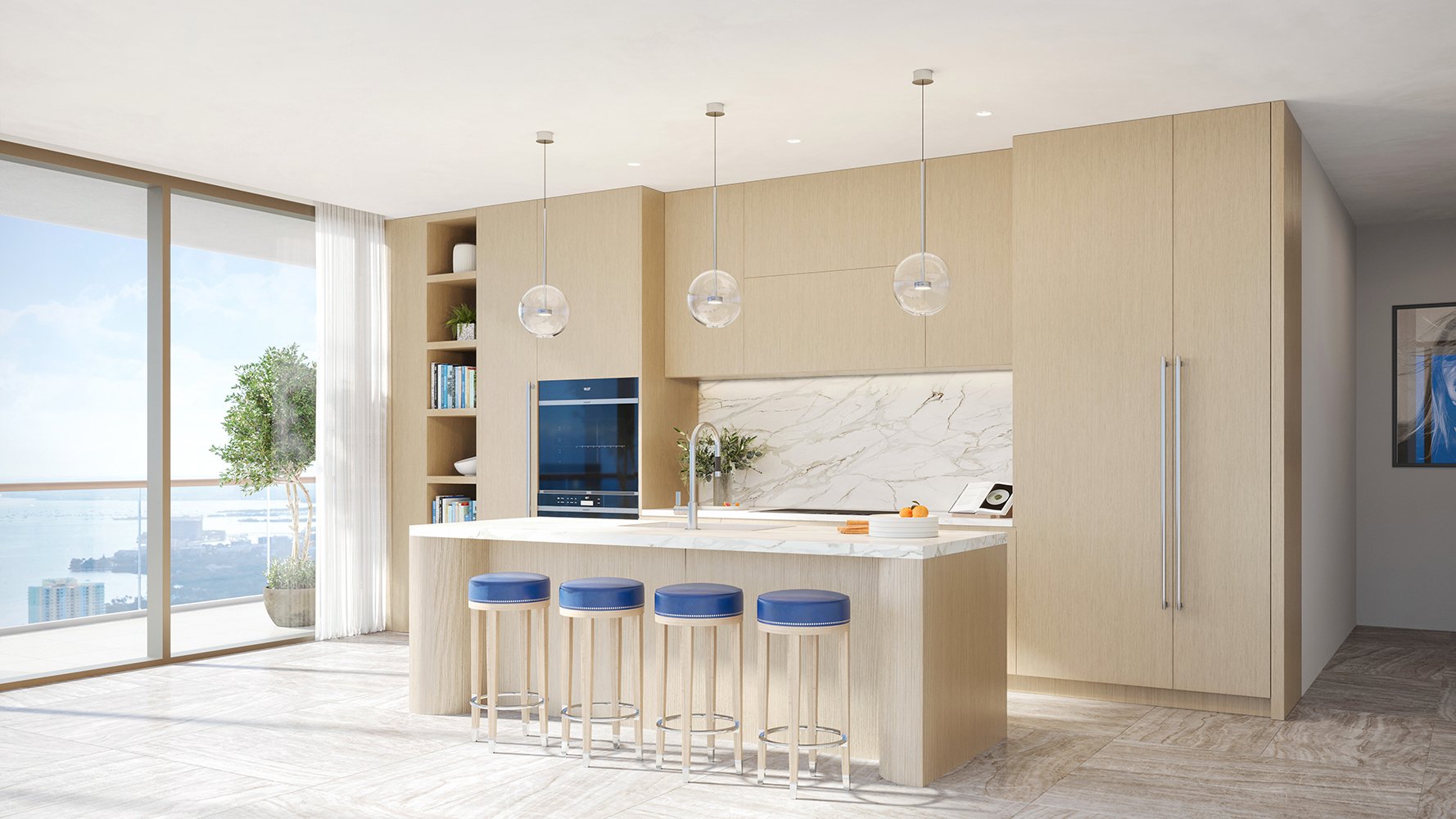
A beautifully appointed kitchen answers one question: where will you cook? A dining-led residence asks something broader: how would you like to live when you would rather not? In Brickell, Cipriani and ORA by Casa Tua offer distinct interpretations of that proposition, extending home life into private dining rooms, restaurants, markets and catered meals.
The distinction is not simply the number of places to eat. Cipriani's advertised model centers on resident-exclusive hospitality, with service inside individual residences and shared private settings. ORA proposes a broader collection of culinary experiences, combining in-residence service with venues intended for residents and the wider city. Neither approach is inherently superior. The more useful comparison is between the household routines each could support.
For buyers, the kitchen remains important. What changes is how much daily life might comfortably take place beyond it.
At Cipriani Residences Brickell, the advertised culinary offering includes in-home dining and 24-hour catering exclusively for residents. The emphasis is on a single hospitality identity across different settings, rather than a collection of distinct restaurant concepts.
That could appeal particularly to an owner who prefers to entertain within a private residential environment. Dinner need not depend entirely on the owner's kitchen or willingness to coordinate outside catering. The advertised service suggests another way to host at home, though staffing arrangements, menu flexibility and ordering procedures should be established before purchase.
Reservable private dining rooms offer a second option: a setting beyond the apartment without turning the occasion into a restaurant outing. For a buyer who enjoys gathering guests but prefers to keep the residence itself private, that separation may be as valuable as the meal.
The project's architecture by Arquitectonica and interiors by 1508 London provide its design context. For this comparison, however, the decisive feature is operational: whether the promised hospitality can support the owner's preferred rhythm of entertaining.
ORA by Casa Tua Brickell approaches the same question through variety. Its planned culinary program comprises Terra, Uva, Fuoco and Vento, each with a different role. Rather than treating dining as one service, the proposal spans everyday provisions, wine, open-fire cooking and rooftop social life.
Terra is planned as a 24-hour gourmet market, bakery and meeting place. Its advertised offerings range from early-morning coffee and house-made breads and pastries to lunch, grocery pickup and late-night food. A private lobby-level entrance for residents and their guests is also specified. The appeal is practical: routine food needs could become part of the building's daily experience rather than a separate excursion.
Uva introduces a more deliberate dining occasion. The proposed enoteca and wine-focused restaurant advertises more than 500 sommelier-selected labels, alongside Mediterranean cuisine, tastings, classes and private resident-oriented spaces. Its focus on wine exploration and longer meals gives it a distinct purpose from Terra.
Fuoco is planned around wood-fire cooking, an open kitchen and a restaurant-and-bar setting. Vento shifts the emphasis upward, proposing rooftop dining with Asian-inspired cuisine, cocktails, lounge seating, entertainment and views toward Biscayne Bay and downtown Miami.
ORA also advertises in-residence dining and catering from its on-site restaurants. The variety is therefore not limited to meals outside the apartment: the proposed program extends into the home.
The clearest distinction is not private dining versus restaurant dining; both projects advertise service within residences. It is the relationship between the residential environment and the people using the culinary spaces.
Cipriani emphasizes resident-exclusive hospitality. ORA's proposed restaurants and shared spaces would serve both residents and the wider city, with certain resident-oriented areas and access arrangements. A private entry to Terra, for example, should not be read as evidence that the entire venue is residents-only.
Some buyers will favor a more private residential setting for meals and entertaining. Others may prefer a livelier social setting without arranging a separate evening elsewhere. These are preferences, not quality rankings.
Consider an ordinary week rather than an exceptional celebration. Does the household most need a late meal delivered home, an easy morning coffee, a private room for guests or a choice of restaurants downstairs? The answer is more revealing than the length of an amenity list.
Cipriani's advertised pool deck includes two resort-style swimming pools, private cabanas and food-and-beverage service. This adds another dining setting, with hospitality proposed as part of time spent outdoors rather than only a formal meal.
ORA's broader advertised amenities include rooftop pools, a spa, fitness facilities and spaces for art, music and reflection. These settings help define its overall lifestyle proposition, but they do not establish that every amenity has restaurant service. Buyers should distinguish between the existence of a space and the specific service available within it.
A neighborhood comparison remains useful without assuming equivalent offerings. Buyers also considering The Residences at 1428 Brickell should apply the same questions about dining access, privacy and recurring costs, rather than assume one project's culinary model carries over to another.
Evaluate these dining programs as advertised or planned arrangements, not as services assumed to be operating. Before giving them weight in a purchase decision, request the current terms governing resident access, guest access, reservations and hours.
At Cipriani, clarify how in-home dining and 24-hour catering are ordered, what advance notice applies and how private dining rooms are reserved. At ORA, establish which spaces welcome the public, which are resident-oriented and whether residents receive booking priority. Confirm restaurant operators and how in-residence orders will be fulfilled.
Billing deserves equal attention. Ask whether food, beverages, delivery, staffing and private-room use incur separate charges, and whether any dining-related costs are included in condominium fees. Confirm current pricing, carrying costs and delivery timing independently of the culinary proposition.
The strongest fit is the building whose documented service arrangements match how an owner actually lives. A compelling menu creates interest; dependable access and clear terms determine its usefulness at home.
Explore Brickell residences through MILLION to refine your shortlist around the way you want to live.
If branded residences are on your mind — as a home or as an allocation — we would be glad to share what we are seeing, privately.
Begin a quiet conversationCipriani emphasizes resident-exclusive hospitality, while ORA proposes four culinary concepts with a mix of resident-oriented and wider-city experiences.
Yes. Its advertised services include in-home dining and 24-hour catering exclusively for residents.
Reservable private dining rooms are part of the advertised amenities. Booking procedures, availability and charges should be confirmed.
ORA's proposed culinary program comprises Terra, Uva, Fuoco and Vento, spanning a gourmet market, wine-focused dining, open-fire cooking and rooftop dining.
Terra is advertised as a 24-hour gourmet market, bakery and meeting place. Its planned offerings include coffee, pastries, grocery pickup and late-night food.
Uva is advertised as an enoteca and wine-focused restaurant with more than 500 sommelier-selected labels. Its proposed program also includes Mediterranean cuisine, tastings and classes.
Yes. ORA advertises in-residence dining and catering from its on-site restaurants.
No. ORA's proposed hospitality program serves residents and the wider city, with certain resident-oriented spaces and access arrangements requiring clarification.
Its advertised pool deck includes two resort-style pools, private cabanas and food-and-beverage service.
That is not established here. Buyers should confirm separate dining charges, any fee inclusions, reservation rules and service terms before committing.