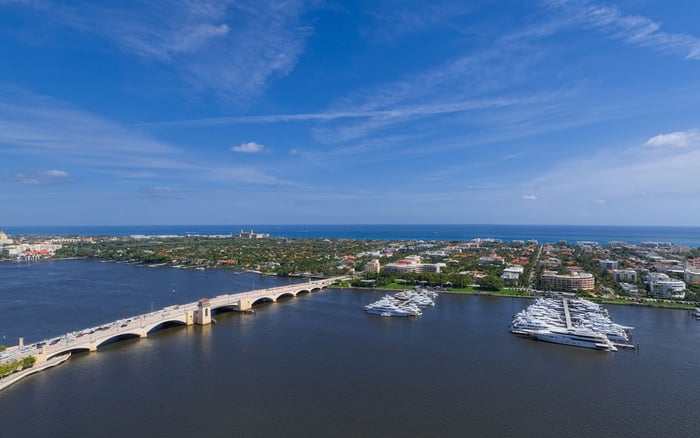
A refined condominium purchase depends on more than the residence itself. This guide explains how West Palm Beach buyers can examine association minutes, litigation, contracts, conflicts, reserves, inspections, and access procedures before closing.

A luxury condominium purchase in West Palm Beach is partly an acquisition of shared governance. The residence may command initial attention, but association decisions can influence assessments, service quality, insurance exposure, construction disruption, and resale appeal.
That makes the paper trail consequential. Buyers should seek meeting minutes, governing documents, budgets, financial statements, reserve materials, insurance information, engineering reports, inspection records, contracts, bids, permits, rules, and available litigation disclosures. For waterfront living, the condition of the common property and the association’s ability to maintain it belong beside views, layout, and finish quality in the purchase analysis.
The finest residence can still inherit the financial consequences of weak association governance.
A prospective purchaser may need the seller’s cooperation to obtain association records before closing. The practical solution is a carefully drafted records contingency requiring the seller to request the materials or authorize an appropriate representative to do so.
The contingency should identify the records to be reviewed and preserve adequate time for the buyer’s legal, financial, insurance, and technical advisers to assess them before the deposit becomes nonrefundable. It should also address incomplete productions, follow-up requests, and documents received close to a contractual deadline.
Repeated resistance or unexplained delay deserves scrutiny. Counsel should confirm the applicable access procedures, request format, and contractual deadlines for the specific transaction rather than relying on assumptions or an informal document package.
Minutes are most useful as a sequence, not as isolated documents. Read enough meetings to identify recurring references to leaks, elevator interruptions, structural concerns, reserve pressure, insurance disputes, threatened claims, and possible assessments. Track whether an issue progresses from resident complaint to technical review, bid solicitation, contract award, and funding decision.
Silence is not necessarily reassurance. Compare the minutes with financial statements, correspondence, contracts, and technical materials. If a report identifies work that does not appear in the budget, or the minutes discuss bids without a corresponding agreement, request clarification. The objective is to understand whether the association has recognized an obligation, estimated its cost, identified funding, and assigned responsibility for completion.
This discipline applies across the local market, whether evaluating established resale inventory or a newer address such as Alba West Palm Beach. Where developer involvement remains relevant, buyers should distinguish current decisions from obligations that may continue under future owner governance.
A disclosed lawsuit should begin the inquiry, not end it. Determine the nature of the matter, the parties involved, the relief sought, its reported status, available insurance information, relevant deductibles, defense arrangements, and whether the dispute could affect operations, repairs, assessments, or financing. Potential claims may surface in minutes, insurance correspondence, technical reports, or funding discussions before they appear in a formal disclosure.
The seller’s disclosure materials are only one part of the review. Buyers should compare them with association records, governing documents, financial information, assessment notices, reserve materials, insurance documents, and available litigation information. Any inconsistency should be raised with appropriate counsel before a contingency is waived.
Buyers comparing Forté on Flagler West Palm Beach with other options should reconcile every litigation reference across the available package. The key question is not simply whether a dispute exists, but what financial or operational strain may sit behind it.
Management, maintenance, elevator, security, landscaping, construction, and other material agreements can commit an association beyond a buyer’s closing. Review duration, pricing, renewal mechanics, termination rights, exclusivity, performance standards, change-order authority, and disclosed vendor relationships. Automatic renewals or restrictive termination provisions may limit a future board’s options when service or value is questioned.
Do not assume that an agreement can be ended merely because ownership or board control changes. Counsel should examine the governing documents, the association’s current governance stage, the contract language, and applicable law before drawing a conclusion.
When considering Mr. C Residences West Palm Beach, buyers may naturally focus on the residence and lifestyle proposition. The parallel inquiry is how service obligations are documented, how costs are controlled, and what remedies exist if performance falls short.
A transaction involving a director, officer, manager, vendor, or affiliated party deserves careful review. Examine agendas, minutes, bids, contracts, disclosures, and voting records to understand how the relationship was identified and handled.
Cross-check the names of decision-makers against available vendor, management, brokerage, and construction records. Determine whether competing proposals were considered, whether an interested person participated in the decision, and whether the record clearly explains the process. A premium contract paired with limited competition, exclusivity, or vague deliverables warrants closer attention.
The same standard belongs in the review of boutique buildings and full-service towers alike, including The Ritz-Carlton Residences® West Palm Beach: refined service should be supported by legible governance.
Inspection requirements can depend on the building, jurisdiction, and current law. Confirm the property’s location and applicable requirements with qualified advisers rather than assuming that a county or municipal rule applies uniformly throughout the West Palm Beach area.
Read inspection findings beside reserve materials, budgets, minutes, bids, and signed contracts. This comparison may reveal recognized but unfunded work, an estimate that no longer aligns with contract pricing, a changed scope, or a possible assessment still under discussion. Ask whether funding has been collected, approved but not collected, or only contemplated.
Insurance should be part of the same analysis. Review available policy information, deductibles, exclusions, open claims, and any connection between insurance decisions and planned repairs. Legal, insurance, engineering, and financial questions often overlap, so they should not be evaluated in isolation.
Before waiving contingencies, counsel should prepare a concise exception list covering unresolved repairs, pending or threatened claims, unfunded projects, material contracts, related-party concerns, insurance gaps, and possible assessments. Each item should identify the supporting document, the open question, and the required contractual response.
Possible responses may include additional records, a written clarification, an extension of the review period, a negotiated allocation of responsibility, or a decision not to proceed. The appropriate approach depends on the documents, the contract, and advice from the buyer’s professional team.
A polished lobby cannot answer those questions, but a coherent record can; for a discreet review of West Palm Beach opportunities and the documents that define ownership, connect with MILLION.
If branded residences are on your mind — as a home or as an allocation — we would be glad to share what we are seeing, privately.
Begin a quiet conversationThe purchase contract can require the seller to request records or authorize appropriate access. Counsel should tailor the process and deadlines to the transaction.
Request them early enough to permit legal, financial, insurance, and technical review before relevant contingencies expire or the deposit becomes nonrefundable.
Look for recurring repairs, service interruptions, structural concerns, reserve pressure, insurance disputes, threatened claims, and possible assessments.
A sequence can show how an issue moved from complaint to investigation, bidding, contracting, and funding. An isolated meeting may not provide the full context.
No. Buyers should compare it with available association, financial, insurance, engineering, contract, and litigation records.
Review the nature and reported status of the dispute, requested relief, available insurance information, deductibles, defense arrangements, and possible operational or financial effects.
Focus on price, duration, renewal, termination, exclusivity, performance standards, change-order authority, and disclosed vendor relationships.
Compare agendas, minutes, bids, contracts, disclosures, and voting records to understand the relationship and decision-making process.
The comparison may reveal unfunded work, changed scopes, outdated estimates, or a possible assessment still under discussion.
Applicable requirements may depend on the property’s location, building characteristics, and current law. Qualified advisers should confirm which rules apply to the specific property.