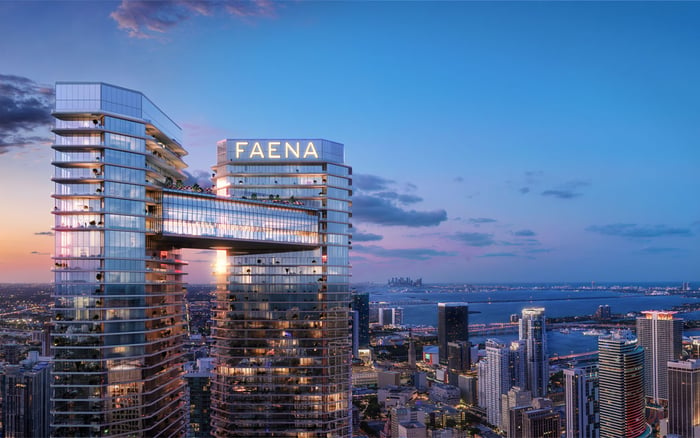
A buyer-focused comparison of three branded Miami towers, centered on service depth, elevator privacy, and owner-only amenity strategy.
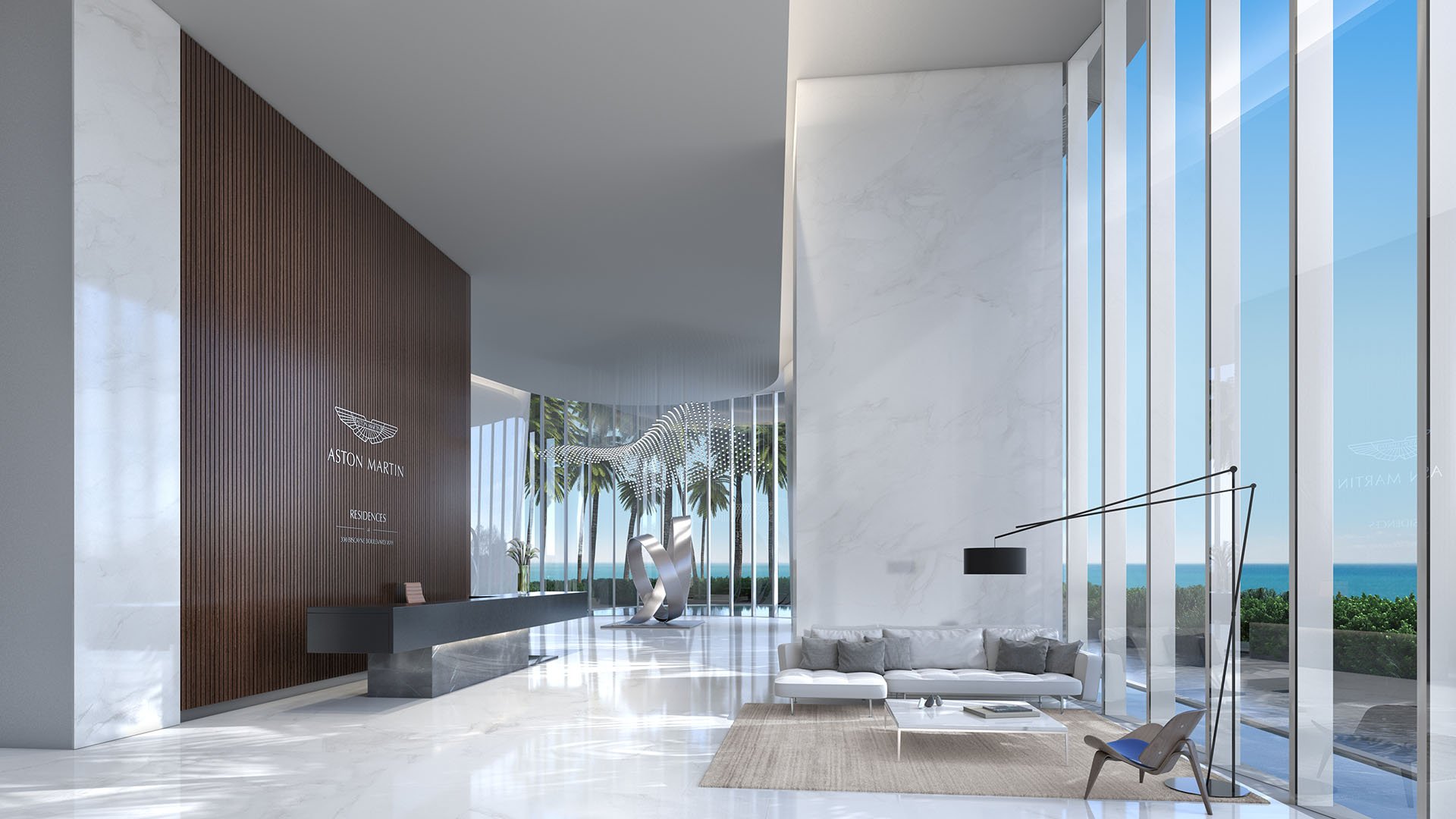
In Miami’s ultra-luxury condominium market, branding has moved well beyond a name on a porte cochere. The most serious buyers are no longer asking only which fashion house, automaker, hotelier, or design studio is attached to a tower. They are asking what the brand is meant to solve once daily life begins.
That distinction matters in Brickell and Downtown, where vertical living can be visually glamorous and operationally complex. A residence may deliver skyline drama, water views, and an instantly recognizable address, while still leaving an owner to evaluate three quieter variables: how much service support exists behind the scenes, how private movement through the building feels, and whether the amenity environment is truly oriented around owners rather than general traffic.
Within that framework, 888 Brickell by Dolce & Gabbana, Aston Martin Residences Downtown Miami, and Casa Bella by B&B Italia Downtown Miami read less like interchangeable branded-condo products and more like three distinct answers to the same high-net-worth question: how should a Miami tower protect time, privacy, and lifestyle quality?
888 Brickell by Dolce & Gabbana is positioned as a branded ultra-luxury tower in Miami’s Brickell neighborhood, with fashion-led hospitality and lifestyle programming central to its identity. Its role in this comparison is the service-depth model, because the project is framed around a hybrid hotel-residence concept rather than a purely conventional condominium experience.
That distinction is important. In an ordinary luxury tower, service can mean a polished lobby, an attentive front desk, and responsive management. In a more hospitality-driven residential model, the deeper question is how consistently the building can choreograph daily needs, guest arrivals, lifestyle requests, and the recurring friction points of urban living. The value is not merely that service exists. The value is that service is embedded in the building’s operating culture.
For a buyer who splits time between Miami and other global cities, that can be especially relevant. The residence is not only a private home; it is part of a managed environment expected to perform with the rhythm of hotel-caliber support. The Dolce & Gabbana association gives the proposition a fashion and lifestyle lens, but the more durable buyer takeaway is operational: service depth is treated as a core part of the residential experience, not as a decorative afterthought.
The term condo-hotel can be too blunt for the nuances of this segment, yet it points to an issue sophisticated buyers watch closely. If a tower blends residence and hospitality, the upside is convenience and programming. The diligence question is how that hospitality backbone is governed, how it preserves residential calm, and whether the experience feels seamless over years rather than theatrical on day one.
Aston Martin Residences Downtown Miami occupies a different position in the comparison. It is the automotive-branded reference point, located in Downtown, and its relevance here is not simply the glamour of an automotive name. The sharper lens is elevator privacy and vertical circulation in dense, high-rise luxury living.
In urban-core towers, privacy is often less about walls than movement. How an owner enters, rises, arrives, receives guests, and transitions between public and private zones can define the emotional texture of a building. A waterfront view may shape the first impression, but the elevator experience often shapes the hundredth.
For ultra-luxury buyers, elevator privacy is both practical and psychological. It affects how exposed an owner feels when returning from dinner, hosting family, meeting staff, or moving through the building during peak hours. In a Downtown tower, where density and vertical scale are inherent to the setting, the circulation strategy becomes part of the luxury proposition.
Aston Martin Residences Downtown Miami therefore represents a buyer priority that is easy to underweight in renderings and difficult to ignore in ownership. The brand association may suggest precision, performance, and design discipline, but the relevant residential question is more intimate: does the building make vertical living feel controlled, composed, and appropriately private?
This is where the comparison with Brickell becomes useful. Brickell buyers may prioritize the hospitality ecosystem around 888 Brickell by Dolce & Gabbana, while a Downtown buyer studying Aston Martin Residences Downtown Miami may focus more closely on how the tower manages personal space within a high-rise environment. Both are luxury concerns, but they solve different kinds of stress.
Casa Bella by B&B Italia Downtown Miami brings the third dimension: owner-only amenity curation. As the design-furniture-branded point in the comparison, Casa Bella’s B&B Italia association supports an editorial angle focused on design-led residential lifestyle rather than hospitality theater or automotive symbolism.
Owner-only amenities are increasingly important in Miami because amenities can either elevate a building or dilute it. A beautiful space loses value if owners feel it is overextended, poorly curated, or misaligned with the private residential tone they expected. The core question is not simply how much amenity space exists, but who it is designed for and how it shapes the daily life of residents.
Casa Bella by B&B Italia Downtown Miami is framed as the owner-amenity and design model among the three towers. The buyer lens should therefore focus on atmosphere, curation, material sensibility, and the relationship between private residences and shared environments. In a design-led building, the amenity experience should feel like an extension of the home, not a separate commercial layer.
This can appeal to buyers who want the polish of a branded tower without making hospitality the dominant identity. For them, the question is less about hotel-style service and more about how the building supports an elegant daily routine: arrival, wellness, gathering, quiet work, social hosting, and retreat. Casa Bella’s design-furniture positioning suggests that the emotional value of the building is found in continuity, where the private residence and the shared spaces speak the same language.
The most productive way to compare these buildings is to begin with lifestyle friction, not aesthetics. A buyer who wants the greatest emphasis on service depth should start with the 888 Brickell by Dolce & Gabbana model. Its hybrid hotel-residence positioning and highly programmed hospitality backbone place operational support at the center of the value proposition.
A buyer who is most sensitive to discretion, arrival experience, and the feel of moving through a large urban tower should study Aston Martin Residences Downtown Miami through the privacy lens. The building’s Downtown positioning makes vertical circulation a meaningful part of the ownership equation.
A buyer who wants the building’s shared spaces to feel residential, curated, and owner-oriented should place Casa Bella by B&B Italia Downtown Miami in the foreground. Its design-furniture identity makes owner-only amenities and lifestyle composition the more relevant evaluative frame.
None of these priorities is inherently superior. They answer different ownership instincts. Some buyers want staff depth and a hospitality safety net. Others want controlled movement and a sense of privacy in the sky. Others want shared spaces that feel highly designed, restrained, and reserved for the resident community.
Brickell and Downtown continue to mature as ultra-luxury residential districts, but their strongest buildings are no longer competing only on height, view corridors, or brand recognition. They are competing on how well they manage the lived reality of vertical ownership.
That is the larger point behind this three-tower comparison. 888 Brickell by Dolce & Gabbana, Aston Martin Residences Downtown Miami, and Casa Bella by B&B Italia Downtown Miami each uses branding as shorthand for a different residential operating philosophy. One leans into hospitality and service depth. One invites attention to privacy and vertical movement. One emphasizes design-led owner amenity culture.
For the right buyer, the choice begins with self-knowledge. If the residence is expected to function like a serviced global base, the hospitality model may resonate. If privacy is paramount, the elevator and circulation experience deserve early scrutiny. If the buyer’s daily pleasure comes from design coherence and resident-only spaces, the amenity model may be the more natural fit.
In Miami’s next phase of branded luxury, the winning question is not which tower has the most recognizable name. It is which tower most precisely solves the owner’s life.
What is the main difference between these three towers? 888 Brickell by Dolce & Gabbana is framed around service depth, Aston Martin Residences Downtown Miami around elevator privacy, and Casa Bella by B&B Italia Downtown Miami around owner-only amenities.
Why is service depth important in a luxury residential tower? Service depth affects how well a building supports daily ownership, guest arrivals, lifestyle needs, and the smooth operation of a high-value home.
Why does elevator privacy matter in Downtown Miami? In a dense vertical setting, the way owners move from arrival to residence can strongly influence discretion, comfort, and the feeling of exclusivity.
How does Casa Bella’s design identity affect the buyer lens? Its B&B Italia positioning supports a focus on design-led amenity curation and a residential lifestyle shaped by atmosphere and continuity.
Is 888 Brickell by Dolce & Gabbana more hospitality-oriented? Yes. It is framed as the service-depth example because of its hybrid hotel-residence model and hospitality backbone.
Is Aston Martin Residences Downtown Miami only about the brand name? No. In this comparison, the more important issue is how an ultra-luxury Downtown tower addresses privacy within vertical living.
What does owner-only amenity exclusivity mean for buyers? It means the amenity environment is evaluated for resident focus, controlled access, and whether shared spaces preserve a private residential tone.
Which buyer is best suited to a hospitality-driven model? A buyer who values hotel-caliber support, lifestyle programming, and a highly serviced Miami base may respond to that model.
Which buyer should focus most on vertical circulation? A buyer who prioritizes discretion, arrival sequence, and privacy in a high-rise urban core should study elevator and circulation strategy closely.
Are these three projects interchangeable branded residences? No. They represent distinct strategies for solving service depth, elevator privacy, and owner-only amenity expectations.
To compare the best-fit options with clarity, connect with MILLION.
If branded residences are on your mind — as a home or as an allocation — we would be glad to share what we are seeing, privately.
Begin a quiet conversation