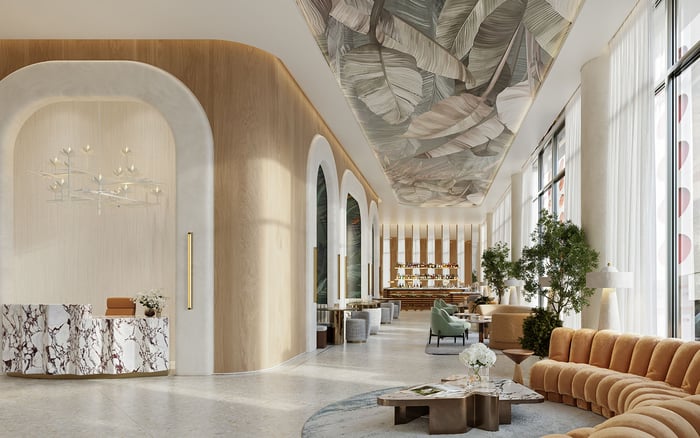
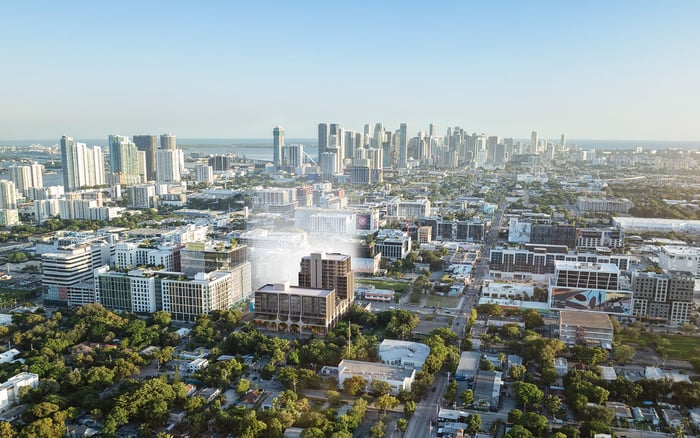
A buyer-facing comparison of two distinct branded luxury propositions in Miami: 619 Residences offers disciplined architecture and Nobu-led service integration, while Faena Residences Miami advances a more theatrical, culture-forward residential identity. For Downtown and Edgewater-adjacent buyers, the difference is less about square footage than about how one wants to live, host, and be seen.
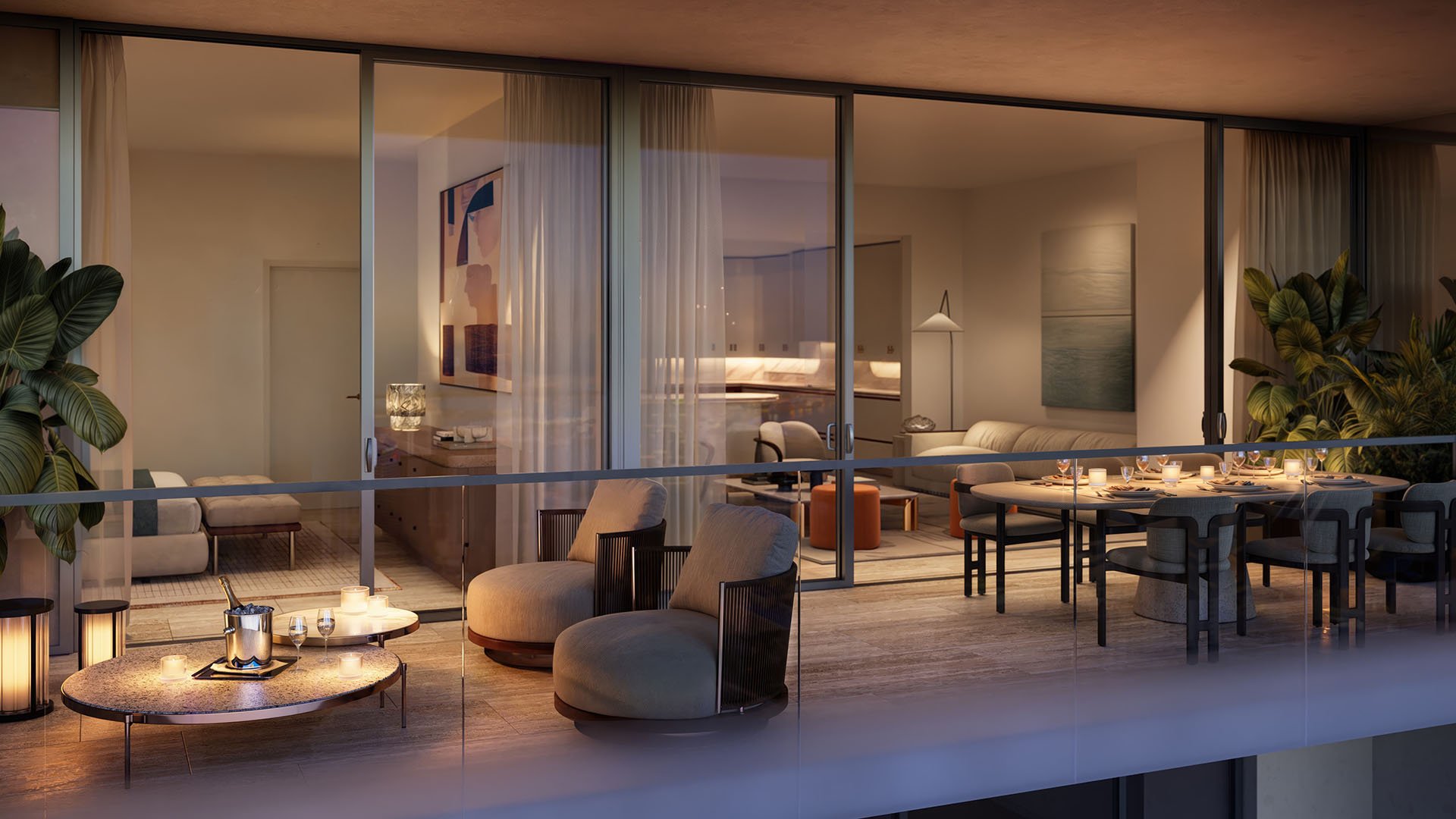
In Miami’s upper residential market, buyers are increasingly choosing between branded worlds rather than simply between floor plans. That is especially true in the conversation around 619 Residences by Foster + Partners + Nobu Hospitality and Faena Residences Miami Downtown Miami. On paper, both operate within the broader realm of luxury, wellness, hospitality, and design. In practice, they project markedly different social temperatures.
619 Residences is planned as a mixed-use vertical development in Downtown Miami combining residences, hotel functions, offices, and retail. Its architecture is by Foster + Partners, and its operational identity is anchored by an integrated Nobu Hotel Miami Downtown. That pairing matters. It points to a building where service is embedded in the structure of daily life rather than simply applied as branding.
Faena Residences Miami, by contrast, is positioned on Biscayne Bay with a distinctly immersive identity shaped by Faena’s wider universe of art, culture, wellness, entertainment, and design. It is far less restrained about what it intends to project. The proposition is not merely residential comfort. It is cultural belonging.
For the discerning South Florida buyer, this is the essential question: do you want luxury to operate quietly in the background, or do you want it to announce a point of view?
619’S appeal begins with control. Foster + Partners gives the tower a disciplined modernist expression, with a gridded façade and strong proportions that read as composed rather than theatrical. The architectural language does not depend on visual spectacle to signal status. It relies on precision.
That restraint continues in the program. Planning frames the project around wellness and community, with amenities and public functions stacked to create a connected urban destination rather than a standalone condo block. This is a subtle but important distinction. The building is designed to function as an ecosystem.
Nobu’s presence sharpens that sensibility. The integrated hotel brings rooftop pool access, wellness-oriented amenities, dining, and concierge-style hospitality to the property. Yet the Nobu proposition reads less as overt opulence and more as polished ease, culinary credibility, and a service ethos grounded in discretion. That makes 619 feel closer to a hospitality-backed residence for buyers who do not need to advertise their access.
In the broader Downtown conversation, that places 619 in a refined lane alongside projects where service and architecture carry more weight than theatrical identity. Buyers comparing it with Waldorf Astoria Residences Downtown Miami and Aston Martin Residences Downtown Miami may notice that 619 reads differently. It is less about logo-led drama and more about a seamless urban machine with luxury integrated at every level.
Faena Residences Miami approaches luxury from the opposite direction. Here, the residence extends a larger hospitality universe that explicitly foregrounds art, culture, wellness, and design. The value proposition is not simply access to services. It is immersion in an atmosphere.
That distinction is visible in the way Faena presents its platform. Social spaces, spa and wellness offerings, dining, and cultural programming are not treated as supporting amenities. They are part of the main event. In residential form, that translates into a lifestyle with a stronger public-facing quality.
For some buyers, that is precisely the point. Home is not a retreat from identity. It is its grandest expression. The resident is not only purchasing a residence on Biscayne Bay, but also a place within a branded cultural world that wants to be seen and felt.
This helps explain why Faena occupies a different emotional register than neighboring trophy developments. In the bayfront Edgewater conversation, a buyer may also consider Aria Reserve Miami or EDITION Edgewater, yet Faena’s proposition remains more identity-driven. It is not just luxe. It is expressive.
The title frames this as a Downtown comparison, but geography tells only part of the story. 619 is unmistakably Downtown in placement and urban logic. Its mixed-use composition aligns with the central business district’s evolving pattern of vertical, fully serviced living. It is for buyers who want the city at their feet and support systems integrated into the building itself.
Faena, while often grouped into the same high-luxury Miami conversation, occupies a bayfront setting that changes the mood. It feels less central business district and more waterfront cultural enclave, with an address that lends itself to arrival, visibility, and a more ceremonious sense of place.
For buyers weighing Downtown versus Edgewater, this is critical. 619 is urban and infrastructural. Faena is atmospheric and experiential. One privileges operational fluency. The other privileges emotional stagecraft.
The buyer best suited to 619 typically values privacy in motion. This is someone who wants hotel-grade support, sophisticated dining, wellness access, and a carefully designed environment without feeling as though daily life is being turned into performance. They may entertain often, travel frequently, and appreciate that the strongest luxury is often the least conspicuous.
The buyer best suited to Faena tends to see residence as an extension of personal curation. They are often comfortable with stronger visual identity, more immersive branding, and a home that exists within a cultural narrative larger than the apartment itself. If 619 whispers confidence, Faena stages it.
This does not make one proposition superior to the other. It makes each better suited to a different temperament. In a market increasingly filled with branded residences, that distinction matters more than any generic label of prestige.
If your definition of luxury centers on quiet execution, architectural discipline, and hospitality that is felt more than advertised, 619 has the sharper proposition. It offers a composed, modern, service-rich version of urban living in which design and operations appear to work in tandem.
If your definition of luxury includes cultural theater, visible glamour, and a more immersive branded universe, Faena is the more compelling choice. It treats the residence not simply as a home, but as a place within a larger world of art, wellness, and curated experience.
In other words, this is not a contest between luxury and luxury. It is a choice between discretion and declaration.
What is the core difference between 619 Residences and Faena Residences Miami? 619 Emphasizes restrained, hotel-backed service and disciplined architecture, while Faena emphasizes cultural programming, expressive design, and visible glamour.
Is 619 Residences actually in Downtown Miami? Yes. It is positioned in Downtown Miami and is planned as a mixed-use urban tower.
Is Faena Residences Miami in the traditional Downtown core? No. It is presented as a bayfront project outside the central business district core, giving it a different residential atmosphere.
What role does Nobu play at 619 Residences? Nobu Hotel Miami Downtown is integrated into the project, shaping its service model through hospitality, dining, wellness, and concierge-style support.
What makes Faena more culturally expressive? Faena builds its residential identity around art, culture, wellness, design, and curated experiences, making lifestyle programming central to the proposition.
Which project is better for a buyer who values discretion? 619 Is the more natural fit for buyers who prefer quiet luxury, operational ease, and less overt social signaling.
Which project is better for entertaining and social visibility? Faena is more aligned with buyers who want a home embedded in a glamorous, public-facing cultural environment.
Does 619 focus only on residences? No. Its concept combines residences with hotel, office, and retail components in one vertically integrated scheme.
Is wellness important to both projects? Yes, but in different ways. At 619, wellness is integrated into a disciplined mixed-use framework, while at Faena it is part of a broader experiential lifestyle narrative.
How should a Miami buyer decide between them? Choose 619 if you want seamless service and controlled modernity; choose Faena if you want immersive branding, cultural energy, and a stronger sense of spectacle.
For a discreet conversation and a curated building-by-building shortlist, connect with MILLION.
If branded residences are on your mind — as a home or as an allocation — we would be glad to share what we are seeing, privately.
Begin a quiet conversation