A discreet buyer’s guide to evaluating construction-neighbor risk around ultra-premium South Florida residences, with a focus on privacy, service continuity, contract protections, and resale positioning.
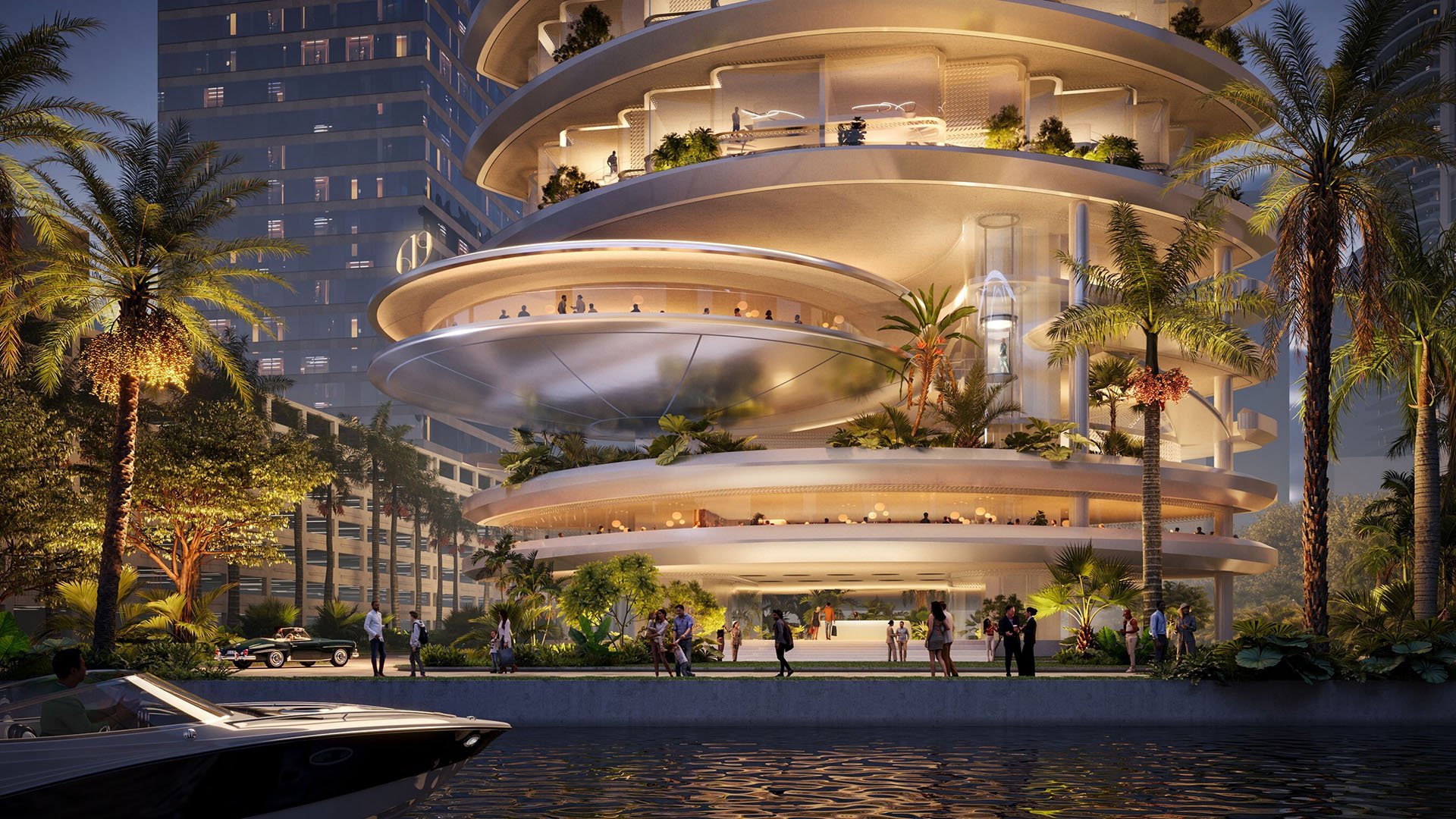
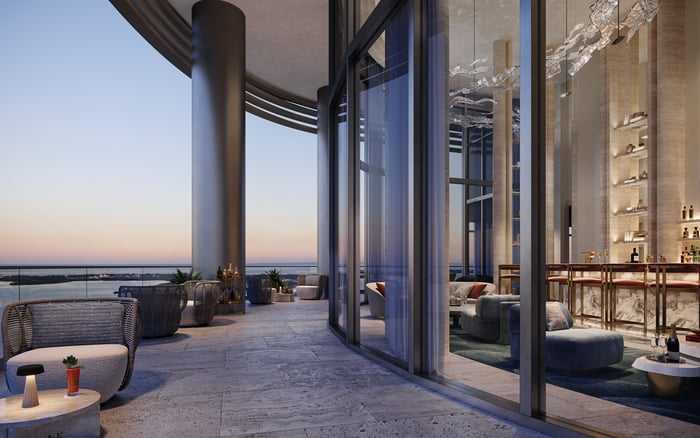
In South Florida luxury real estate, the most refined purchase decisions often turn on what is not immediately visible from the sales gallery, model residence, or sunset terrace. A buyer evaluating 619 Residences by Foster + Partners + Nobu Hospitality is not simply considering the residence itself. The more sophisticated question is what happens around it: the adjacent parcel, the crane next door, the alley used for staging, the future tower that may alter a view corridor, and the service rhythm of the building during years of nearby work.
Construction-neighbor risk is not a reason to retreat from a compelling address. In many cases, it is the cost of entering a district while it is still improving. The issue is calibration. Privacy, service continuity, and eventual resale value all depend on understanding whether nearby construction is a temporary inconvenience, a structural impairment, or a long-term enhancement.
For MILLION clients, the most valuable exercise is not speculation. It is disciplined due diligence before the contract becomes emotional.
Luxury buyers are trained to look outward: water, skyline, sunsets, marina lights, garden canopies. Construction-neighbor analysis begins differently. It looks sideways, downward, and behind the scenes.
The first question is ownership and entitlement. Is the neighboring site vacant, improved, assembled, or actively under development? Has its future use been clearly defined, or is it still fluid? A parcel that appears calm today may have a more consequential future than a noisy project already above grade. The known inconvenience can sometimes be less risky than the unknown entitlement.
Buyers should ask their advisors to map the immediate perimeter around the residence: adjacent lots, access drives, service courts, public rights of way, loading zones, garage entries, and any site that could support vertical development. In a dense Brickell setting, for example, one block can contain multiple ownership stories, each with different timing and operational consequences.
This is where restraint matters. A beautiful residence can still be the right acquisition, but the purchase price, floor selection, exposure, and exit strategy should all reflect the neighbor context.
Privacy risk is often discussed emotionally, but it should be analyzed geometrically. The central questions are simple: who can see into the residence, from what height, for how long, and at what distance?
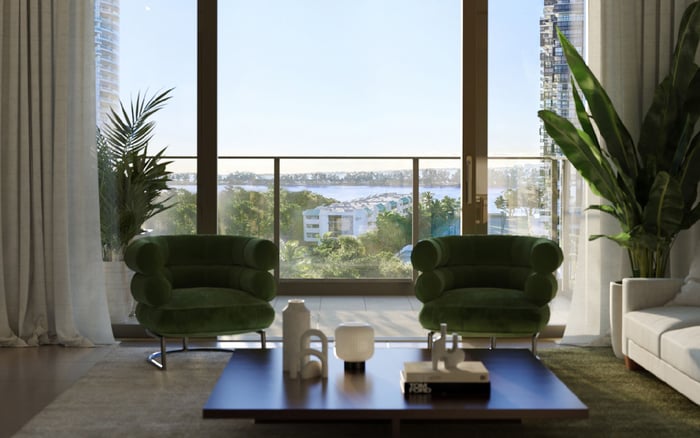
During construction, privacy exposure can come from workers, temporary platforms, cranes, hoists, and neighboring floors as they rise. After completion, it may come from permanent windows, amenity decks, office floors, hotel rooms, or residential balconies. A residence that feels private on day one can feel different once another structure reaches its living-room elevation.
Floor height helps, but it is not a universal solution. A lower-floor residence may benefit from landscape screening or a podium setback. A high-floor residence may face a future tower at equal elevation. Corner units can be magnificent, yet they may also have more angles to protect. Deep terraces, tinted glass, motorized shades, and thoughtful furniture placement can reduce exposure, but they do not replace the need to understand neighboring massing.
For buyers comparing Miami Beach, bayfront, and urban-core opportunities, privacy should be reviewed at multiple times of day. Morning glare, evening interior lighting, and nighttime reflections can all change how visible a residence feels.
In the ultra-premium market, true luxury is not only architecture. It is continuity. A residence should feel composed even when the neighborhood is not.
Neighboring construction can affect valet flow, delivery windows, ride-share access, guest arrival, pet walks, service elevators, loading docks, and the ability of staff to move discreetly. Noise matters, but access is often the more practical issue. If concrete pours, lane closures, utility work, or staging trucks intersect with the daily choreography of the building, residents may feel the disruption more acutely than expected.
A buyer should ask how the building plans to manage operations during nearby construction. The questions are direct: where will residents enter if the primary approach is constrained, how will deliveries be handled, can housekeeping and private chefs access service elevators without delay, and what communication protocols will be used when street conditions change?
The best buildings do not eliminate all disruption. They anticipate it and communicate with precision. In the new-construction and pre-construction segments, that operational culture should be evaluated with the same seriousness as the finish package.
Construction-neighbor risk belongs in the advisory conversation before a buyer signs, not after closing. The contract may not solve every future disruption, but it can clarify what has been disclosed, what the buyer has reviewed, and which contingencies or remedies are available within the transaction structure.
Buyers should discuss neighboring development risk with counsel, including disclosure language, inspection windows, document review, closing conditions, association materials, easements, access rights, and any limitations on claims related to construction activity beyond the property. For a pre-completion purchase, the review should include not only the residence documents but also the broader setting in which the building will operate.
This is not about making the contract adversarial. It is about preventing ambiguity. In the luxury segment, ambiguity is costly because expectations are high. A buyer who understands the neighboring condition can negotiate more intelligently, select the right exposure, and avoid confusing normal urban evolution with a failure of the residence itself.
Every acquisition has a future audience. When the time comes to resell, the next buyer will ask the same questions, often with sharper hindsight: did the neighboring construction improve the district, compromise privacy, protect views, reduce traffic friction, or create a more desirable micro-neighborhood?
A temporary inconvenience can become a long-term advantage if the completed neighbor adds architectural quality, streetscape polish, dining, services, or public realm energy. Conversely, a poorly understood adjacent condition can become a recurring objection in every showing.
Resale risk is therefore not only about what is being built. It is about whether the present buyer can explain it cleanly later. Documentation helps. Keep records of reviewed plans, correspondence, disclosure materials, association communications, and visual references from the time of purchase. Future buyers respond well to clarity. They hesitate when the narrative feels improvised.
For an investment-minded purchaser, this clarity is especially important. Rental appeal, seasonal occupancy, and exit pricing are all influenced by how easily the residence can be presented as serene, well-serviced, and rationally priced within its immediate context.
Before moving from admiration to commitment, a buyer should assemble a concise construction-neighbor file. It does not need to be theatrical. It needs to be complete enough to support a confident decision.
Start with the physical context: neighboring parcels, current construction, possible vertical sites, access points, and view corridors. Then review operational context: valet routes, delivery areas, loading access, pedestrian circulation, and any likely pinch points. Next, test livability: expected noise windows, dust exposure, terrace usability, pool deck proximity, and privacy from temporary or permanent structures.
Finally, connect the findings to price. A residence with a manageable neighbor condition may justify proceeding without hesitation. A residence with meaningful uncertainty may still be desirable, but only at the right exposure, floor, timing, and basis. The goal is not to eliminate risk. The goal is to avoid paying a fully settled price for an unsettled condition.
The right advisor should not reduce the conversation to optimism or alarm. They should help separate nuisance from impairment, temporary friction from lasting value, and visual discomfort from genuine market resistance.
Ask for plain-language answers. Which neighboring conditions are known? Which are uncertain? Which can be mitigated by unit selection? Which should be reflected in negotiation? Which might enhance the location over time? A serious answer will acknowledge tradeoffs without dramatizing them.
The most successful South Florida buyers often accept complexity, but they do not accept surprise. That is the distinction. In a market where architecture, hospitality, and branded living are increasingly intertwined, the surrounding construction environment becomes part of the ownership experience. It deserves equal attention.
What is construction-neighbor risk? It is the privacy, access, noise, service, view, and resale exposure created by construction or future development near a residence.
Should nearby construction automatically discourage a purchase? No. It may be temporary friction or a sign of district improvement, but it must be priced and documented appropriately.
How does neighboring construction affect privacy? Temporary workers, cranes, platforms, and future windows or amenity decks can change sightlines into a residence.
Is a higher floor always safer for privacy? Not always. A future tower can meet a high-floor residence at a similar elevation, so exposure and distance matter.
What service issues should buyers evaluate? Valet access, deliveries, loading docks, guest arrival, service elevators, pet routes, and staff movement all deserve review.
Can contract language reduce this risk? It can clarify disclosures, review periods, contingencies, and expectations, but buyers should discuss specifics with counsel.
How does this affect resale value? Future buyers will evaluate whether neighboring development improved the setting or created lasting objections.
What should an investment buyer document? Keep records of reviewed plans, disclosures, access conditions, privacy concerns, and any operational communications.
Does pre-construction create more uncertainty? It can, because both the residence and its surroundings may still be evolving when the buyer commits.
What is the best first step before signing? Build a concise neighbor-risk file covering parcels, sightlines, access, service flow, and resale implications.
For a confidential assessment and a building-by-building shortlist, connect with MILLION.
If branded residences are on your mind — as a home or as an allocation — we would be glad to share what we are seeing, privately.
Begin a quiet conversation