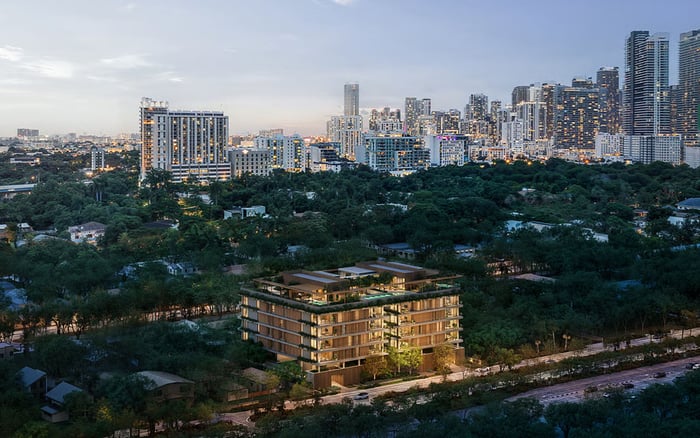
2200 Brickell’s advertised direct parking access offers a compelling starting point for buyers with limited mobility. The decisive questions concern the assigned space, the complete route home, and whether rooftop amenities can be used comfortably and independently.
For a buyer with limited mobility, luxury begins before the front door. The distance from a vehicle, the effort of opening a door, and the ability to arrive without waiting for assistance can matter as much as the residence itself. At 2200 Brickell, at 2200 Brickell Avenue in South Brickell, advertised above-ground parking on all levels with direct access to residences puts that everyday journey at the center of the evaluation.
The appeal is straightforward: parking near home may reduce transfers and reliance on elevators. But direct access does not necessarily mean immediate parking-to-door adjacency, nor does it establish that every residence meets a buyer’s mobility needs. A sound assessment separates three questions: how the buyer arrives, how they enter the residence, and how they reach and use the amenities.
The advertised parking program combines self-parking with a covered porte-cochère and valet service, offering alternatives rather than a single arrival routine. A buyer may prefer self-parking for independence and choose the sheltered valet arrival when weather, fatigue, or assistance needs make it more practical.
Residence #313 offers a useful, unit-specific example. Its advertised assigned parking space is on the residence’s level, allowing direct access without an elevator. A complimentary valet parking space for a second vehicle is also advertised for that residence. Neither detail should be treated as a building-wide entitlement; both require confirmation for the particular purchase.
Even same-level parking leaves important questions unanswered. The route may involve substantial corridor distance, turns, thresholds, or doors that require more effort than anticipated. The test is not simply whether an elevator can be avoided, but whether the complete journey is comfortable and repeatable with the buyer’s actual mobility equipment.
Begin with the assigned space number and floor, then establish the space’s ownership or use status in the condominium documents. Confirm whether the assignment transfers with the residence and whether a proposed change requires approval. A convenient space has limited value if the buyer cannot rely on retaining it.
Next, inspect the space with the vehicle and equipment the buyer expects to use. Measure clearance for entering and exiting, opening doors, and deploying a wheelchair or scooter. Consider conditions when adjacent spaces are occupied. Walk or roll the entire route to the residence, noting door operation, surface transitions, turns, and any exposure to moving vehicles.
Apply the same discipline to a broader Brickell search. If Una Residences Brickell is also under consideration, request equivalent unit-specific measurements rather than assuming the arrival arrangement suits the buyer. Compare documented daily journeys, not amenity descriptions.
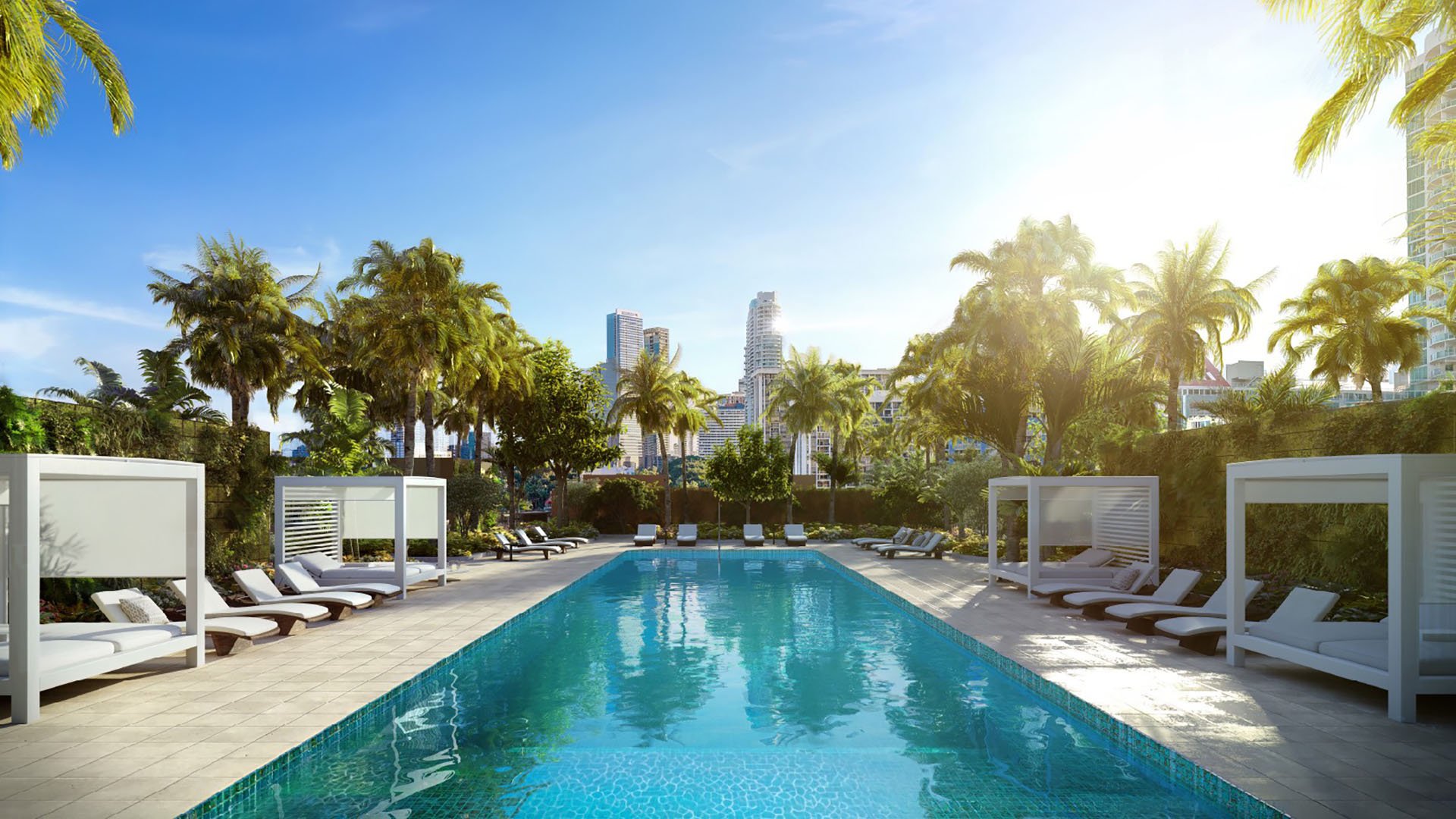
2200 Brickell’s advertised rooftop amenity area spans approximately one acre. The program includes a resort-style swimming pool and spa, a quarter-mile walking track, outdoor fitness and yoga areas, summer kitchens, an outdoor living room, and a garden retreat. A pickleball court and children’s play area add options for households and visiting family.
For a buyer with limited mobility, that breadth has value only if the destinations are comfortably reachable. Assess the residence-to-rooftop journey separately from the parking route. Check elevator access, cabin dimensions, controls, door timing, and the path from the elevator landing to each amenity the buyer expects to use.
Do not stop at reaching the deck. Trace the route to seating, restrooms, gathering areas, and the return elevator. Ask where a resident can rest and whether shade is available along the intended route. A generous amenity area can offer choice, but size alone does not establish ease of use.
The advertised pool and spa do not establish the availability of a pool lift, zero-entry access, or other adaptive entry equipment. Confirm the actual entry arrangement, whether assistance is necessary, and how any equipment is operated and maintained. Reaching the pool surround and entering the water are separate accessibility questions.
Likewise, the quarter-mile track describes a distance, not its suitability for a particular gait, wheelchair, or endurance level. Slopes, handrails, seating intervals, and detailed accessible routes remain unconfirmed. Inspect the surface and identify practical stopping points rather than assuming the entire circuit will be comfortable.
Outdoor fitness and yoga areas deserve the same scrutiny. Ask whether there is sufficient room to maneuver and whether the buyer can participate in a preferred activity. These are personal usability checks; the presence of an amenity alone does not answer them.
Valet can provide flexibility, but its usefulness depends on operating details. Ask about hours, typical retrieval times, where a resident waits, and whether staff can assist with mobility equipment. Clarify the limits of that assistance rather than assuming it includes transfers or handling specialized devices.
Electric-vehicle charging is advertised, but buyers should confirm the arrangement associated with their assigned parking. Separately, ask about scooter storage and charging rules. Neither a building’s EV provision nor a nearby parking space establishes permission to store or charge mobility equipment in a particular location.
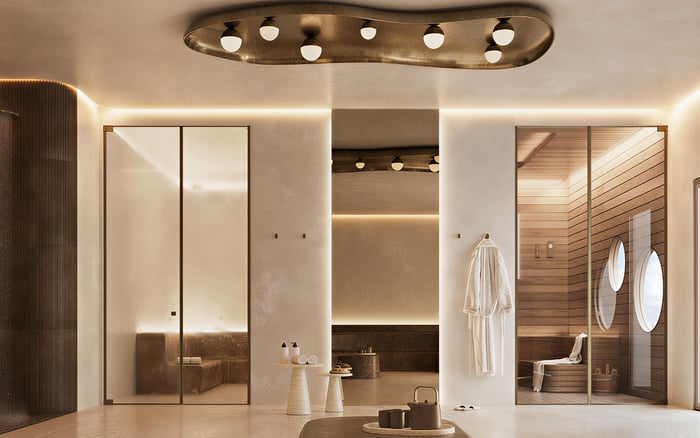
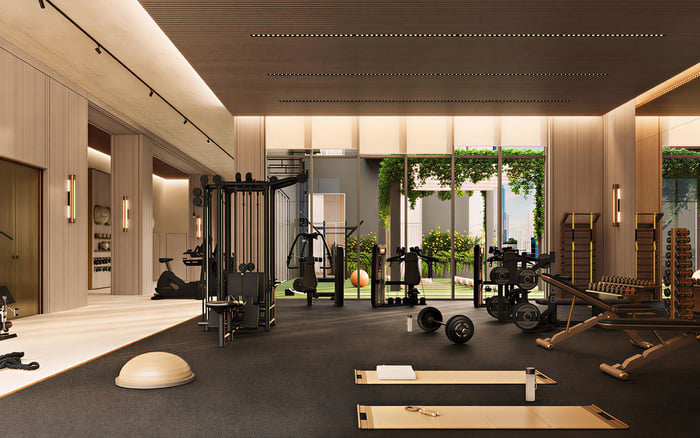
Indoor amenities include a fitness center, wellness lounge, treatment room, and sauna, along with a cycling lounge and workshop and a children’s playroom. Inspect the rooms relevant to the household, including their doors and maneuvering space. Request the emergency procedures for residents unable to use stairs.
Before committing, turn the tour into a written, residence-specific record: parking assignment, measured route, access conditions, relevant service policies, and unresolved questions. Where a feature is essential, seek confirmation in the transaction documents rather than relying on a general description.
For buyers also evaluating The Residences at 1428 Brickell, use the same checklist without assuming equivalent parking or accessibility features. This keeps the decision focused on personal fit.
2200 Brickell’s direct-access parking is a meaningful reason to investigate further. Its rooftop program adds another dimension, but neither substitutes for testing the complete daily experience. The strongest choice is the residence that supports both independence at arrival and comfortable participation beyond the front door.
For a discreet, residence-specific conversation about your South Florida search, connect with MILLION.
If branded residences are on your mind — as a home or as an allocation — we would be glad to share what we are seeing, privately.
Begin a quiet conversation2200 Brickell is located at 2200 Brickell Avenue in Miami’s South Brickell area.
The project advertises above-ground parking on all levels with direct access to residences. That does not establish immediate parking-to-door adjacency for every home.
That is not established for every residence. Residence 313 specifically advertises an assigned space on its level with access that does not require an elevator.
Yes, self-parking and a covered porte-cochère with valet parking are advertised. Confirm valet hours, assistance policies, and any residence-specific entitlements.
A complimentary valet space for a second vehicle is advertised for residence 313. It should not be assumed to be a building-wide benefit.
Confirm its number, floor, ownership or use status, and transfer terms. Measure vehicle-exit clearance and the full route to the residence.
The approximately one-acre rooftop program includes a pool, spa, quarter-mile walking track, fitness and yoga areas, and social spaces. Pickleball and a children’s play area are also advertised.
The amenity descriptions do not establish a pool lift, zero-entry access, or other adaptive entry equipment. Confirm the actual entry arrangement before relying on pool use.
Its quarter-mile length alone does not establish suitability. Slopes, handrails, seating intervals, and the buyer’s own comfort require inspection.
Ask about mobility-equipment assistance, scooter storage and charging, and emergency procedures for residents unable to use stairs. Confirm these separately from advertised parking and amenities.