A buyer-oriented editorial on pantry lighting as a defining luxury detail in Brickell residences, with practical guidance for evaluating illumination systems at 1428 Brickell and SLS LUX Brickell without relying on unsupported specifications.
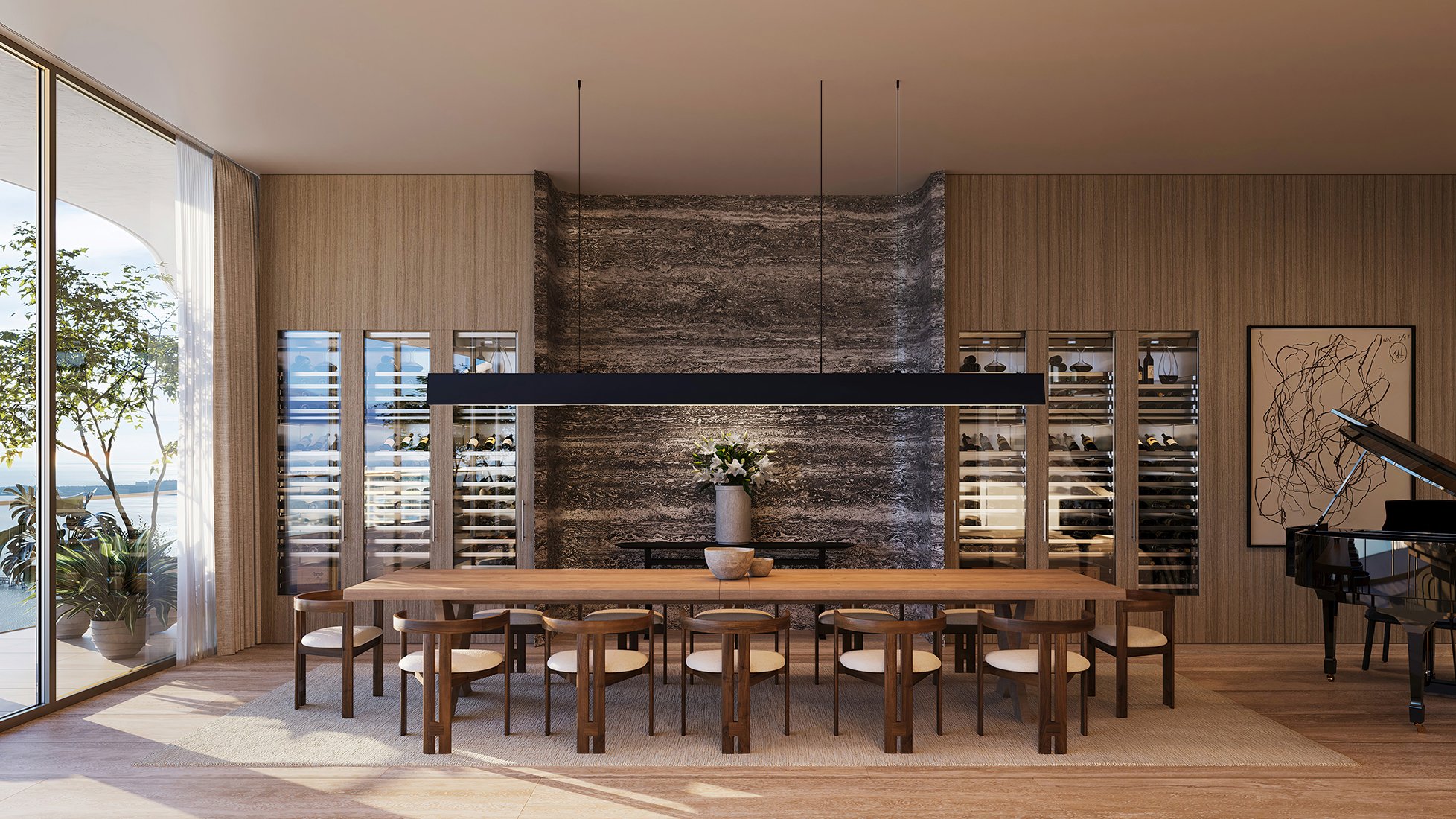
In the most composed residences, luxury is often revealed in rooms once treated as secondary. The pantry has become one of them. It is no longer simply a storage zone behind the kitchen. It is a preparation area, a service corridor, a breakfast station, a staging point for entertaining and, in many homes, the place where daily rituals begin before the primary kitchen is ever engaged.
That is why the 2026 conversation around pantry lighting feels especially relevant in Brickell. In a vertical neighborhood defined by refined living, evening entertaining and high-design kitchens, illumination is no longer an afterthought. Buyers looking at The Residences at 1428 Brickell or SLS LUX Brickell should think beyond fixtures and ask how the pantry performs across an entire day. Morning requires clarity. Afternoon calls for balance. Evening asks for softness. Late-night use needs orientation without glare.
The result is a more disciplined way to evaluate luxury. A pantry lighting system should not announce itself. It should make surfaces legible, reveal material quality, protect the mood of the kitchen and allow the owner to move through the space with ease.
The best pantry illumination is layered. A single overhead fixture may light a room, but it rarely supports the choreography of a luxury pantry. Buyers should look for a hierarchy of light: ambient illumination for safe movement, task light for counters and appliances, integrated light for shelves or millwork, and low-level orientation light for evening use.
Just as important is restraint. Ultra-modern interiors can be diminished by excessive brightness, visible diodes or cold color. A refined system should feel architectural, not decorative, unless the design clearly calls for a feature moment. Light should graze stone, soften cabinetry and make glassware or serving pieces visible without turning the pantry into a showroom.
Control is the hidden luxury. A pantry that can shift from full task brightness to a quiet evening glow gives the owner more than convenience. It gives the residence a more intelligent rhythm. That matters in Brickell, where kitchens often sit within larger open-plan living environments and where pantry light may be visible from dining or lounge areas.
Because explicit pantry-lighting specifications should always be verified during a tour or design review, buyers should approach 1428 Brickell and SLS LUX Brickell with practical questions rather than assumptions. The goal is not to collect vocabulary. The goal is to understand whether the system supports real life.
Begin with the layers. Ask which lights are dedicated to counters, which are integrated into cabinetry and which serve circulation. Then ask whether those layers can be controlled separately. A pantry with attractive lighting but limited control may feel less refined once the owner begins using it at different hours.
Next, study glare. Stand where you would prepare coffee, open storage, plate food or select wine glasses. Look upward, across the countertop and into reflective surfaces. If the light is uncomfortable from those positions, it may become more noticeable over time. This is particularly important in glossy kitchens, stone backsplashes, lacquered millwork and glass-front storage.
Finally, consider maintenance. Beautiful lighting becomes less luxurious when servicing is difficult. Buyers should ask how concealed elements are accessed, whether components are replaceable and how the system is coordinated with cabinetry. In premium residences, serviceability should be part of the design conversation, not a surprise after closing.
A primary kitchen may impress at first glance, but the pantry reveals how carefully a residence has been considered. It is where owners notice shadowed shelves, awkward switches, overly cool light or dim corners. It is also where they notice excellence: a worktop that is evenly lit, a cabinet interior that glows only when needed, a nighttime path that appears without disrupting the home.
For new-construction buyers, this can become an important part of the design review. Lighting is easier to refine before occupancy than after the home is complete. Even when a residence already presents beautifully, owners with specific entertaining habits may want to plan how lighting supports service flow, storage visibility and appliance use.
For resale-oriented buyers, the conversation is slightly different. The question becomes whether the existing lighting feels current enough to support the broader value of the kitchen. In luxury real estate, small technical details can influence perception. Pantry lighting may not define a purchase on its own, but it can reinforce the sense that a home has been designed with intention.
The most important attribute is consistency. Color temperature should feel harmonious with the kitchen and adjacent living areas. If the pantry appears noticeably cooler or harsher than the main kitchen, the transition can feel abrupt. Warm, accurate light tends to flatter natural materials and make evening use more comfortable.
Dimming range is equally important. A system that dims smoothly, without flicker or uneven drop-off, feels more sophisticated. In a luxury setting, the difference between 100 percent output and a gentle glow should be meaningful. This is especially true for owners who entertain and want the pantry to support service without breaking the atmosphere of the dining area.
Switching logic also matters. The most elegant system is intuitive. A guest or household staff member should not need to decipher a wall of controls to use the space. Scenes, zones and occupancy response can all be valuable when thoughtfully deployed, but complexity should never become the defining experience.
High-floor residences may add another layer to the assessment. Daylight can be abundant at certain times and nearly absent at others, so pantry lighting must be able to balance natural brightness and evening darkness. A strong design feels composed in both conditions.
Investment discussions often focus on views, floor plans, amenities and location. Those elements matter, but the most persuasive homes also succeed at the level of touch, light and routine. Pantry lighting is a small category with an outsized impact because it belongs to everyday life.
A well-lit pantry suggests a broader design discipline. It signals that the home was not only staged for a first impression but planned for repeated use. In Brickell, where buyers may compare multiple high-end residences, this type of detail can help a home feel more complete.
Still, buyers should remain precise. Do not assume that a prestigious address automatically includes the exact lighting profile you prefer. Do not assume that integrated lighting is automatically well controlled. And do not assume that brightness equals quality. The best illumination systems are quiet, adaptable and almost invisible in their competence.
Why is pantry lighting important in a luxury residence? It affects daily function, entertaining flow and the way adjacent kitchen materials are perceived after dark.
Should buyers expect detailed pantry lighting specifications at every showing? Not always. Buyers should ask for lighting plans, control details and service information when those items matter to the decision.
What is the biggest lighting mistake in a pantry? Relying on one bright overhead source. Layered lighting usually creates a more comfortable and useful environment.
Is warmer light always better for pantry spaces? Warmer light often feels more residential, but the ideal choice should coordinate with cabinetry, stone, flooring and the main kitchen.
How should I evaluate glare during a tour? Stand at the work surfaces and look toward shelves, appliances and reflective materials. Discomfort from normal positions is a warning sign.
Can pantry lighting affect resale perception? Yes. Thoughtful lighting can make a kitchen suite feel more complete, polished and easy to live with.
What should I ask about integrated cabinet lighting? Ask how it is controlled, how it is serviced and whether it is designed for task use, display or both.
Are automated scenes useful in a pantry? They can be useful when simple and intuitive. The best scenes support morning, entertaining and nighttime use without unnecessary complexity.
How does Brickell living influence pantry design? Brickell residences often emphasize open living and evening entertaining, so pantry lighting should support service while preserving atmosphere.
What should I verify before making a purchase decision? Verify the actual lighting layers, controls, dimming performance and maintenance access in the specific residence under consideration.
For a tailored shortlist and next-step guidance, connect with MILLION.
If branded residences are on your mind — as a home or as an allocation — we would be glad to share what we are seeing, privately.
Begin a quiet conversation