A buyer-oriented look at how equestrian estate planning in Wellington and Palm Beach-inspired residential layouts balance privacy, horse care, landscape, service access, and refined outdoor living.
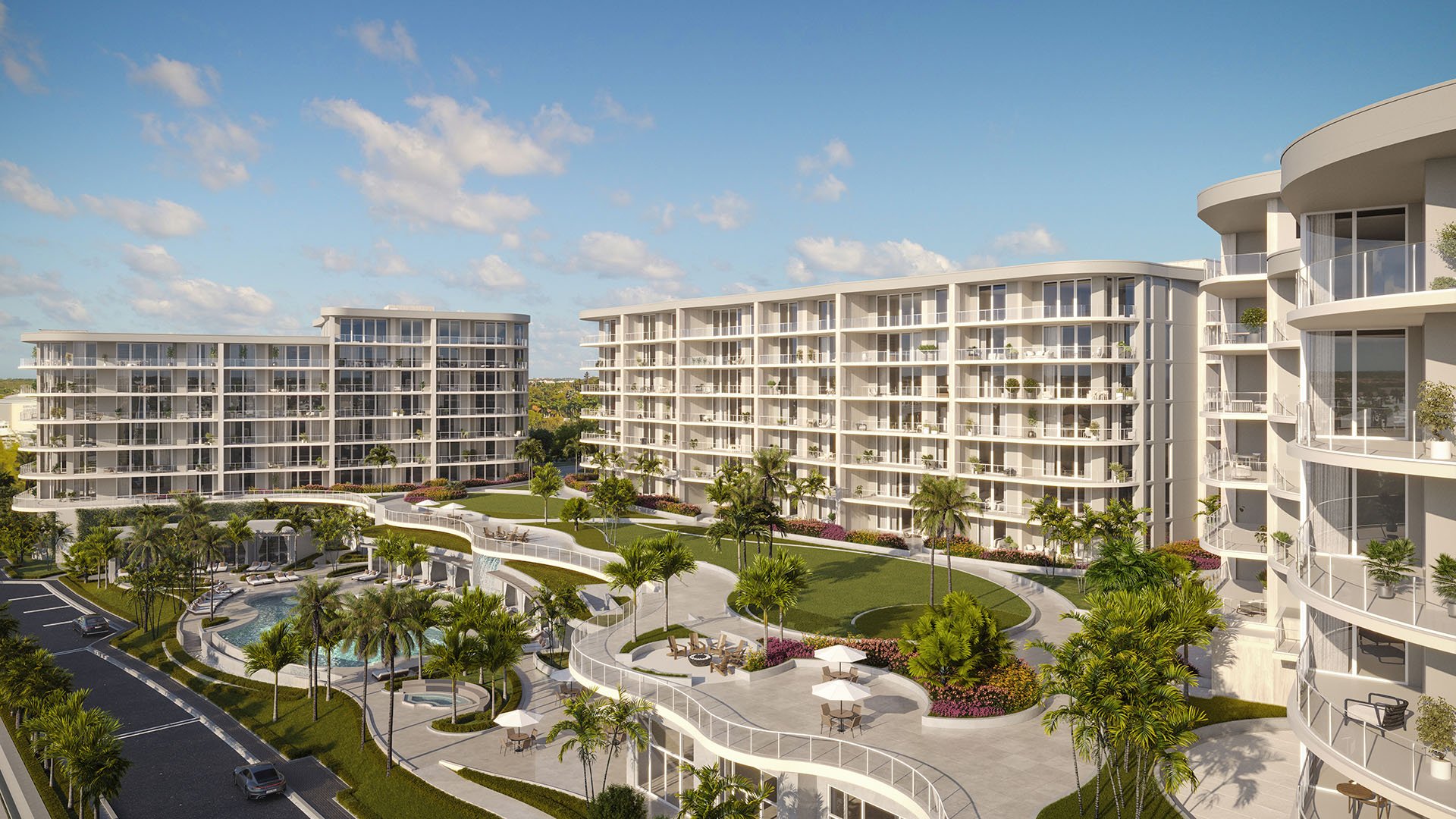
In Wellington luxury estate design, the residence is never the only subject. The horse, the landscape, the arrival sequence, the service court, the stable, the paddock, the pool garden, and the guest experience all compete for space. The most successful layouts do not force these elements into hierarchy. They choreograph them so daily equestrian life feels effortless while the home retains the poise expected of a Palm Beach County estate.
This is why equestrian community design is less about decoration than discipline. A formal motor court can feel gracious when it is separated from trailer circulation. A barn can be architecturally handsome without dominating the primary view. A terrace can open to broad lawn and sky while remaining screened from the working side of the property. In buyer shorthand, Palm Beach and West Palm Beach searches often overlap with gated-community, single-family-homes, pool, and terrace priorities, but the deeper question is whether the property plan supports both beauty and use.
The Wellington buyer typically evaluates a home through two lenses at once. One is residential, focused on privacy, entertaining, suite separation, finishes, wellness, and indoor-outdoor comfort. The other is operational, focused on how horses, grooms, veterinarians, farriers, deliveries, equipment, guests, and household staff move through the estate without conflict. When those paths are resolved, the property feels calm. When they are not, even a visually impressive estate can feel inefficient.
Wellington’s equestrian estate logic begins with circulation. The front arrival should establish privacy and ceremony, but the working arrival should be equally legible. Trailer access, barn deliveries, feed storage, maintenance movement, and service parking should not rely on the same visual path guests experience when arriving for dinner. A well-planned estate allows the household to entertain without exposing the machinery of equestrian life.
Barn placement is central. Too close to the main residence, and the working side of the property can intrude on views, quiet, and scent control. Too far away, and daily horse care becomes inconvenient. The strongest plans create a practical relationship between home and barn, often using landscape, allees, hedging, or garden rooms to mediate the distance. The barn becomes part of the architectural composition, not an afterthought at the edge of the site.
Paddock orientation also matters. Open land should feel generous, but it should not leave the residence exposed. Buyers often respond to framed views, not simply large views. A line of palms, clipped hedges, shade trees, or layered planting can make acreage feel composed rather than empty. The goal is to give the eye a sequence: arrival, architecture, garden, pasture, and sky.
Palm Beach layout thinking brings a different sensibility to the conversation. Where equestrian design begins with function, Palm Beach residential planning often begins with privacy, symmetry, garden sequence, and the art of arrival. The lesson for Wellington is not to imitate coastal living, but to borrow its refinement.
A Palm Beach-inspired plan pays close attention to thresholds. The gate should not reveal everything at once. The driveway should move through landscape with intention. The front door should have presence without theatrical excess. Interior rooms should connect to outdoor spaces in a way that feels natural for both quiet mornings and formal evenings. In this context, luxury is measured by control: what is revealed, what is concealed, and how gracefully the property transitions from public to private.
For equestrian buyers, this means practical spaces require the same design intelligence as formal ones. A wash area, tack room, feed room, equipment court, or staff entrance may be utilitarian, but it should still be placed and screened with care. The difference between a merely large estate and a truly resolved estate is often found in these invisible decisions.
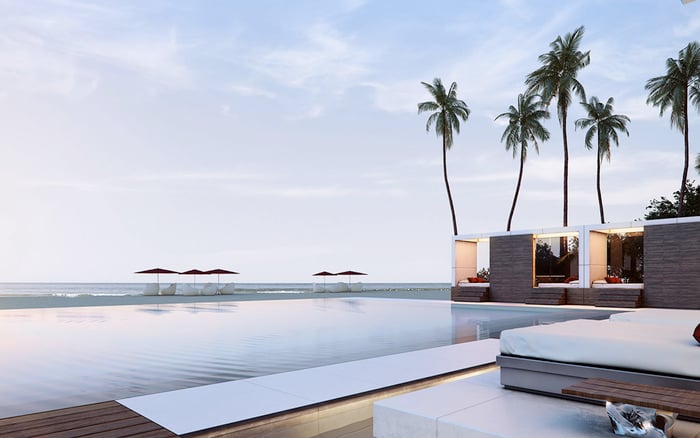
The outdoor room is where Wellington and Palm Beach sensibilities meet. A pool terrace can soften the transition between the residence and the grounds, giving the estate a center of leisure that remains distinct from the equestrian zone. Covered dining, shaded seating, summer kitchens, and garden paths allow the home to live outward without making the barn or paddocks feel like stage scenery.
The best pool placement is not simply the sunniest location. It should be considered in relation to privacy, prevailing views, guest circulation, evening entertaining, and the main interior rooms. A pool that sits too close to the working side of the property may feel compromised. A pool that is overly isolated may lose its role as the heart of resort-style living. Balance is everything.
Terraces deserve the same scrutiny. A narrow terrace may satisfy a floor plan, but it rarely supports the way luxury buyers actually live. A generous terrace can function as an outdoor salon, dining room, morning coffee setting, and sunset perch. When planned well, it becomes the visual and social hinge between architecture and landscape.
Before focusing on finishes, buyers should study the site plan. Where does the first impression happen? Can guests arrive without seeing service areas? Can staff move efficiently without crossing formal spaces? Is the barn convenient without overwhelming the residence? Are paddocks visible in a controlled and beautiful way? Does the pool feel private? Does the terrace have enough depth for real furniture, not just decorative seating?
Equestrian estates also require patience in evaluating sound, shade, drainage, lighting, and storage. These are not glamorous line items, but they define daily comfort. A property may photograph beautifully and still have awkward circulation. Conversely, a quieter estate with excellent planning may live far better than a more dramatic house that ignores operational flow.
Architectural style is ultimately secondary to proportion. Mediterranean, transitional, contemporary, and island-influenced homes can all succeed when the massing is calm, the landscape is layered, and the equestrian components are integrated. A buyer should ask whether the estate feels composed from every angle: the gate, the drive, the front door, the primary suite, the terrace, the pool, the barn, and the paddocks.
In South Florida estate planning, privacy is often discussed as a boundary condition, but in equestrian design it is also an internal one. The house needs privacy from the road, but it also needs privacy from its own working infrastructure. Guests should enjoy the romance of horses and open land without encountering every logistical detail that supports them.
This separation is not cold or rigid. It is a form of hospitality. It allows owners to host elegantly while the estate continues to operate. It allows riders to move through morning routines without disrupting the household. It allows staff to perform necessary work without visual friction. In a refined Wellington estate, discretion is built into the layout.
The Palm Beach influence reinforces this idea. True luxury is rarely the loudest gesture. It is a sequence of thoughtful decisions that makes a property feel serene, serviceable, and timeless. For the equestrian buyer, the most desirable estate is the one where beauty and work have been given equal respect.
What makes an equestrian estate layout successful? A successful layout separates guest, household, service, and equestrian circulation while keeping the residence, barn, paddocks, pool, and gardens visually connected.
Why is barn placement so important? Barn placement affects convenience, views, privacy, service access, and the overall sense of order across the property.
Should the barn be visible from the main house? It can be, but the view should feel composed and intentional rather than dominated by working infrastructure.
How does Palm Beach design influence Wellington estates? Palm Beach design brings attention to arrival, garden sequence, privacy, symmetry, and restrained outdoor living.
What should buyers review before finishes? Buyers should study the site plan, circulation routes, service access, outdoor room placement, and the relationship between the house and equestrian facilities.
Is a larger estate always better for equestrian living? Not necessarily. A well-organized property can live better than a larger estate with awkward circulation or poorly placed facilities.
Where should the pool be located? The pool should connect naturally to the main living areas while remaining private and visually separate from service or barn activity.
Why do terraces matter in estate design? Terraces shape how the home lives outdoors, supporting dining, entertaining, relaxation, and the transition to the landscape.
Can contemporary architecture work in an equestrian setting? Yes, if the massing, materials, landscape, and barn architecture are composed with restraint and consistency.
What is the best way to shortlist comparable options for touring? Start with location fit, delivery status, and daily lifestyle priorities, then compare stacks and elevations to validate views and privacy.
For a discreet conversation and a curated building-by-building shortlist, connect with MILLION.
If branded residences are on your mind — as a home or as an allocation — we would be glad to share what we are seeing, privately.
Begin a quiet conversation