A discreet buyer’s guide to evaluating South Florida residences through the lens of privacy, tower spacing, view corridors, terraces, and day-to-night exposure.
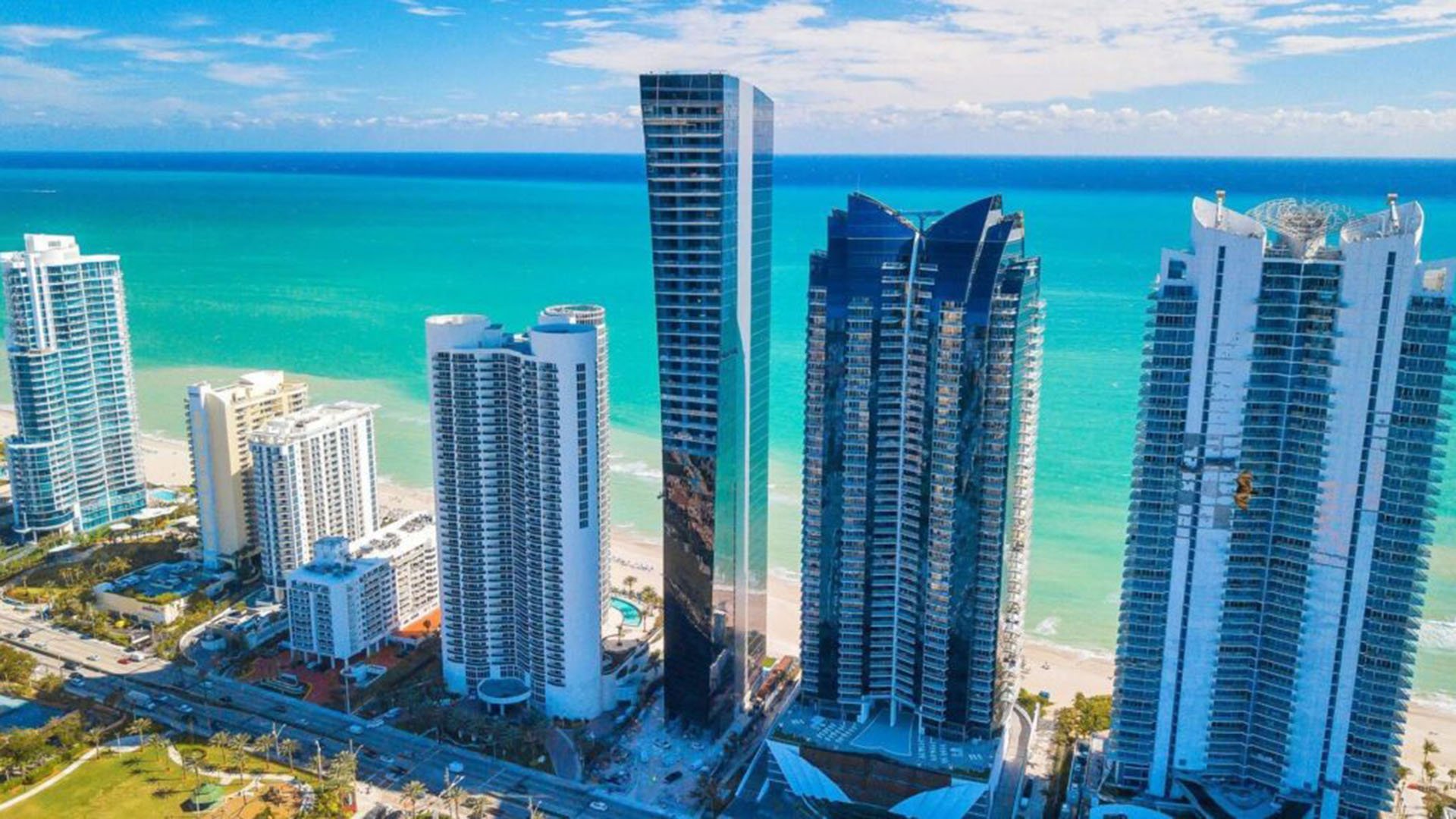
For a Zurich buyer considering Miami Beach or the broader South Florida coast, privacy is often more nuanced than any brochure suggests. A high floor can still feel exposed when its glass line faces another tower. A spectacular terrace can lose utility when a neighboring balcony looks directly across. A serene bedroom can surrender its discretion once evening interior lighting turns the residence into a visible stage.
The strongest privacy decisions begin with sightlines. Before finishes, services, or brand cachet, study what each room sees, what sees into it, and how that relationship shifts throughout the day. In South Florida, where water, light, and glass define much of the luxury market, the premium residence is not always the tallest or most dramatic. It is the one with the most controlled exposure.
A serious privacy review should be conducted room by room. The primary suite matters differently than a dining room. A family media room requires a different threshold than a formal salon used for entertaining. Kitchens, staff circulation, home offices, and children’s rooms all deserve separate attention.
Ask for floor plans, orientation, and a clear understanding of adjacent buildings. Then stand inside the residence, or, if it is pre-construction, study the plan as if you were already living there. Where would you place the bed? Which wall would hold art? Where would evening lighting be strongest? A private home is not simply one that looks outward beautifully. It is one that allows domestic life to unfold without constant awareness of the tower next door.
This is especially important in Miami Beach, where buyers may be drawn to the ocean, while the lived experience can depend on lateral exposure. A residence such as The Perigon Miami Beach should be evaluated not only for address and view, but for how its plan, glazing, and outdoor spaces mediate the relationship between private interiors and surrounding buildings.
A skyline photograph can be seductive, but privacy is judged at eye level. Neighboring towers are not abstractions. They have balconies, amenity decks, service corridors, elevators, roof terraces, and illuminated common areas. Each can shape the daily experience of a residence.
When reviewing a property, consider four layers. First, the direct line of sight from opposite windows. Second, the diagonal line from nearby terraces. Third, the vertical relationship between amenity decks and private rooms. Fourth, the night condition, when interior lighting can reverse the gaze and make a home more visible from outside.
In Brickell, the privacy conversation is often more urban. Buyers attracted to the neighborhood’s energy should be especially precise about orientation and elevation. At The Residences at 1428 Brickell, as with any sophisticated city residence, the question is not whether the setting is active. It is whether the home’s most personal spaces are shielded from the most active lines of view.
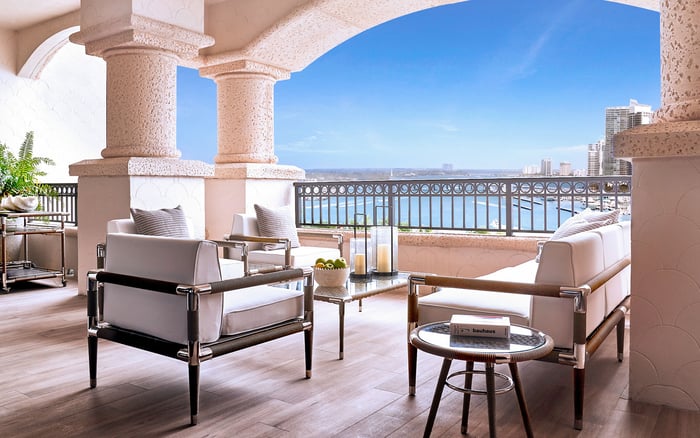
Many South Florida buyers imagine the terrace as the emotional center of the home. It is where breakfast, reading, sunset cocktails, and quiet conversation are meant to happen. Yet terraces are also the most exposed part of a residence.
Study the depth, railing transparency, neighboring balcony angles, and the relationship between outdoor furniture zones and adjacent buildings. A deep terrace can feel far more private than a shallow one, even on a lower floor, if it allows seating to sit back from the glass edge. Conversely, a dramatic wraparound terrace may need careful furniture placement if it faces a comparable outdoor space across a narrow corridor.
For buyers comparing Surfside, Bal Harbour, and Miami Beach, the difference between perceived openness and true privacy can be subtle. A project such as The Delmore Surfside belongs in a conversation where scale, frontage, and the choreography of outdoor living are reviewed with care, rather than treated as secondary to the view.
Each South Florida enclave carries a different privacy logic. Miami Beach offers glamour, beach proximity, and architectural range, but it rewards buyers who understand adjacency. Surfside can feel more residential in tone, yet individual exposure still depends on tower placement and unit orientation. Sunny Isles Beach often calls for close attention to vertical relationships, particularly where towers sit along the waterfront. Coconut Grove tends to attract buyers who want a softer, more garden-oriented rhythm, though privacy still depends on building massing and neighboring parcels.
Fisher Island is often discussed in the language of seclusion, but even there, the strongest purchase is the one that aligns household routine with outlook and arrival sequence. A buyer considering The Residences at Six Fisher Island should still review elevator approaches, terrace exposure, water-facing rooms, and how guest circulation relates to family privacy.
The lesson is simple: no neighborhood automatically solves privacy. Each one creates a different set of conditions. The right residence is the one whose conditions match the buyer’s tolerance for visibility.
Buyers arriving from Zurich often bring an instinct for order, discretion, and material calm. That sensibility can be a powerful advantage in South Florida, where the market can sometimes emphasize spectacle. Privacy-focused buyers should slow the process and evaluate how a home performs in ordinary moments: morning coffee, a confidential video call, a family dinner, a quiet evening with lights on.
The most elegant residence is rarely the one that shouts. It is the one that lets its owner decide when to be visible. Look for plans that separate entertaining zones from private suites, place service functions away from primary outlooks, and allow window treatments to enhance comfort without making the home feel sealed.
Before committing, ask three questions. Can the primary bedroom remain private without closing every shade? Can the terrace be used comfortably at different times of day? Can guests enjoy the view without compromising family areas? If the answer is yes, the residence is likely designed for real privacy rather than merely marketed with the word.
A South Florida home should offer beauty, light, water, and ease. But for the global buyer, the rarest luxury may be control: control over visibility, arrival, exposure, and the rhythm of private life.
Is a higher floor always more private in South Florida? Not always. Height helps, but orientation, neighboring towers, terraces, and amenity decks can matter more.
What is the first thing to check for privacy from neighboring towers? Begin with direct sightlines from bedrooms, living areas, terraces, and home offices. Then review diagonal and nighttime views.
Should I prioritize ocean views or privacy? The best residences balance both. A wide water view loses value if daily living spaces feel constantly exposed.
Are corner residences more private? They can be, but corner glass may also increase visibility. The answer depends on neighboring buildings and the angle of exposure.
How should I evaluate a terrace? Look at depth, railing transparency, furniture placement, and whether nearby balconies look directly into the seating area.
Does Miami Beach require a different privacy strategy than Brickell? Yes. Miami Beach often centers on coastal exposure, while Brickell requires a more urban analysis of tower adjacency.
Can window treatments solve privacy concerns? They can help, but they should not be the only solution. A strong residence feels private even before shades are closed.
What should I ask about pre-construction privacy? Ask for orientation, floor plans, neighboring building context, terrace relationships, and likely views from key rooms.
Is Fisher Island automatically private? It can offer a secluded setting, but each residence still needs a room-by-room and terrace-by-terrace privacy review.
When should privacy be evaluated in the buying process? Evaluate it before negotiating. Privacy is central to long-term comfort and should shape the shortlist from the beginning.
For a discreet conversation and a curated building-by-building shortlist, connect with MILLION.
If branded residences are on your mind — as a home or as an allocation — we would be glad to share what we are seeing, privately.
Begin a quiet conversation