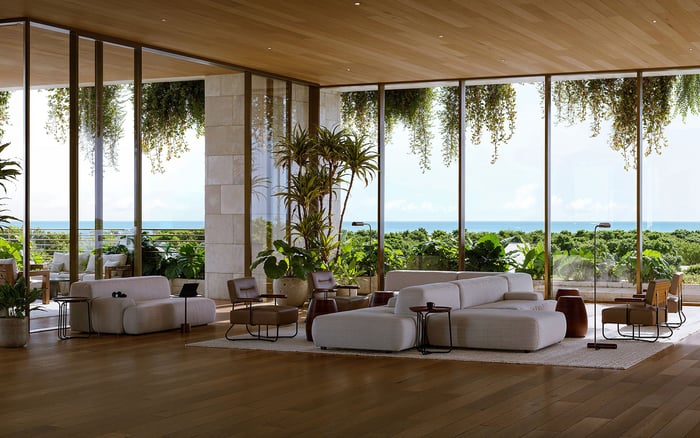
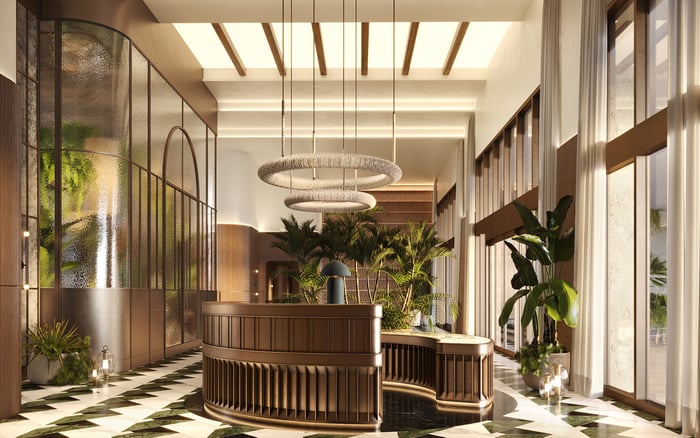
A buyer-focused editorial comparing how building culture influences the lived experience at Ziggurat Coconut Grove and The Residences at 1428 Brickell, from private amenity access to daily neighborhood rhythm.
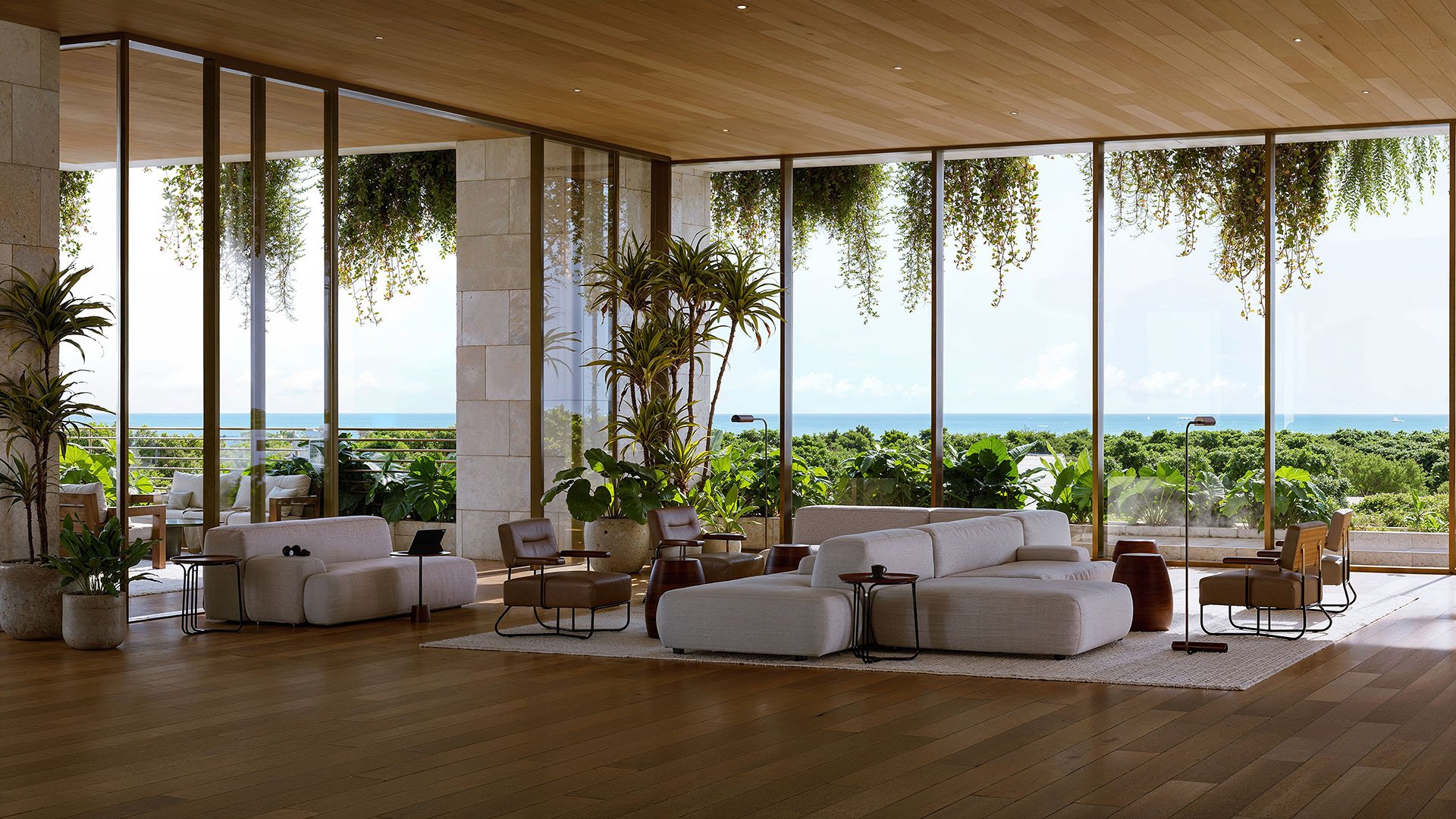
In South Florida’s luxury market, the most discerning buyers are no longer evaluating residences solely by view corridor, ceiling height, parking, or finish package. They are asking a more nuanced question: what kind of life does the building encourage? That question sits at the center of any serious comparison between Ziggurat Coconut Grove and The Residences at 1428 Brickell.
Both names signal distinct forms of urban prestige. One is tied to the deeply textured residential character of Coconut Grove. The other sits within Brickell’s elevated business, dining, and private-club energy. Even without unsupported specifics, the larger distinction is clear. Building culture is the choreography of access, privacy, movement, service, and social encounter. It determines whether amenities feel like a natural extension of the home or a separate destination that requires effort.
For a new-construction buyer comparing Brickell and Coconut Grove options, boutique is not merely a size category. It is a question of tempo. How many people will naturally cross paths? How formal is the arrival sequence? Does the amenity environment feel hushed, animated, residential, or club-like? These are not cosmetic considerations. They shape how a property is used every morning, every weekend, and every season.
The Residences at 1428 Brickell belongs to a neighborhood where vertical living is part of the cultural code. Brickell buyers often value precision: direct arrival, a well-managed elevator experience, privacy from the street, and amenities that can support a full day without leaving the building. In this setting, club access is not simply about having a room with a view. It is about how effortlessly a resident moves from home to wellness, work, dining, entertaining, or quiet retreat.
A Brickell residence has to answer the question of compression. The neighborhood is energetic, highly urban, and connected to Miami’s business and social life. A strong building culture can soften that intensity by creating layers of separation: a calm lobby, discreet resident circulation, private amenity zones, and spaces that feel reserved rather than performative. The best experience is not necessarily the loudest. It is the one that lets a resident control when to participate and when to withdraw.
For buyers considering The Residences at 1428 Brickell, the lifestyle lens should be practical. Imagine the workweek. How quickly can one transition from a private residence to a meeting, a workout, a quiet call, or an evening engagement? Does the building feel like a vertical club, a private residence, or a hybrid of both? In Brickell, the answer matters because neighborhood life is already abundant. The building must provide calm, not compete for attention.
Ziggurat Coconut Grove invites a different kind of analysis because Coconut Grove carries a more intimate residential identity. The Grove is experienced less as a grid of towers than as a layered neighborhood of streets, trees, dining, walking rituals, and a long-established sense of place. In that context, building culture should not overpower the neighborhood. It should translate the Grove’s rhythm into private residential form.
The most successful Coconut Grove buildings tend to be evaluated through a softer lens: arrival that feels personal, outdoor transitions that feel natural, amenities that complement daily walks and local dining, and common spaces that allow recognition without obligation. The social energy is not necessarily about spectacle. It is about continuity. A resident may want the building to feel connected to the neighborhood without sacrificing privacy.
For Ziggurat Coconut Grove, the buyer’s question becomes: does the building deepen the sense of living in the Grove, or does it simply occupy an address there? That distinction is essential. A residence in Coconut Grove should respect the area’s slower tempo. Club access may be meaningful, but not if it disrupts the neighborhood cadence that drew the buyer there in the first place.
Private amenities should be judged by frequency, friction, and feeling. Frequency asks how often a resident will actually use the amenity. Friction asks how easily it can be accessed without planning around peak times, guests, or complicated circulation. Feeling asks whether the space carries the emotional tone a buyer wants from home.
In Brickell, a private amenity suite may be most valuable when it creates a controlled environment above or away from the city’s intensity. The resident wants convenience, discretion, and the ability to move through a full day with minimal interruption. In Coconut Grove, the most valued amenity may be one that supports indoor-outdoor ease, quiet socializing, and a neighborhood-rooted lifestyle rather than a self-contained resort fantasy.
This is where many buyers misread luxury. A longer amenity list is not automatically better. A more coherent amenity culture is better. If the gym, pool, lounge, work areas, dining rooms, and arrival sequence serve the same lifestyle thesis, the building feels whole. If each space seems designed for a different buyer, the experience can feel fragmented, even at a high price point.
Neighborhood rhythm is not a soft variable. It affects how often the residence is occupied, how guests experience it, how relaxed owners feel returning home, and how confidently the property can be described in a future resale conversation. Brickell offers proximity to urban momentum. Coconut Grove offers a more village-like residential cadence. Neither is inherently superior. The better fit depends on the buyer’s actual life.
A principal-residence buyer may prioritize morning patterns, school or office routines, privacy, and the feeling of returning home at the end of the day. A second-home buyer may focus on ease of arrival, guest hosting, and whether the building delivers an immediate sense of place. An investor or long-horizon owner may be more focused on the clarity of the building’s identity. Properties with a legible lifestyle thesis are easier to understand and easier to position.
This is why Ziggurat Coconut Grove and The Residences at 1428 Brickell should not be reduced to a simple Grove-versus-Brickell comparison. They represent two different cultural propositions. One asks how a building can live within a mature, intimate neighborhood. The other asks how a building can refine the experience of vertical urban living.
The smartest approach is to tour for behavior, not just beauty. Watch how residents and staff move through the building. Notice whether common spaces feel natural at different times of day. Ask whether amenity access supports your routine or merely impresses during a showing. A great building should make life feel easier, more private, and more aligned with the surrounding neighborhood.
For South Florida’s ultra-premium buyer, the decision is increasingly about cultural fit. Brickell can offer the controlled sophistication of a vertical address with access to the city’s energy. Coconut Grove can offer a quieter, more textured relationship between home and neighborhood. The difference is not only architectural. It is behavioral.
Why does building culture matter in luxury real estate? It shapes how residents use amenities, move through the property, meet neighbors, and experience privacy every day.
How should buyers compare Ziggurat Coconut Grove and The Residences at 1428 Brickell? Buyers should compare the lifestyle each setting encourages rather than relying only on finishes, views, or amenity counts.
Is Brickell better for buyers who want energy and convenience? Brickell often suits buyers who value urban access, efficient daily movement, and a more vertical residential rhythm.
Is Coconut Grove better for buyers who want a quieter neighborhood feel? Coconut Grove often appeals to buyers who prefer a softer pace, local texture, and a more residential sense of place.
What should I look for when evaluating private amenities? Focus on how often you will use them, how easy they are to access, and whether they match your daily routine.
Does a longer amenity list always mean a better building? No. A coherent amenity culture usually matters more than the number of rooms or features presented during a tour.
How does club access influence everyday living? It can make the building feel more complete if access is discreet, intuitive, and aligned with how residents actually live.
Why is neighborhood rhythm important for resale? A clear match between building identity and neighborhood lifestyle can make a property easier to understand and position.
Should second-home buyers evaluate these buildings differently? Yes. They should prioritize arrival ease, guest experience, privacy, and how quickly the residence delivers a sense of place.
What is the best way to shortlist comparable options for touring? Start with location fit, delivery status, and daily lifestyle priorities, then compare stacks and elevations to validate views and privacy.
For a discreet conversation and a curated building-by-building shortlist, connect with MILLION.
If branded residences are on your mind — as a home or as an allocation — we would be glad to share what we are seeing, privately.
Begin a quiet conversation