Wynwood can be compelling for cash buyers when a building’s operating model protects time, privacy, liquidity and day-to-day ease, not merely when the purchase price looks attractive.
Cash buyers often approach Wynwood with an expectation of speed. Without financing contingencies, the decision can feel cleaner, more private and more strategic. Yet in a neighborhood defined by movement, restaurants, galleries, hospitality energy and constant visual stimulus, the real test is not simply whether a buyer can close. It is whether the building can operate with enough discipline to make ownership feel effortless.
That distinction matters in Wynwood because the value proposition is rarely about silence or seclusion in the traditional sense. It is about access, texture and cultural immediacy. A cash buyer may welcome a more urban rhythm, but that does not mean accepting operational looseness. The right building should translate the neighborhood’s energy into a polished residential experience: easy arrivals, predictable service, clear rules, secure circulation and a management culture that treats every detail as part of the asset.
In a buyer’s own underwriting notes, the categories may read: Wynwood, Investment, New-construction, Pre-construction, Short-term-rentals and Condo-hotel. Those labels are useful, but they are not the conclusion. They are the start of a more consequential question: does the building have the operational maturity to support the way the buyer intends to own?
Cash is powerful because it allows a buyer to negotiate from certainty. It may simplify timing, remove lender friction and create a more discreet path to contract. But the strongest cash buyers use that advantage to slow down the parts of diligence that matter most.
In Wynwood, that means reviewing the ownership structure, association framework, management approach, access controls, rental parameters, amenity rules and service standards with unusual care. A beautiful lobby cannot compensate for a confusing guest policy. A striking amenity deck cannot solve poor elevator management. A flexible rental program can be an asset, but only if the building has the staffing, technology and enforcement culture to keep the residential experience composed.
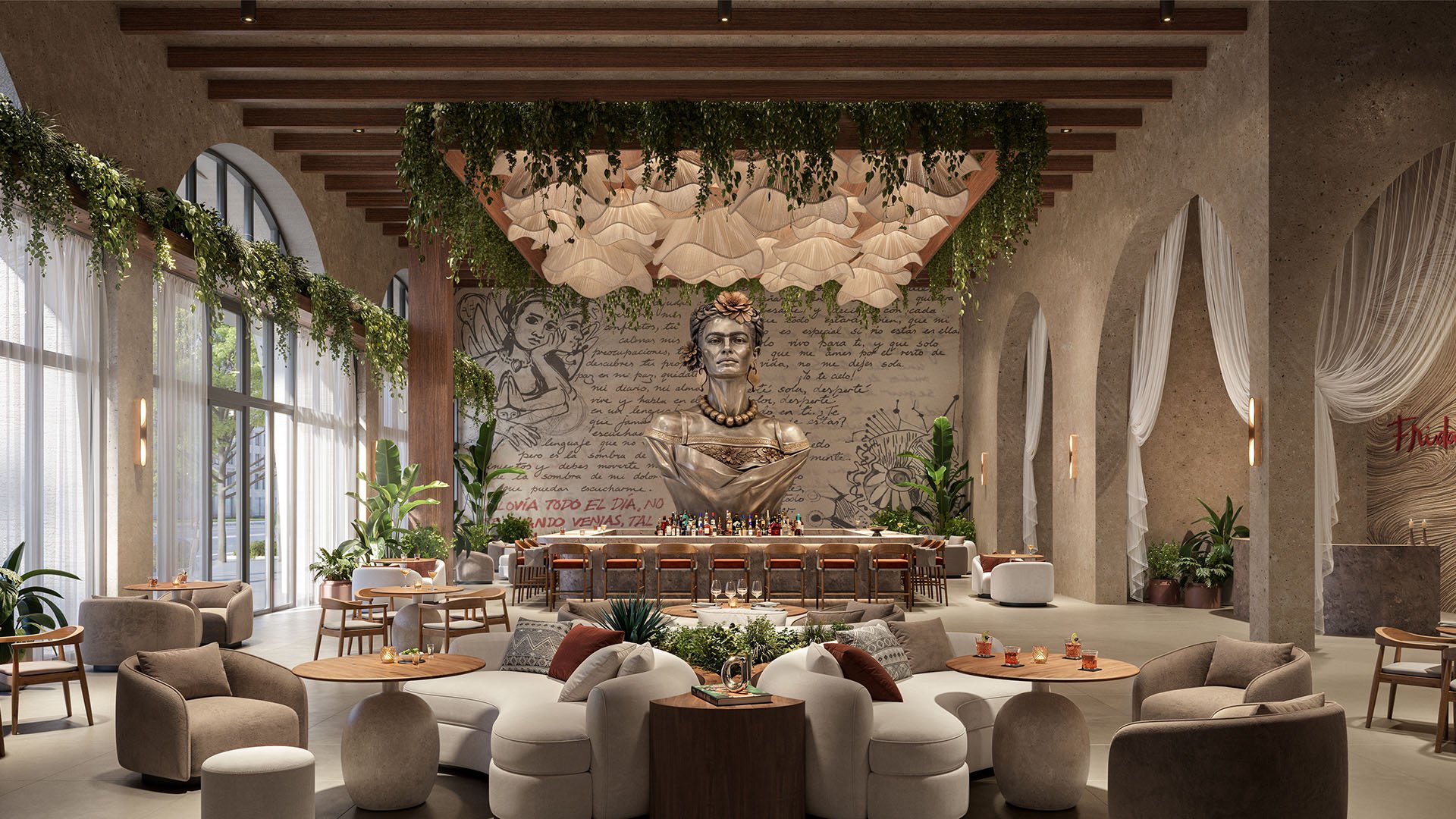
A cash buyer considering Frida Kahlo Wynwood Residences, for example, should not stop at the architecture, name recognition or location narrative. The sharper question is how the building intends to manage arrivals, stays, maintenance requests, owner communications and daily oversight. In an urban luxury setting, operations are not backstage. They are the product.
Not every cash buyer wants the same thing. One buyer may want a personal Miami base used several times a year. Another may want a pied-à-terre with rental optionality. Another may be comparing Wynwood with Edgewater, Brickell, the Design District or Miami Beach as part of a broader portfolio strategy. The right building is the one whose rules and staffing align with that intention.
For a pure second residence, privacy and predictability should lead the review. How are guests announced? How controlled is access after hours? How are packages, deliveries and vendors handled? Is the front desk a hospitality feature or merely a checkpoint? These details determine whether the home feels calm when the owner arrives after a long flight.
For an income-oriented buyer, rental permissions are only one layer. The stronger question is operational capacity. A building that allows rental activity without clear oversight can dilute the experience for owners and guests alike. A building that pairs flexibility with disciplined systems can be more resilient. The difference is not found in marketing language. It is found in rules, staffing, enforcement and the way the property is managed on an ordinary Tuesday.
A disciplined Wynwood search often improves when it is compared against nearby residential models. A buyer studying Miami Design Residences Midtown Miami may be evaluating a similar desire for urban access, design adjacency and lifestyle convenience. A buyer looking at Kempinski Residences Miami Design District may be considering how a more service-led residential environment frames daily ownership.
These comparisons are not about declaring one district superior. They are about calibrating tolerance. Wynwood’s strength is its immediacy. The Design District may appeal to buyers who want a more fashion and design-oriented rhythm. Midtown can offer practical urban connectivity. Edgewater may appeal to those who want water views and a more conventional residential skyline. Each location asks the same question in a different accent: does the building operate at the level the buyer expects?
That is why a cash buyer should avoid being seduced by neighborhood momentum alone. If the building is poorly run, the address cannot carry the experience indefinitely. If the building is well run, Wynwood’s creative intensity can become an advantage rather than a compromise.
Luxury buyers often ask about pools, fitness rooms, lounges and parking. Those matter. But in Wynwood, the hidden amenity is the service stack: the front desk, security posture, digital access, cleaning cadence, maintenance responsiveness, vendor protocol, package management, elevator reliability, trash handling and the tone of communication between management and owners.
These elements become especially important in buildings with rental flexibility or hospitality-style use. Guests need guidance. Owners need accountability. Staff need authority to enforce rules without making the property feel rigid. When the operating culture is clear, the building can feel both relaxed and controlled.
A buyer comparing Wynwood with Aria Reserve Miami may notice a different residential premise, with Edgewater often framed around waterfront living and larger-scale tower expectations. The comparison is useful because it forces the Wynwood buyer to identify what they are actually purchasing: a quieter residential retreat, a flexible urban asset, or a design-forward base with hospitality energy. Each answer requires a different operating model.
Cash buyers sometimes think first about acquisition and later about exit. In reality, the exit is shaped at purchase. The next buyer will care not only about the unit, view, finishes and neighborhood, but also about whether the building feels professionally controlled.
Resale confidence often comes from things that are not immediately photogenic. Are rules consistently enforced? Are common areas maintained with discipline? Is the association transparent and responsive? Do owners understand what is permitted and what is not? Is the building’s identity coherent, or is it trying to satisfy too many ownership types at once?
This is where Investment thinking becomes more refined. A cash buyer does not need to chase the most permissive building. The better target may be the building where permissions, service and governance are balanced. Flexibility without structure can feel fragile. Structure without flexibility can feel limiting. The premium position is often in the middle, where the property can serve modern use patterns without losing residential dignity.
Before going hard on a Wynwood purchase, the cash buyer should ask practical questions in plain language. Who manages the building day to day? What is the staffing plan? How are guests identified and controlled? What are the precise rental rules? How are violations handled? What technology supports access, reservations and owner communication? What costs are fixed, what costs may vary, and what services are optional?
The answers should feel consistent. If different representatives describe the rules differently, pause. If the building promises both total flexibility and complete privacy, ask how those ideas coexist. If the service model depends on future decisions that are not yet defined, price that uncertainty into the offer.
Wynwood can work beautifully for cash buyers, but only when the property is more than visually compelling. It must be operationally literate. In the best cases, the building understands that luxury is not just what the owner sees. It is what the owner never has to worry about.
Is Wynwood a good fit for cash buyers? It can be, especially for buyers who value urban energy and are prepared to evaluate the building’s management, rules and service model with discipline.
Why do building operations matter so much in Wynwood? Wynwood’s appeal is active and experiential, so access control, staffing, maintenance and guest flow have an outsized effect on daily ownership.
Should a cash buyer prioritize rental flexibility? Rental flexibility can be valuable, but only when the building has clear rules and the operational capacity to manage that flexibility well.
What is the biggest operational red flag? Inconsistent answers about access, rentals, staffing or enforcement suggest that the building experience may be less predictable than the marketing implies.
Does paying cash reduce due diligence needs? No. Cash may simplify the transaction, but it should make the buyer more focused on governance, service standards and long-term usability.
How should buyers compare Wynwood with nearby areas? Compare the lifestyle premise and the operating model together, rather than judging only by design, price or neighborhood energy.
Are short-term rental policies always positive for value? Not always. They can support flexibility, but without strong oversight they may weaken privacy, maintenance standards and owner confidence.
What should second-home buyers emphasize? They should focus on secure arrivals, simple owner communication, vendor management and a calm experience when the residence is not in use.
Can operations affect resale potential? Yes. Future buyers often respond to buildings that feel well governed, consistently maintained and clear about how residents and guests use the property.
What is the best way to shortlist comparable options for touring? Start with location fit, delivery status, and daily lifestyle priorities, then compare stacks and elevations to validate views and privacy.
If you'd like a private walkthrough and a curated shortlist, connect with MILLION.
If branded residences are on your mind — as a home or as an allocation — we would be glad to share what we are seeing, privately.
Begin a quiet conversation