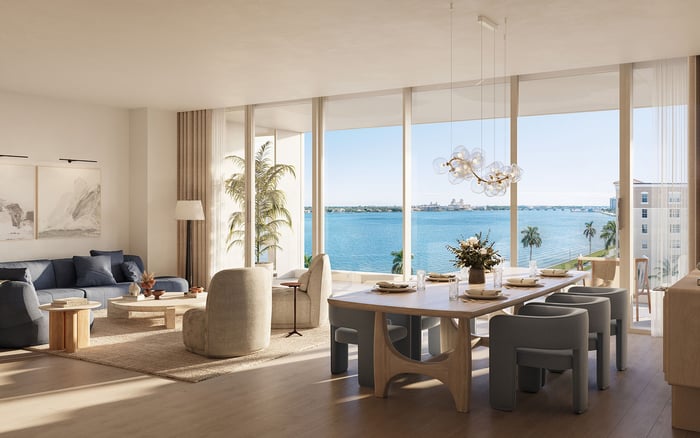
For Palm Beach Gardens buyers, the most consequential details may sit outside the residence itself. A disciplined review of insurance terms, flood-zone context, deductibles, association obligations, and closing conditions can reveal more about ownership than an immaculate finish schedule.

Stone, millwork, lighting, and landscape design shape the emotional first impression of a Palm Beach Gardens residence. Yet before assigning too much value to finishes, serious buyers should begin a second, less visible review: How would the property be insured? What risks might remain with the owner? And how could the site affect coverage and future decisions?
This is not an argument against design. It is an argument for sequence. Finishes can often be changed. The relationship among a property, its insurance options, its flood-zone context, and its deductible structure may be far less flexible. In a sophisticated acquisition, those questions belong near the beginning of diligence-not in the final days before closing.
The first useful step is to request a property-specific insurance review early enough to inform the purchase decision. A buyer should not assume that a polished presentation, recent construction, or prestigious address automatically resolves underwriting questions.
For a residence under consideration at The Ritz-Carlton Residences® Palm Beach Gardens, for example, diligence should distinguish the private residence from any obligations, limits, or deductibles associated with the broader property. The objective is not to prejudge the result, but to understand precisely which layer responds to each type of loss-and which costs could remain with the owner.
A practical buyer file should consolidate proposed policy terms, exclusions, deductibles, property documents, inspection findings, and lender conditions. Reviewing these items side by side can reveal gaps that remain invisible when each document is considered in isolation.
Premiums command attention because they are recurring expenses. Deductible language deserves equal scrutiny because it defines the portion of a covered event that may remain the owner’s responsibility before insurance responds.
Ask for each relevant deductible to be translated into a clear potential dollar obligation. Then assess whether that amount aligns with the buyer’s liquidity preferences, ownership structure, and tolerance for an unexpected capital call. A lower annual cost is not automatically the more attractive outcome if the owner retains substantially more risk.
This discipline belongs in every investment analysis. The appropriate question is not simply, “What does the policy cost?” It is, “What combination of premium, deductible, exclusions, limits, and uncovered exposure am I accepting?” That framing enables a more useful comparison between otherwise similar residences.
A flood-zone designation should prompt questions, not determine a conclusion in isolation. Buyers can ask their advisers to examine the property’s specific designation, available elevation information, drainage context, access routes, parking location, mechanical placement, and the scope of proposed coverage.
The same framework applies when considering Palm Beach Residences or Mandarin Oriental Residences, West Palm Beach. Each property warrants an individual review. A regional label or visual impression should never replace address-specific and building-specific diligence.
For waterfront property, the quality of the ownership decision often turns on how carefully the buyer separates view value from risk structure. Both matter, but they answer different questions.
A condominium buyer generally needs to understand both the residence-level policy under consideration and the association-level insurance framework described in the governing documents. The boundary between those layers is critical: interiors, improvements, personal property, common elements, temporary living costs, assessments, and deductibles should all be discussed with qualified advisers.
At Forté on Flagler West Palm Beach, as with any condominium considered by a Palm Beach buyer, the disciplined approach is to align the owner’s intended coverage with the property’s documents rather than rely on assumptions about responsibility.
New-construction buyers should apply the same rigor before closing. Marketing materials and finish schedules serve a different purpose from insurance proposals and association documents. One describes the intended experience; the other helps define the owner’s financial exposure.
A useful buyer’s guide worksheet can present each candidate property on a single page: proposed premium, deductible structure, significant exclusions, coverage limits, flood-related questions, association obligations, likely owner-retained costs, and unresolved conditions. Alongside those considerations, include traditional luxury criteria such as layout, privacy, outlook, service, and design quality.
The result is a more complete hierarchy. A residence with quieter finishes may offer the cleaner ownership profile. Another with exceptional interiors may remain compelling-but only after the buyer has priced its less visible obligations with intention.
Before making an offer, identify the insurance and flood questions that could affect appetite or terms. During diligence, obtain written proposals and have the relevant professionals review policy language, property documents, inspections, and financing requirements. Before closing, confirm that assumptions remain current and all conditions have been satisfied.
The most refined purchase is not merely the home that photographs beautifully. It is the home whose visible pleasures and retained risks are both understood.
Should insurance be reviewed before making an offer? An early review can identify questions that may influence price, terms, financing, or whether the buyer proceeds.
Is the annual premium enough to compare policies? No. Buyers should compare deductibles, limits, exclusions, conditions, and potential owner-retained costs as a whole.
Why does a wind deductible deserve special attention? It can represent a meaningful retained obligation, so buyers should request a clear dollar illustration for the property.
Does a flood-zone designation settle the risk question? No. It should be considered alongside property-specific elevation, drainage, access, building systems, and proposed coverage.
What should a condominium buyer review? Review the proposed residence policy alongside association insurance information and the governing documents.
Are association and owner policies interchangeable? They should not be assumed to cover the same property or obligations. Confirm the boundary with qualified advisers.
Do superior finishes offset insurance concerns? Finishes may support enjoyment and value, but they do not resolve unclear coverage, exclusions, or retained risk.
Should cash buyers conduct the same review? A cash purchase removes lender conditions, not the buyer’s need to understand potential ownership exposure.
Who should be involved in diligence? Depending on the transaction, buyers may consult insurance, legal, inspection, lending, tax, and real-estate professionals.
What belongs in the final comparison? Include design, location, service, premium, deductibles, exclusions, flood context, association obligations, and unresolved conditions.
To compare the best-fit options with clarity, connect with MILLION.
If branded residences are on your mind — as a home or as an allocation — we would be glad to share what we are seeing, privately.
Begin a quiet conversation