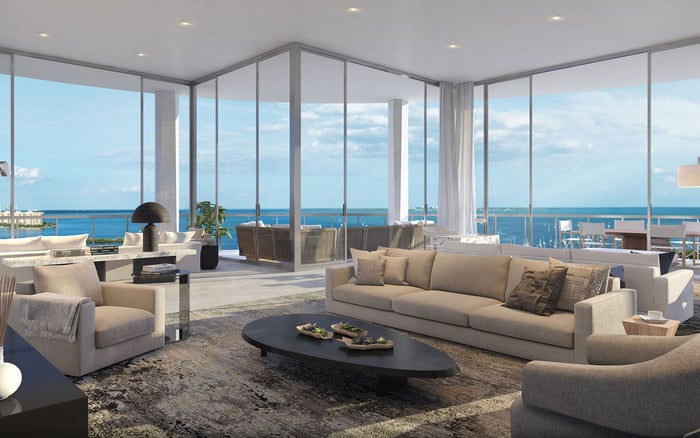
In Coconut Grove, sophisticated due diligence extends beyond price to the liability structure, household-employment exposures, caregiver circulation, and a home's capacity to support changing needs.

A Coconut Grove home can look exceptional on a conventional acquisition spreadsheet. Yet the asking price, negotiated basis, and immediate renovation allowance reveal only part of the commitment. For a household with substantial assets, employees, frequent guests, or evolving care needs, the more consequential questions may involve liability limits, staff protection, and whether the architecture can support life over decades.
This is where luxury due diligence becomes personal. A waterfront setting, generous floor plan, and beautifully detailed bath do not establish whether an umbrella policy fits the household's underlying coverage, whether a staff injury has an appropriate coverage path, or whether a caregiver can move safely between essential rooms. These issues belong beside title, inspection, and financing-not in a folder to be opened after closing.
The most enduring luxury is a home that protects both the household and the life unfolding within it.
An umbrella policy should be reviewed in relation to the homeowners, automobile, and other underlying coverage beneath it. Before closing, buyers can ask a licensed Florida insurance professional to examine required underlying limits, covered residences and vehicles, exclusions, named insureds, and the conditions that apply before excess coverage responds.
The review should reflect the household's actual circumstances rather than a generic coverage target. Assets, property use, vehicles, regular drivers, guests, business interests, and staff arrangements can all shape the questions that deserve attention. The objective is a coordinated review rather than a collection of policies considered in isolation.
Water exposure also deserves property-specific attention. Buyers can ask how homeowners, flood, excess-liability, and other relevant policies interact for the residence under consideration. Proximity to the bay or a canal should prompt careful questions, not assumptions about the scope or availability of coverage.
A housekeeper, nanny, caregiver, or household manager adds workplace and employment considerations to the ownership plan. Buyers should not assume that a homeowners or umbrella policy addresses every event involving a household employee.
A licensed insurance adviser can review potential injury coverage, employers-liability considerations, policy endorsements, employee classifications, and the effect of each person's working arrangement. A Florida employment professional can separately assess agreements, responsibilities, and transition issues when staff may remain after a sale.
Employment disputes require their own review. Buyers can ask whether dedicated employment-practices protection is appropriate for the household and what claims, exclusions, or conditions apply. Keeping workplace injury, employment practices, and personal liability as separate review categories helps prevent one policy from being treated as a universal solution.
Physical due diligence should test more than finishes and building systems. In a multistory Coconut Grove residence, circulation, lighting, room placement, and level changes can affect how comfortably a resident and caregiver use the home. A buyer can trace the route from arrival to the bedroom, bathroom, kitchen, and outdoor areas while considering whether assistance could be provided practically and discreetly.
A useful walkthrough can examine entry conditions, walkways, flooring, lighting, thresholds, circulation space, and transitions between levels. Bathrooms may merit additional attention, including the feasibility of future support features and maneuvering space. Buyers can also consider whether mobility or communication technology could be integrated without compromising the design.
Caregiver access does not require an institutional appearance. It is a planning discipline centered on sensible room relationships, fewer avoidable obstacles, and privacy for both resident and staff. When future accessibility is important, qualified design and construction professionals can help distinguish a straightforward adaptation from a structurally involved renovation.
Buyers considering Coconut Grove estates and single-family homes may also compare them with newer residential formats. In a condominium or managed residence, the review expands to unit layout, common-area circulation, building procedures, and the boundary between personal and association responsibilities.
That framework can guide due diligence at Four Seasons Residences Coconut Grove. A buyer can connect the residence and building format to personal insurance, automobiles, staff arrangements, and any property-specific water exposure rather than assuming that management resolves every household-level concern.
Floor-plan analysis at The Well Coconut Grove or The Lincoln Coconut Grove can use the same disciplined checklist: routes to bedrooms and baths, level transitions, privacy, and the practical movement of a caregiver. These are due-diligence questions, not assertions about the features or suitability of any particular project.
Before ownership changes, ask an experienced private-client insurance adviser to test the proposed coverage structure against the property's intended use. Review how the umbrella relates to each underlying policy, identify household-staff considerations, and evaluate water-related coverage separately. Written explanations of material limits, exclusions, and conditions can make the final decision easier to assess with the buyer's legal and financial advisers.
At the property, engage appropriate design and construction expertise when accessibility is material. Document entry conditions, bedroom and bathroom access, lighting, circulation, and level changes. Consider whether a future modification appears straightforward or potentially extensive. The findings may influence renovation priorities, timing, and long-term suitability even when they do not alter the negotiated price.
Ultimately, this is lifestyle planning expressed through contracts, coverage, employment arrangements, and architecture. A compelling acquisition is not merely one that clears inspection; it is one evaluated in relation to the household's assets, the people working inside it, and the possibility that personal needs may change.
For discreet guidance on evaluating Coconut Grove opportunities through a long-term ownership lens, connect with MILLION.
If branded residences are on your mind — as a home or as an allocation — we would be glad to share what we are seeing, privately.
Begin a quiet conversationIt can provide excess liability protection subject to its terms and the underlying policies. Buyers should review how it coordinates with the household's full insurance structure.
The appropriate limit depends on the household's assets, activities, residences, vehicles, and risk profile. A licensed insurance adviser can evaluate those factors together.
The umbrella may impose requirements or conditions related to the coverage beneath it. Reviewing the policies together can reveal limits, exclusions, or coordination issues.
Buyers should not assume that it does. Staff injuries, employment disputes, and personal liability should be examined as separate coverage questions.
Relevant insurance records, employment agreements, job classifications, and transition arrangements may merit review. Licensed Florida professionals should assess the household's specific situation.
It is coverage intended for certain employment-related claims, subject to its policy terms. Buyers should ask which claims, exclusions, and conditions apply.
Room placement, level changes, lighting, and circulation can affect how safely and discreetly assistance is provided. A walkthrough can identify potential obstacles before ownership changes.
A buyer can review entries, flooring, lighting, thresholds, circulation, bedroom and bathroom access, and transitions between levels. The feasibility of future adaptations also deserves attention.
Yes, but the analysis also considers common areas, building procedures, and the division of responsibility between the owner and association. Unit layout and caregiver access remain relevant.
Licensed Florida insurance and legal professionals can address coverage and employment questions. Qualified design and construction professionals can assess accessibility and potential modifications.