For luxury buyers with companion animals, The Residences at 1428 Brickell stands out less for a simple pet-friendly label than for how its Brickell location, residence scale, wellness orientation, and service culture can support everyday routines.
For high-end buyers, the most useful pet question is rarely limited to a yes-or-no policy. The stronger question is whether the building, residence, and neighborhood can make life with a companion animal feel natural, private, and well supported. That is where The Residences at 1428 Brickell earns attention.
The project sits in Miami’s Brickell neighborhood and is positioned around an urban lifestyle shaped by access to wellness, work, dining, and social routines. For buyers with dogs or other companion animals, that matters because daily life is built from repetition: morning walks, elevator transitions, grooming coordination, quiet time inside the residence, and a neighborhood that can absorb frequent outings without making them feel like a production.
This is why The Residences at 1428 Brickell belongs in a serious buyer’s guide conversation. Its appeal for pet-centered owners does not depend on an unverified amenity claim or a marketing label. It comes from the broader lifestyle framework: residence scale, wellness-oriented programming, service expectations, and a Brickell setting that supports walkable daily patterns.
Brickell is one of Miami’s most established mixed-use districts, with residential towers, offices, restaurants, retail, and services layered into a dense urban environment. For many luxury buyers, that density is precisely the point. It allows work, dining, wellness, and social life to sit close to home, reducing the need to turn every errand or outing into a drive.
For pet owners, walkability is not merely a convenience feature. It is part of the household operating system. Frequent outings are easier when the surrounding neighborhood offers multiple routes, varied streetscapes, and the ability to fold a walk into a coffee stop, a waterfront pause, or a quick service appointment.
Buyers comparing other interpretations of Brickell living may also study 2200 Brickell for a different residential feel, or ORA by Casa Tua Brickell for an urban lifestyle conversation tied closely to dining and social energy. The distinction for 1428 Brickell is its emphasis on fitting into Brickell while remaining oriented toward a refined residential rhythm.
Not all Brickell addresses feel the same once a dog leash, carrier, stroller, or service schedule enters the picture. A tower positioned in the middle of the district’s busiest commercial and transit intersections can deliver energy, but that energy may not always translate into easy daily pet routines.
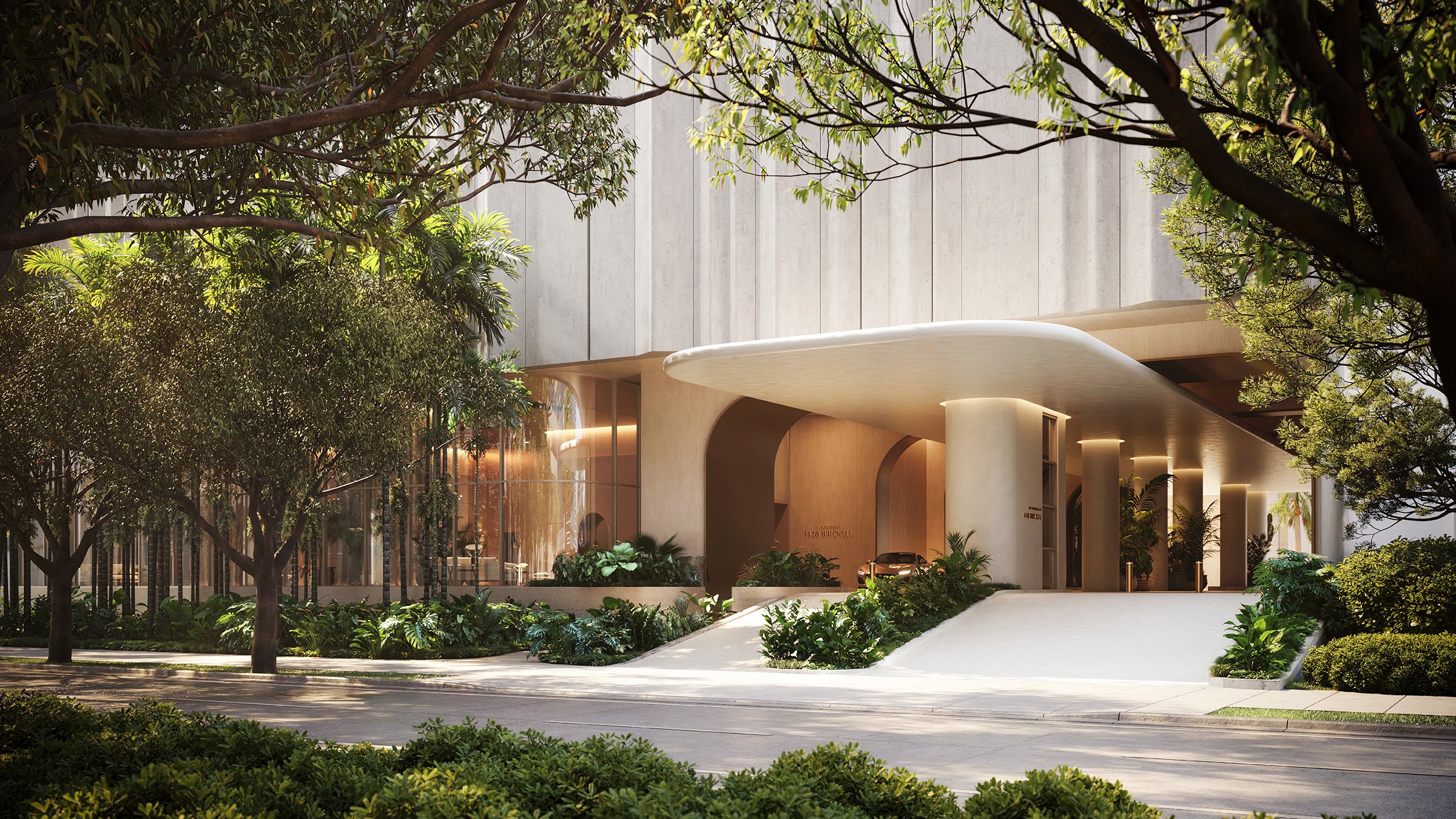
The Residences at 1428 Brickell is compelling because it allows buyers to consider Brickell through the lens of everyday movement, not only views or skyline presence. For pet-owning households, that means evaluating arrival sequence, elevator use, lobby circulation, walking routes, and the practical ease of stepping outside several times a day.
This is also why nearby residential comparisons should be made carefully. Una Residences Brickell and St. Regis® Residences Brickell may enter the same broader buyer conversation, but each project’s micro-location, arrival experience, and daily circulation should be evaluated through actual routines rather than postcard views alone.
Luxury pet ownership is not only about leaving the apartment. It is also about how comfortably the home accommodates life inside. Large-format residences are a key part of The Residences at 1428 Brickell’s lifestyle pitch, and that can matter for households with companion animals.
Space changes the feel of daily living. It can support clearer separation between entertaining areas and quiet zones, make storage for pet supplies less visible, and allow owners to create calm routines without compromising design. In a luxury condominium, that kind of flexibility becomes especially important because the home needs to perform beautifully for guests, work, wellness, and private family life.
For buyers moving from single-family homes, the question is often whether vertical living can still feel generous. Residence scale is part of that answer. It helps a pet-inclusive lifestyle feel considered rather than improvised.
Wellness-centric amenity programming is a major differentiator for buyers who want their own health routines to coexist with the rhythms of pet ownership. When a building is conceived around wellness, the lifestyle promise extends beyond a fitness room. It suggests a broader orientation toward daily balance, recovery, movement, and convenience.
For pet owners, that orientation can be especially valuable. A morning walk can connect naturally to a workout. A grooming appointment can be coordinated around a wellness block. A busy professional schedule can be managed with fewer tradeoffs when the residence and building are designed around routine rather than occasional indulgence.
The most compelling luxury buildings increasingly understand that service is not only ceremonial. It is operational. The Residences at 1428 Brickell’s service-oriented positioning supports the idea of seamless routines for busy owners, including the coordination of daily pet-related needs where permitted and available.
Even when a project feels ideal for pet-friendly luxury routines, due diligence remains essential. Buyers should not assume a specific pet policy, breed allowance, weight limit, dog run, grooming room, or pet spa unless those details are confirmed in the official materials.
The most relevant questions are practical. What are the official pet rules? Are there weight or breed restrictions? Which elevators and common areas apply to pets? Are there protocols for arrivals, deliveries, walkers, or service providers? Are grooming, walking, or related services available through the building or through approved outside providers?
This is not a minor checklist. For owners who travel often, work demanding schedules, or maintain multiple residences, these rules determine whether the building’s luxury promise translates into everyday ease.
The Residences at 1428 Brickell belongs on the shortlist because it addresses the full pet-centered lifestyle equation. It combines a Brickell address, walkable daily patterns, large-format residences, wellness programming, and service expectations that can support busy owners.
The case is strongest when buyers look beyond a label. Pet-friendly luxury is not only about permission. It is about whether a household can move through the day with discretion, comfort, and continuity. On that measure, 1428 Brickell offers a compelling framework for buyers who want the energy of Miami’s financial district without sacrificing the routines that make a residence feel truly livable.
Is The Residences at 1428 Brickell in Brickell? Yes. It is a luxury condominium project in Miami’s Brickell neighborhood.
Why is Brickell relevant for pet owners? Brickell supports walkable daily routines, which can be important for frequent outings with dogs and other companion animals.
Does the project have a verified pet policy? Buyers should verify the official pet policy directly before relying on any specific allowance, limit, or protocol.
Are large residences helpful for pet-owning households? Yes. Larger layouts can make it easier to separate quiet areas, storage, entertaining spaces, and everyday pet routines.
Why does wellness programming matter for pet-focused buyers? Wellness-oriented living can help owners align their own health routines with daily walking, recovery, and schedule management.
Should buyers evaluate the exact arrival sequence? Yes. Lobby circulation, elevator access, walking routes, and service-provider procedures can shape the daily experience for pet-owning households.
What neighborhood factor matters most for daily pet routines? Walkability is central because it affects how easily owners can handle multiple outings throughout the day.
Should buyers ask about elevator rules for pets? Yes. Elevator access, common-area protocols, and service-provider procedures should be reviewed before purchase.
Is this a lifestyle-driven purchase decision? Yes. The building’s appeal is tied to how wellness, service, walkability, and residence scale work together.
What is the best way to shortlist comparable options for touring? Start with location fit, delivery status, and daily lifestyle priorities, then compare stacks and elevations to validate views and privacy.
If you'd like a private walkthrough and a curated shortlist, connect with MILLION.
If branded residences are on your mind — as a home or as an allocation — we would be glad to share what we are seeing, privately.
Begin a quiet conversation.jpg&width=700&height=438&fit=cover)