At The Residences at 1428 Brickell, luminous interiors and collection care require separate scrutiny. A buyer-focused review of glazing, shading, artwork placement, and the measurements that matter before valuable works come home.
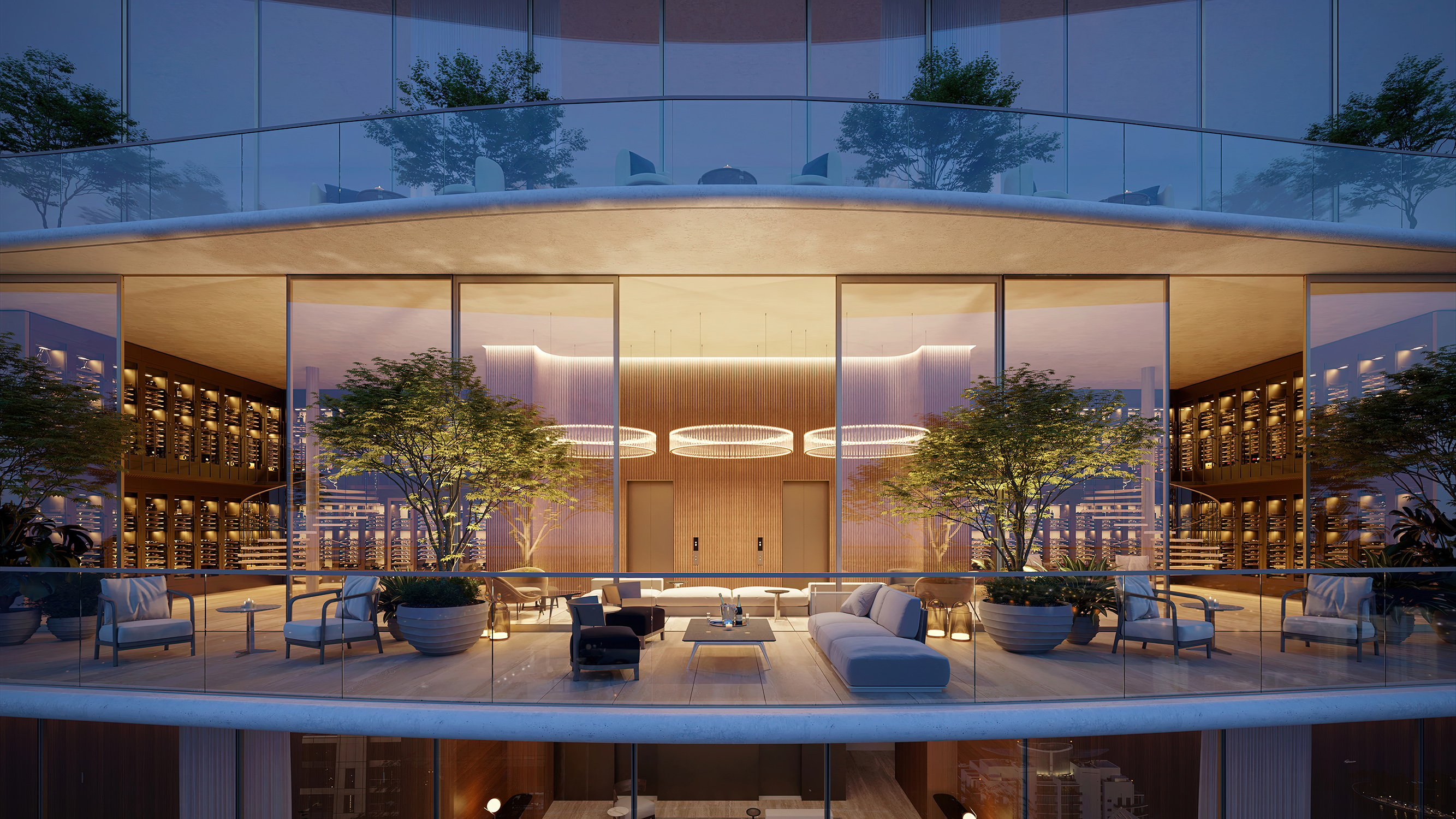
At The Residences at 1428 Brickell, daylight is central to the residential appeal: east-facing homes toward Biscayne Bay, floor-to-ceiling glass, and terraces connecting interiors with expansive water views. For an art collector, that openness introduces a second design brief. The apartment must balance the pleasure of living with light with the discipline of protecting objects from it.
This is a due-diligence question, not evidence of defective glazing or an inability to accommodate valuable art. Residence-specific glare limits and museum-grade display conditions remain to be verified. Equally, an undisclosed feature should not be treated as absent. The prudent approach is to verify the exact home, its glazing, and its proposed display walls before making conservation assumptions.
Daylight quality, visual comfort, and artwork protection are related, but not interchangeable. A beautifully illuminated room may still require a more controlled setting for a watercolor or textile.
The planned west-facing “Solar Backbone” comprises approximately 500 photovoltaic-integrated windows and nearly 20,000 square feet of energy-producing glass. It is intended to partially power the tower, not make the building entirely solar-powered.
That energy function does not establish conservation-grade UV filtration or artwork-protection performance. Nor does the east-facing orientation described for the residences mean every room faces only east, or every residential window uses the photovoltaic glazing associated with the west façade. These are distinct questions requiring distinct specifications.
Before purchase, request the glazing schedule for the actual residence, including any orientation-specific variations. Ask for UV transmission, visible-light transmission, solar heat-gain coefficient, U-factor, and reflectance. Have the design and conservation team interpret these specifications together rather than treating a single performance number as proof of suitability.
For a buyer also considering Una Residences Brickell, the same document-led comparison is useful: evaluate the proposed home and collection together, without assuming equivalent glazing or art-display conditions between projects.
“Museum-grade” should be treated as a performance brief requiring verification, not a quality implied by architecture or price. Materials respond differently to light and require different conservation limits.
Especially sensitive works, including textiles, watercolors, prints, drawings, and manuscripts, have a recommended maximum of 50 lux. Oil and tempera paintings have a 200-lux benchmark, while less-sensitive materials generally should not exceed 300 lux. These are material-specific reference points, not project certifications or promises of damage-free display.
For watercolors and other highly sensitive dye- or lake-based paints, a further benchmark is a maximum UV level of 30 microwatts per lumen alongside the 50-lux limit. For oil, tempera, and acrylic paintings, the benchmark permits up to 200 lux, but direct daylight on paintings should still be avoided.
The distinction matters when assigning walls. A suitable location for one object may be inappropriate for another. Ask a conservator to identify sensitive works first, then establish placement, lighting, and exposure requirements for each. Do not apply the highest permissible figure across the entire collection.
Light-filled interiors do not establish how comfortable a particular seating position will be, or whether sunlight will reach an intended art wall. Request seasonal sun-path and glare studies for the selected residence rather than relying on a general orientation label.
Shutters, curtains, and blinds are established tools for blocking window glare. Before assuming the delivered home includes the controls your collection needs, obtain written confirmation of shade inclusion, blackout capability, control zones, and maintenance responsibilities. Ask how the proposed system will serve both occupied rooms and periods when the residence is unused.
Treat these questions as part of the interior architecture, not as decorative decisions deferred until installation. The test is whether the specified controls can support the intended uses and artwork locations.
If Cipriani Residences Brickell is also on the shortlist, carry the same shading questions into that review. A consistent brief makes comparisons more meaningful without presuming either project's performance.
Ordinary glass does not provide sufficient assurance against UVA in the 315-400 nanometer range. That general principle does not establish the performance of the glazing specified at 1428 Brickell; it explains why the actual product data matters.
UV-absorbing window films and plastic secondary glazing are potential protective measures. Evaluate them with glazing and conservation specialists rather than assuming they are necessary, permitted, or appropriate for this residence. Establish the installed glass performance first, then assess any additional treatment.
Even effective UV filtration does not eliminate fading. Visible light can damage sensitive materials, and light damage is cumulative and irreversible. A brief measurement of acceptable illuminance cannot substitute for an exposure plan.
The buyer's brief should address both how much light reaches an object and for how long. Low-light display locations and placement outside direct window-light paths are especially important when UV filtration is absent. For paintings, keep direct daylight off the work even when other lighting targets appear satisfied.
Before committing to a display plan, assemble the residence drawings, glazing specifications, shading details, and artwork inventory for a conservator's review. The goal is a coordinated arrangement of objects, daylight controls, and artificial lighting-not separate decisions that conflict after move-in.
Once the relevant glazing, shades, and lighting are installed, verify conditions with calibrated lux and UV measurements at proposed artwork locations. Include temperature and humidity monitoring in the assessment. Testing should address the conditions the works will actually experience, not merely a convenient measurement elsewhere in the room.
Where seasonal studies indicate changing exposure, ask the team how those variations will be checked and managed. Document the resulting settings and responsibilities so that conservation does not depend on memory or a single household routine.
The purchasing decision need not be a choice between a luminous Brickell residence and a serious collection. It should turn on whether the specific apartment can deliver the controls, placement options, and verified conditions the intended works require.
A credible plan preserves daylight where it enriches daily life while managing exposure where art demands restraint. The unresolved risk is not glass itself, but accepting broad architectural promises in place of residence-specific evidence. Resolve that distinction before the collection arrives.
For a discreet discussion of your South Florida residential search, connect with MILLION.
If branded residences are on your mind — as a home or as an allocation — we would be glad to share what we are seeing, privately.
Begin a quiet conversationEach residence is described as facing east toward Biscayne Bay. That does not establish that every room or window faces only east.
The planned photovoltaic façade is intended to generate energy. Its description does not establish conservation-grade UV filtration or artwork-protection performance.
The photovoltaic façade is intended to partially power the tower, not supply all of its electricity.
Request the exact residence's glazing schedule, UV and visible-light transmission, solar heat-gain coefficient, U-factor, and reflectance. Confirm any orientation-specific variations.
A maximum of 50 lux is a conservation benchmark for watercolors and other especially light-sensitive materials. Highly sensitive dye- or lake-based paints also carry a maximum UV benchmark of 30 microwatts per lumen.
Conservation guidance advises against direct daylight on paintings, even though oil and tempera paintings have a 200-lux benchmark. Suitability should be assessed for the individual work.
No. Visible light can still damage sensitive materials, so illuminance and exposure duration also require control.
The information presented does not establish shade inclusion or blackout capability. Request written confirmation of those features, control zones, and maintenance responsibilities.
Use calibrated lux and UV measurements at intended artwork locations after glazing, shades, and lighting are installed. Include temperature and humidity monitoring in the assessment.
No. It identifies residence-specific verification needs, not a glazing defect or a conclusion that valuable art cannot be accommodated.