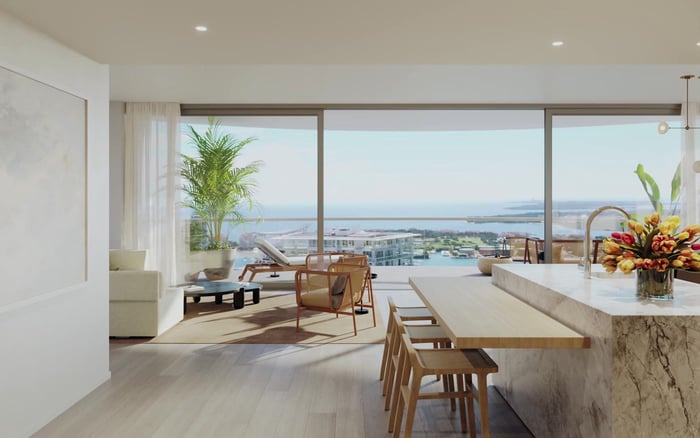
For Toronto buyers, South Beach’s most persuasive luxury is operational ease. Staffed arrivals, controlled access, concierge support and managed beachfront amenities can make an occasional residence simpler to use from afar, provided buyers carefully verify costs, rules and service scope.
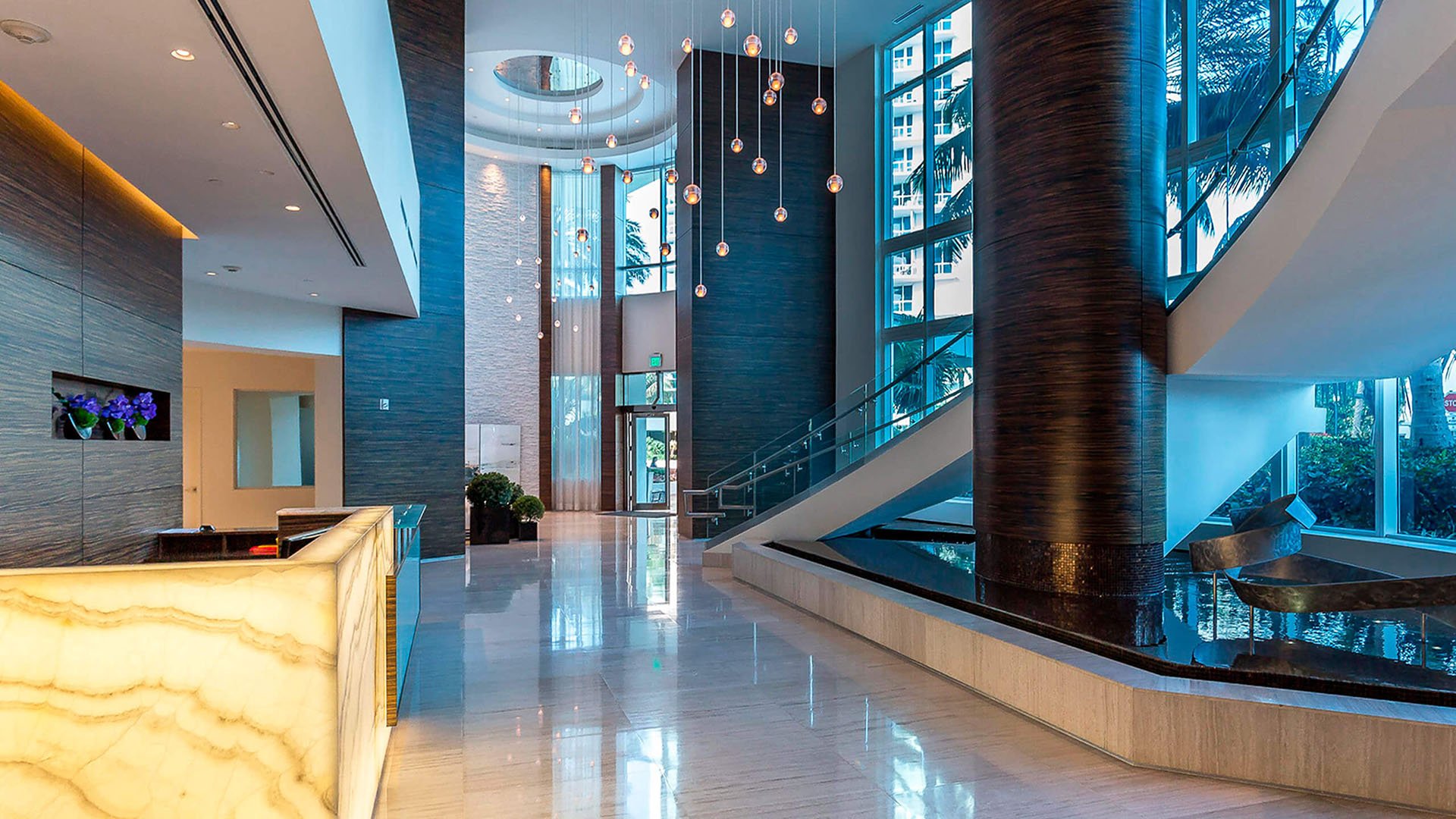
For a Toronto buyer, South Beach’s appeal extends beyond winter light, the Atlantic, and proximity to restaurants and cultural life. The more consequential advantage is a residence that can be prepared, secured, and serviced without requiring the owner to manage every detail personally.
This is the practical meaning of no-frictions ownership. It does not imply freedom from costs, decisions, or condominium obligations. Rather, it describes a professionally staffed setting where arrivals, parking, access, beach logistics, reservations, and routine lifestyle requests can be handled within a defined service structure.
That distinction matters for second-home ownership. A private house may offer autonomy, but it can also require a separate network for security, maintenance, deliveries, and pre-arrival preparation. A resort-style condominium concentrates much of that operational responsibility within the property, creating a more credible lock-and-leave proposition.
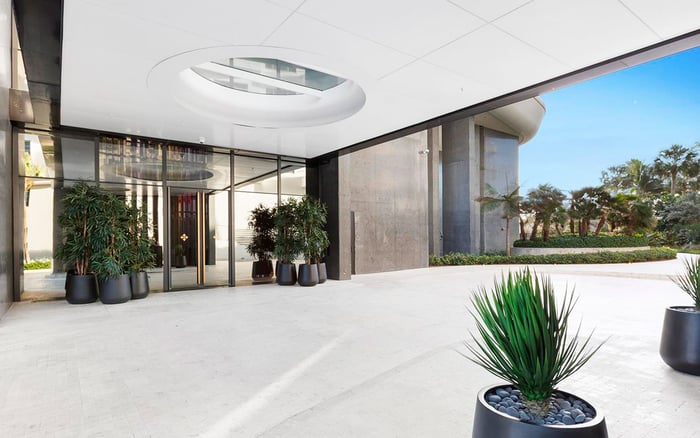
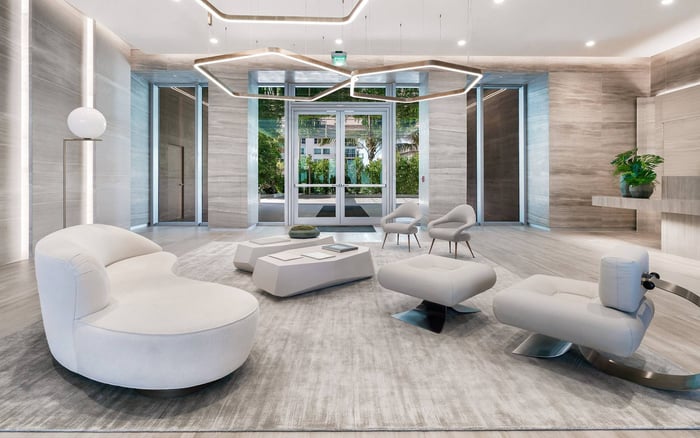
In South Beach, discretion is shaped as much by circulation and staffing as by the residence itself. Gated entry, an attended porte-cochère, 24-hour security, controlled elevators, and private or semi-private foyers reduce the number of unsupervised transitions between curb and home.
At Continuum on South Beach, 24-hour concierge and valet service are paired with manned gated security. Smart elevators open to private or semi-private residential foyers-an especially relevant feature for owners seeking to minimize exposure to shared corridors. Its 12-acre setting adds another layer of separation, with a private beach club, pools, tennis courts, a gym, spa, and on-site dining contained within the property.
This is why the South of Fifth market holds particular interest for privacy-minded purchasers. The central question is not how many amenities appear in a brochure, but whether the path through them remains controlled, attended, and appropriately reserved for residents.
The most valuable services are often the least theatrical. A doorman receiving an owner after a late arrival, valet staff managing the car, a concierge arranging dining, and a beach team setting out chairs, umbrellas, and towels all remove small but recurring points of friction.
The Ritz-Carlton Residences® South Beach illustrates the hospitality-led model with a 24-hour doorman and concierge, valet service, and an attended porte-cochère. Its offering also includes beach concierge, business assistance, airline and restaurant reservations, and move-in coordination. A residents-only beach club provides dedicated cabana service, lounges, and umbrellas. For an owner based elsewhere, these functions can matter more than an oversized amenity count because they address practical needs before and during each stay.
W South Beach offers another expression of the proposition through a condo-hotel structure, combining 24-hour security, multilingual concierge staff, valet parking, and private beach access. Its hotel infrastructure provides an established operational layer absent from an unstaffed vacation property.
Not every buyer wants the same balance of energy, privacy, and formality. One Ocean at 1 Collins Avenue combines a private beach club, infinity-edge pool, landscaped Zen garden, outdoor clubhouse, and food service. Residents can also submit service requests through an iPad, supplementing 24-hour concierge and valet support with a low-touch channel suited to occasional use.
The planned Shore Club Private Collections Miami Beach presents a branded-residences approach, with Auberge-managed residential service and an on-site 75-key Auberge hotel. Planned operations include 24-hour concierge, valet and security, a private oceanfront beach club, and residents’ lounges. For purchasers considering new offerings, the key is to distinguish proposed services from those currently operating and to confirm the final condominium framework.
Across Miami Beach, these models range from established residential resorts to condo-hotels and hospitality-managed private collections. The right choice depends on how frequently an owner expects to visit, how much personal coordination feels acceptable, and whether a lively hotel environment or a more insulated residential rhythm is preferred.
Operational simplicity should be tested, not assumed. Buyers should review current condominium documents and verify the precise scope of concierge, valet, security, beach, housekeeping, delivery, and move-in services. It is equally important to determine which services are included in monthly charges and which are billed separately.
Residence-use restrictions, reserves, insurance exposure, access protocols, guest policies, and staffing coverage deserve equal attention. A polished arrival experience is only one dimension of ownership; the financial and governance structure must also align with the buyer’s expectations.
For Toronto purchasers, cross-border tax, estate, financing, and legal questions require advice from appropriately qualified professionals. Building staff can streamline the residential experience, but they do not replace the owner’s advisers or eliminate personal responsibilities. The strongest acquisition is one in which hospitality, privacy, and due diligence reinforce one another.
What does no-frictions ownership mean in South Beach? It refers to professional staffing and bundled resident services that reduce routine coordination. It does not mean ownership is free of costs or responsibilities.
Which privacy features deserve the most attention? Prioritize gated security, attended arrivals, controlled elevators, private or semi-private foyers, and residents-only spaces.
Why can a staffed condominium suit a Toronto owner? Concierge, valet, security, and beach teams can manage practical needs while the owner is away and simplify each return.
Are branded residences automatically more private? No. Hospitality management can create a structured service environment, but buyers should verify circulation, access controls, and guest policies.
How does a condo-hotel differ from a conventional condominium? A condo-hotel combines residential ownership with hotel infrastructure. Buyers should review residence-use rules, service arrangements, and applicable charges.
Which beach services can reduce day-to-day effort? Chair, umbrella, towel, cabana, dining, and beach concierge services can eliminate much of the setup associated with an occasional stay.
Should buyers rely on published amenity descriptions? No. Service scope and availability should be confirmed through current condominium documents and direct diligence.
What recurring costs require scrutiny? Review monthly fees, reserves, insurance exposure, and charges for optional or à la carte services before purchasing.
Does lock-and-leave mean a residence needs no oversight? No. It signals stronger operational support, but owners still retain financial, legal, and maintenance responsibilities.
What should guide the final building choice? Match the property’s privacy, staffing model, atmosphere, rules, and cost structure to the way the residence will actually be used.
For a tailored shortlist and next-step guidance, connect with MILLION.
If branded residences are on your mind — as a home or as an allocation — we would be glad to share what we are seeing, privately.
Begin a quiet conversation