Five full-service residences merit a closer look, but their service credentials are not proof of financial resilience. This buyer-focused shortlist separates lifestyle appeal from the reserve, insurance, inspection, and assessment documentation needed to evaluate ownership risk.

For a Miami Beach buyer, effortless ownership means more than attentive service and beautifully maintained common spaces. It also means understanding how the association funds major repairs, what its insurance covers, and whether tomorrow's capital obligations are visible today. A residence's lifestyle promise should hold up to a careful review of its financial documents.
The five properties below form a provisional due-diligence shortlist, not a verified ranking of reserve strength, insurance adequacy, or assessment risk. None should be treated as assessment-free, fully funded, or adequately insured without current association-level evidence. The order identifies service-oriented candidates for closer examination; it does not establish which association has the strongest balance sheet.
For buyers considering Faena House Miami Beach, that distinction is essential: a branded, full-service oceanfront profile warrants attention, but cannot replace a reserve schedule. The same discipline applies at every price point.
1. Faena House - 3315 Collins Avenue, Mid-Beach
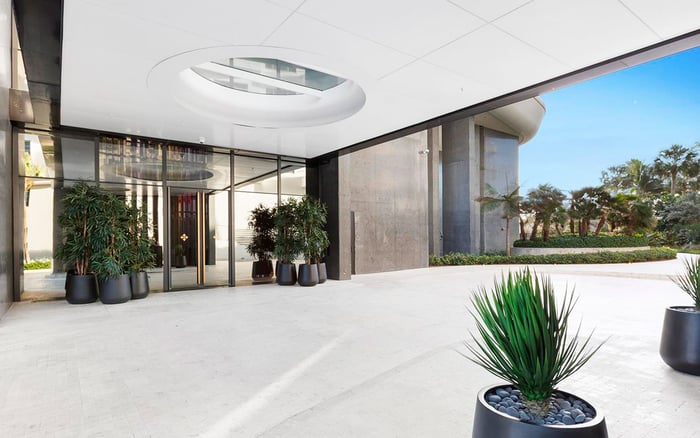
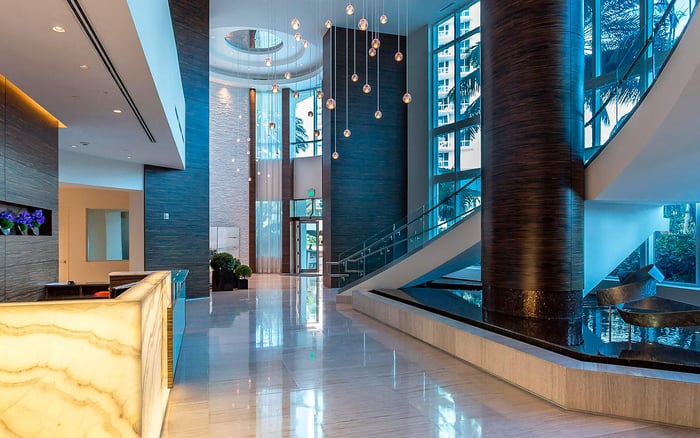
Faena House leads this provisional shortlist for its newer, branded, full-service oceanfront profile. Its extensive services appeal to buyers seeking a highly managed residential experience in Miami Beach.
The financial decision remains separate. Review the current budget, reserve balances, funding schedule, structural records, and assessment disclosures before treating the service model as evidence of capital preparedness. A newer profile alone does not establish limited exposure to future assessments.
2. The Ritz-Carlton Residences, Miami Beach - 4701 Meridian Avenue
Branded residential operations and extensive services make this a candidate for buyers who value operational depth. Its place on the shortlist reflects those services, not a verified comparison of association finances.
The central question is whether recurring operating costs and capital funding are clearly distinguished. Request insurance records alongside financial statements, and evaluate both independently of the brand. Hospitality-style operations may explain high dues without demonstrating strong reserves.
3. Carillon Miami Wellness Resort - 6801 Collins Avenue, North Beach
Carillon's extensive wellness and hospitality offering suits buyers drawn to a resort-service lifestyle. Its substantial amenities and service-intensive character make it a relevant candidate for these ownership priorities.
Those lifestyle priorities also make budget clarity essential. Examine the distinction between operating expenses and scheduled capital contributions, and request reserve information for shared amenities. High dues and an extensive wellness offering cannot substitute for documented repair funding.
4. Continuum - South Beach, South of Fifth
Continuum remains an established full-service candidate for buyers focused on South of Fifth. Its inclusion is provisional; this shortlist makes no building-specific finding about reserve sufficiency, insurance quality, or assessment exposure.
Prioritize structural inspection history, reserve documentation, and the funding status of identified work. An established residential profile calls for deeper document review, not an assumption that future capital requirements have already been resolved.
5. Apogee South Beach - South of Fifth
Apogee remains a highly serviced residential candidate, conditional on satisfactory financial, insurance, inspection, and assessment disclosures. Its appeal belongs in the lifestyle comparison; its financial resilience must be established separately.
Request the complete association file before drawing conclusions about ownership predictability. This position does not indicate weaker finances than the preceding properties, just as their higher positions do not establish superior financial condition.
At service-intensive residences, monthly dues can reflect hospitality-style operations. Routine cleaning and day-to-day staffing are operating expenses, not the intended use of capital reserves. Buyers should resist two easy conclusions: that high dues prove financial strength, or that low dues necessarily represent better value.
When evaluating The Ritz-Carlton Residences® Miami Beach, ask to see operating costs and capital contributions separately. The question is not simply how much owners pay, but how that payment supports current service and future work.
Reserves support major repairs and replacements, including roofs, elevators, façades, waterproofing, parking structures, pool decks, and central HVAC. A useful review connects each relevant component to its funding needs. Low dues can conceal inadequate contributions or deferred maintenance, leaving an apparently attractive carrying cost vulnerable to later increases.
A Structural Integrity Reserve Study, or SIRS, evaluates major structural and life-safety components and establishes funding needs for future repairs. Florida associations generally cannot waive required reserves for specified SIRS components or redirect those funds to unrelated purposes. Buyers should have qualified advisers confirm the requirements applicable to the property under consideration.
Ask advisers to compare the study with the current budget, reserve schedule, financial statements, and identified repairs. A reserve balance is the start of the inquiry, not its conclusion. The question is whether documented funding addresses documented obligations.
For Continuum on South Beach, the same review should connect inspection history to planned work and its funding. Qualifying condominium buildings with at least three habitable stories face milestone inspections at applicable age thresholds and periodically thereafter. Miami-Dade also has longstanding building-recertification requirements, making historical inspection records important when evaluating older properties.
Insurance deserves its own place in the buyer file; it should not be inferred from dues or brand reputation. Request current association insurance records and ask a qualified insurance adviser to explain coverage, deductibles, exclusions, and any renewal information available for review. These are review questions, not findings about any residence on this shortlist.
For a purchase at Apogee South Beach, apply the same standard used elsewhere: require understandable documentation before treating insurance as satisfactory. Keep the association's coverage review separate from advice about the buyer's own insurance needs.
A complete buyer file should include governing documents, budgets, reserve schedules, financial statements, insurance records, structural inspection records, assessment disclosures, litigation information, and delinquency data. An amenity list cannot substitute for these documents.
Special assessments can fund planned capital projects or emergency repairs when operating funds and reserves are inadequate. Inspection-related repairs can create exposure when sufficient reserves have not accumulated. Ask advisers to distinguish disclosed assessments from identified work that still requires a funding decision.
The objective is not an unsupported promise that assessments will never occur. It is to understand known obligations, scrutinize their funding, and decide whether the remaining uncertainty suits your ownership priorities. Let service narrow the shortlist; let current documentation determine the purchase.
For a discreet conversation about Miami Beach ownership priorities, connect with MILLION.
If branded residences are on your mind — as a home or as an allocation — we would be glad to share what we are seeing, privately.
Begin a quiet conversationNo. It is a provisional service-oriented shortlist, not a verified comparison of association reserve strength or financial condition.
The shortlist includes Faena House, The Ritz-Carlton Residences, Miami Beach, Carillon Miami Wellness Resort, Continuum, and Apogee South Beach.
No. High dues may support hospitality-style operations, while capital reserve funding must be evaluated separately.
Yes. Low dues can reflect inadequate reserve contributions or deferred maintenance rather than a genuinely lower ownership cost.
A SIRS evaluates major structural and life-safety components and establishes funding needs for future repairs.
Florida associations generally cannot waive required reserves for specified SIRS components or redirect those funds to unrelated purposes. Buyers should confirm applicable requirements with qualified advisers.
Request governing documents, budgets, reserve schedules, financial statements, insurance records, inspection records, assessment disclosures, litigation information, and delinquency data.
They help buyers evaluate identified repair needs and their funding. Miami-Dade has longstanding building-recertification requirements, and qualifying condominiums also face milestone inspections.
Request current association insurance records and have a qualified adviser explain coverage, deductibles, exclusions, and available renewal information. Brand reputation does not establish adequate coverage.
No such conclusion is established here. Special assessments can fund planned projects or emergency repairs when operating funds and reserves are inadequate.