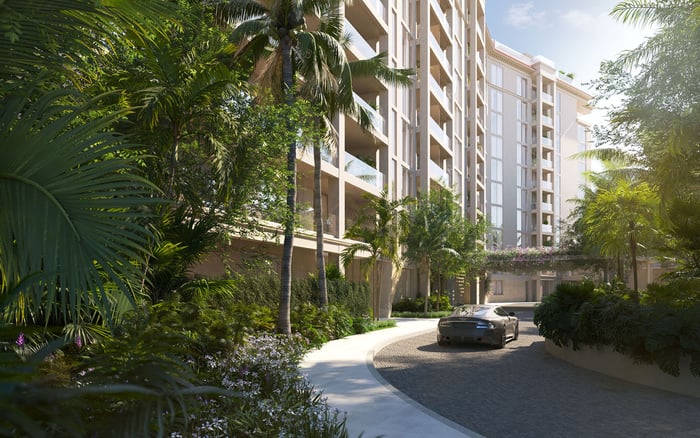
For serious Miami buyers, true luxury begins with controlled access, operational discipline and privacy systems that remain effective whether the owner is home or away.
A marble specification can be changed. A weak arrival sequence, exposed service route or poorly monitored perimeter is considerably harder to correct. For serious Miami buyers, the more consequential question is not simply how a residence presents, but how intelligently it controls access, information and movement.
Privacy is an operating condition. It depends on who can enter, how visitors are verified, where staff circulate, what follows an alarm and whether protections remain active during extended absences. These concerns belong alongside title, condition and financial review, not beneath a decorative wish list.
Cabinetry, stone and lighting can be upgraded within a defined scope. Security infrastructure reaches deeper into a property. Cameras require appropriate placement and connectivity. Access control must coordinate with alarms, elevators, garages and service entries. Staffing protocols demand management discipline, not merely an attractive equipment schedule.
A buyer should therefore distinguish between visible hardware and an effective system. The presence of cameras means little without suitable resolution, night vision, recording retention and active monitoring. Likewise, an electronic gate offers limited reassurance if visitor authorization, deliveries and incident escalation are handled inconsistently.
The strongest proposition is layered: vulnerability assessment, controlled access, hardened perimeter points, surveillance, vetted personnel and clear procedures. Each layer should reinforce the others. Depending on the residence and its risk profile, protection may combine on-site personnel, patrols or overnight coverage with real-time monitoring systems.
Buyers evaluating Aston Martin Residences Downtown Miami should confirm the current security scope through governing documents, management interviews and an on-site review. Marketing language is a starting point, not a substitute for verification.
Waterfront security cannot end at the driveway. Seawalls, docks and marine approaches may create additional entry points. Cameras directed toward water-facing approaches and sensors around docks or seawalls can form part of the response.
Buyers considering Bentley Residences Sunny Isles should ask how the broader property addresses every practical route of approach. The essential inquiry is whether the water-facing perimeter receives the same rigor as street entrances, garages and lobbies.
In a condominium, privacy depends on shared operations. The review should follow a guest from arrival through authorization and onward to the residence. It should also examine deliveries, contractors, household employees, amenity access, parking, loading areas and after-hours exceptions.
A gated-community label is not enough. Electronic gates and on-site personnel add privacy when they actively control entry, while physical barriers, continuous surveillance and trained staff can help deter unauthorized visitors. Buyers considering The Residences at Six Fisher Island should focus on written procedures and actual practice, including who can override controls and how those actions are recorded.
The same discipline applies when assessing The Residences at 1428 Brickell. Due diligence should trace resident, guest, vendor and staff circulation separately rather than treating the lobby desk as the entire security plan.
Household employees and other regular-access personnel can create privacy exposure, making screening and access limits essential. Credentials should match responsibilities, and former staff should not retain entry rights. Buyers should also understand how management documents key issuance, recurring vendors and temporary permissions.
Travel patterns matter equally. A second home may be unoccupied for long intervals, so protocols should define elevated monitoring, alarm response and escalation while the owner is away. A system that performs only when residents are present does not fully address extended absences.
Before closing, commission an assessment proportionate to the property and test the system rather than relying on a feature summary. Review camera performance, retention, monitoring responsibility, alarms, access logs, marine exposure where relevant and the human response to an incident. Finishes shape the atmosphere. Privacy layers protect the ability to enjoy it.
Why can security matter more than interior finishes? Finishes are generally replaceable, while access routes, perimeter exposure and operating procedures can be more difficult to redesign.
Is the presence of CCTV sufficient? No. Buyers should verify resolution, night vision, recording retention, coverage and whether monitoring is active.
What access points should a waterfront buyer review? Review driveways, pedestrian entries, garages, service routes, seawalls, docks and marine approaches.
What makes a privacy plan layered? It combines controlled access, surveillance, hardened perimeter points, vetted personnel and dependable procedures.
Should project-marketed security features be independently verified? Yes. Confirm them through governing documents, management interviews and direct on-site due diligence.
How should buyers evaluate building staff? Ask about training, visitor verification, incident escalation, credential controls and coverage outside normal hours.
Why does employee screening matter? Household employees and recurring vendors may receive regular access, creating potential security and privacy exposure.
What should happen when an owner travels? The residence should have defined away-mode procedures, elevated monitoring and a clear alarm-response chain.
Are gates enough for a private community? No. Gates work best with active entry control, surveillance, physical barriers and trained on-site personnel.
When should a security assessment occur? It should occur during due diligence, early enough for findings to influence negotiations and the purchase decision.
When you're ready to tour or underwrite the options, connect with MILLION.
If branded residences are on your mind — as a home or as an allocation — we would be glad to share what we are seeing, privately.
Begin a quiet conversation.jpg&width=700&height=438&fit=cover)