A practical buyer’s guide to evaluating elevator redundancy, service continuity, privacy, and resale risk before purchasing a seasonal residence in South Florida.
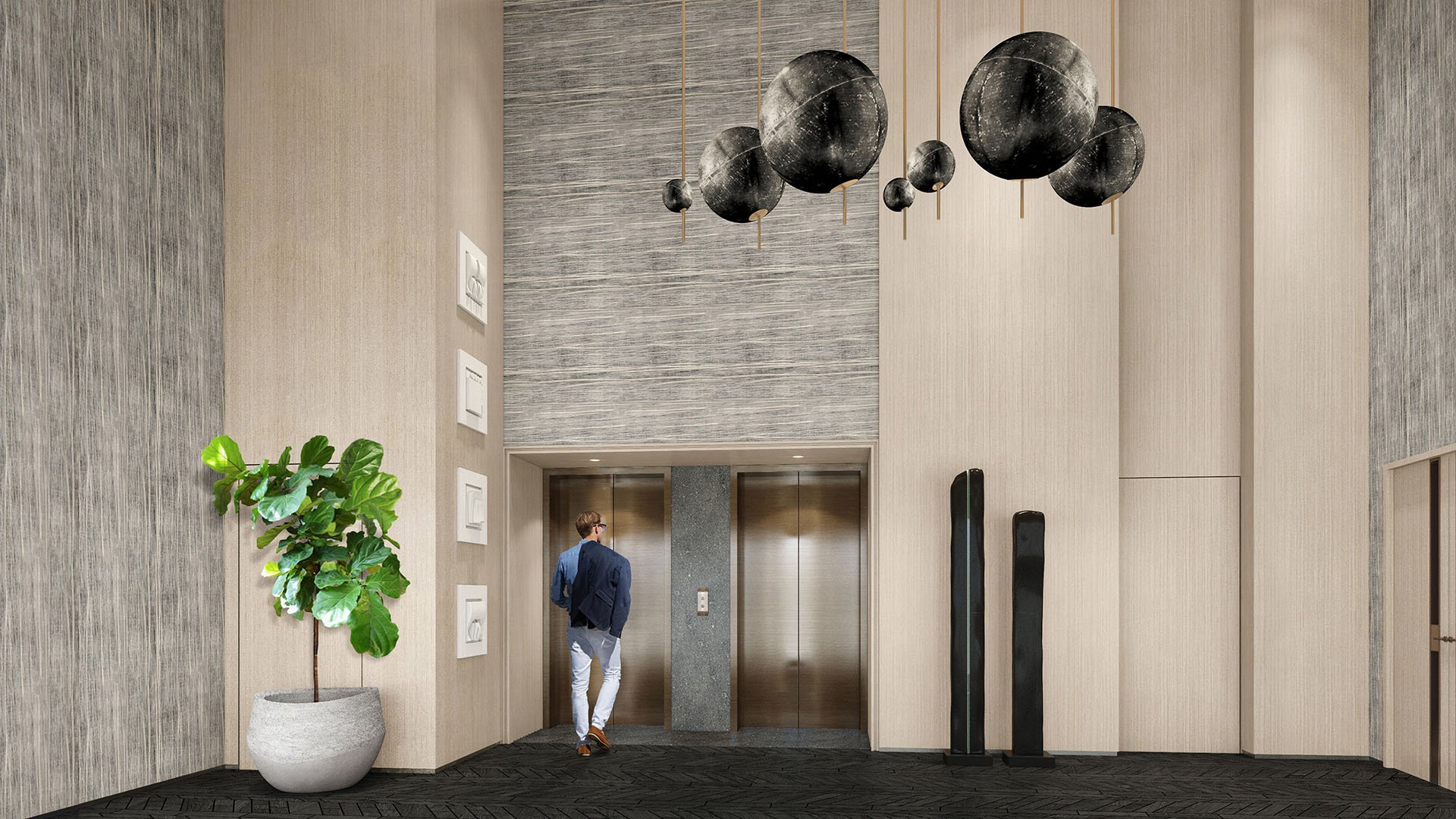
In South Florida luxury real estate, buyers naturally focus on view lines, floor height, terraces, finishes, wellness amenities, parking, and neighborhood character. Yet one of the most consequential elements of daily life in a vertical residence is often addressed too late: elevator redundancy.
For a year-round resident, a temporary elevator inconvenience may be absorbed into the rhythm of daily life. For a seasonal owner, the impact can feel sharper. Arrival windows are compressed. Family and guests may be in residence for a defined period. Staff, luggage, deliveries, pets, service providers, and private entertaining may all move through the building at once. When vertical transportation is strained, the residence can feel less private, less effortless, and less aligned with the standard implied by its price point.
Elevator redundancy is not simply a matter of counting cabs. It is the relationship between access, backup capacity, maintenance planning, service separation, resident privacy, and the building’s ability to function gracefully when one part of the system is unavailable.
At its most basic, redundancy means there is a practical alternative if one elevator is offline or reserved for another use. In a luxury condominium, that alternative should reflect how owners actually live. A residence may need to accommodate arrivals from the garage, front entry, amenity levels, service areas, and private or semi-private residential corridors.
Buyers should distinguish between elevator quantity and elevator usability. Two buildings can have similar numbers of elevators and deliver very different experiences. The relevant questions are more nuanced: Are resident and service movements separated where appropriate? How does the building handle move-ins, contractors, deliveries, and housekeeping? Is there a sensible plan for scheduled maintenance? Are upper-floor owners exposed to long waits at peak moments? Can staff access the residence without disrupting the owner’s sense of privacy?
These are not cosmetic questions. They sit at the intersection of architecture, operations, and lifestyle. In markets where branded residences, boutique towers, and high-design waterfront buildings compete for the same buyer, operational refinement is part of the luxury proposition.
For a second-home buyer, the residence is often judged by the quality of concentrated time. The owner may arrive for a long weekend, an extended winter stay, a holiday period, or a family gathering. There is less tolerance for friction because the property is meant to deliver immediate ease.
Elevator disruption can shape the first and last impression of every stay. It affects the arrival from airport to garage to residence. It influences how quickly luggage and provisions can be brought upstairs. It can determine whether a private dinner setup feels seamless or crowded. It may also affect the comfort of older relatives, young children, or guests unfamiliar with the building.
Seasonal ownership also adds an oversight dimension. When the owner is away, property managers, housekeepers, maintenance vendors, and design teams may need access. A building with thoughtful elevator protocols can make that access smoother while protecting the owner’s privacy and the association’s standards.
In dense urban settings, elevator planning is tied to daily intensity. A Brickell buyer comparing a high-rise lifestyle near offices, dining, and entertainment should ask how the building manages peak vertical movement, private access, and service flows. When evaluating residences such as The Residences at 1428 Brickell, the elevator conversation should be part of the broader review of building operations and owner experience.
On the beach, the questions shift. Sand, wet traffic, beach service, family guests, and resort-like amenity patterns can place different demands on circulation. A buyer considering The Perigon Miami Beach should think not only about private arrival, but also about how the building choreographs movement between residence, amenities, parking, and waterfront routines.
In Sunny Isles, height and skyline living make vertical performance especially visible in daily perception. Sunny Isles buyers looking at projects such as Bentley Residences Sunny Isles should ask how the elevator plan supports privacy, convenience, and contingency when the building is active.
Farther north, oceanfront living in markets such as Pompano Beach can blend residential calm with resort-oriented expectations. For buyers reviewing The Ritz-Carlton Residences® Pompano Beach, elevator redundancy belongs in the same conversation as arrival sequence, service standards, and long-term building management.
A sophisticated buyer does not need to become an elevator engineer. The goal is to ask clear questions before contract, rather than discover operational limits after closing.
Start with access. Which elevators serve the residence from the garage, lobby, amenities, and service areas? Are the arrangements private, semi-private, or shared? If one cab is unavailable, what is the resident pathway? How are guests directed without compromising privacy?
Then ask about operations. How does the building schedule elevator maintenance? How are owners notified? Are service providers limited to specific elevators or time windows? How are deliveries, furniture installation, and contractor movements handled? A building’s answers can reveal whether its luxury is purely visual or genuinely operational.
Finally, ask about governance. Elevator systems belong to the building’s long-term maintenance culture. Seasonal owners should understand how the association or management team approaches preventive care, vendor coordination, emergency communication, and owner access when the residence is unoccupied.
A buyer may be tempted to reduce the issue to a single metric: more elevators equals better redundancy. Sometimes that may be true, but luxury living is more subtle. A smaller boutique building with a disciplined service protocol may feel calmer than a larger tower with less separation between resident and operational traffic. Conversely, a tall building with thoughtfully planned elevator banks may provide strong privacy and reliability even with a complex program.
The practical test is experiential. Imagine arriving with guests on a Friday evening. Imagine a housekeeper entering while you are away. Imagine a contractor delivery during your short stay. Imagine one elevator under scheduled service. The question is whether the building still feels composed.
For seasonal buyers, that composure is valuable. It protects the emotional promise of the property. It also supports liquidity, because future buyers often sense when a building is easier to live in than its competitors.
Elevator redundancy should be reviewed alongside reserves, insurance, parking, storage, rental policy, pet policy, staff access, and amenity operations. It is part of the building’s performance profile. If the answers are vague, ask for clarification. If the building is new or in pre-completion sales, request the clearest available explanation of intended access patterns and operating protocols.
The best buyers approach the issue discreetly. They do not need to overstate it. They simply make it part of diligence. In South Florida, where seasonal ownership often combines privacy, hospitality, and precise scheduling, the elevator is not a back-of-house detail. It is the spine of the residence.
What is elevator redundancy in a luxury condo? It is the building’s ability to maintain practical vertical access when one elevator is unavailable, reserved, or serving another function.
Why should seasonal owners care more than full-time residents? Seasonal owners often use the residence during concentrated periods, so delays or access issues can affect a larger share of their time in residence.
Is the number of elevators the most important factor? Not by itself. Layout, service-traffic separation, maintenance planning, and access protocols can matter just as much.
Should I ask about elevator maintenance before signing? Yes. Ask how maintenance is scheduled, how owners are notified, and what alternatives exist during service interruptions.
Do private elevators always solve the issue? Private or semi-private access can improve discretion, but buyers should still understand backup routes and service procedures.
How does elevator planning affect privacy? It influences how residents, guests, staff, contractors, and deliveries move through the building, and whether those movements overlap.
What should absentee owners ask management? Ask how approved vendors access the residence, how keys or credentials are controlled, and how the owner is notified of issues.
Can elevator problems affect resale perception? Yes. Buyers often respond to how a building feels in daily use, and smooth access can support confidence in the property.
Are boutique buildings better for elevator redundancy? Not automatically. A boutique building may feel calm, but its actual redundancy depends on design, protocols, and management quality.
When is the best time to evaluate this issue? Before signing, while diligence questions can still shape negotiation, expectations, and the decision to proceed.
For a discreet conversation and a curated building-by-building shortlist, connect with MILLION.
If branded residences are on your mind — as a home or as an allocation — we would be glad to share what we are seeing, privately.
Begin a quiet conversation