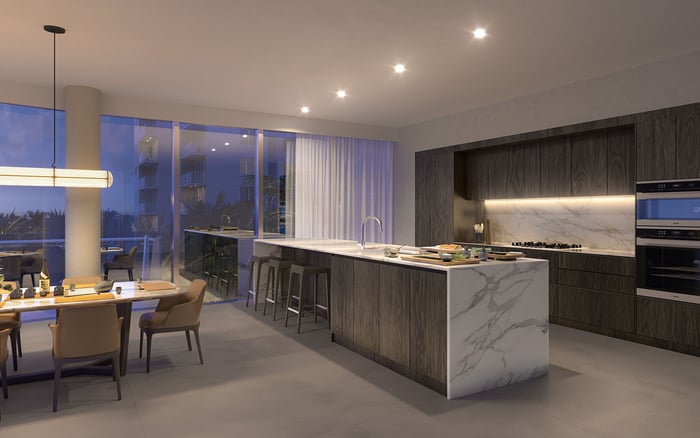
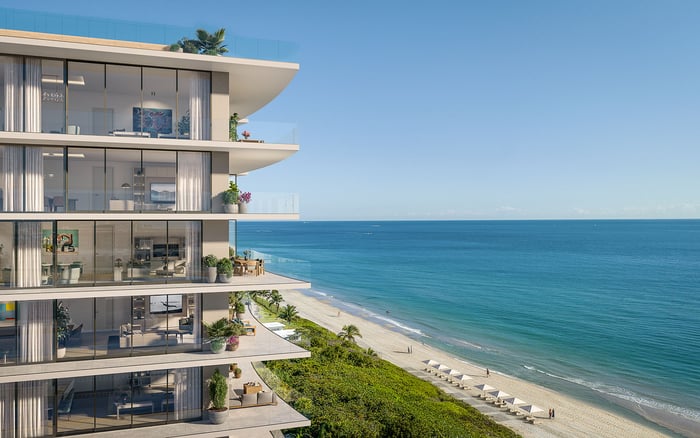
A collector-focused shortlist of five Pompano Beach condominiums, with a practical framework for evaluating privacy, controllable light, secure art delivery, and collection care.
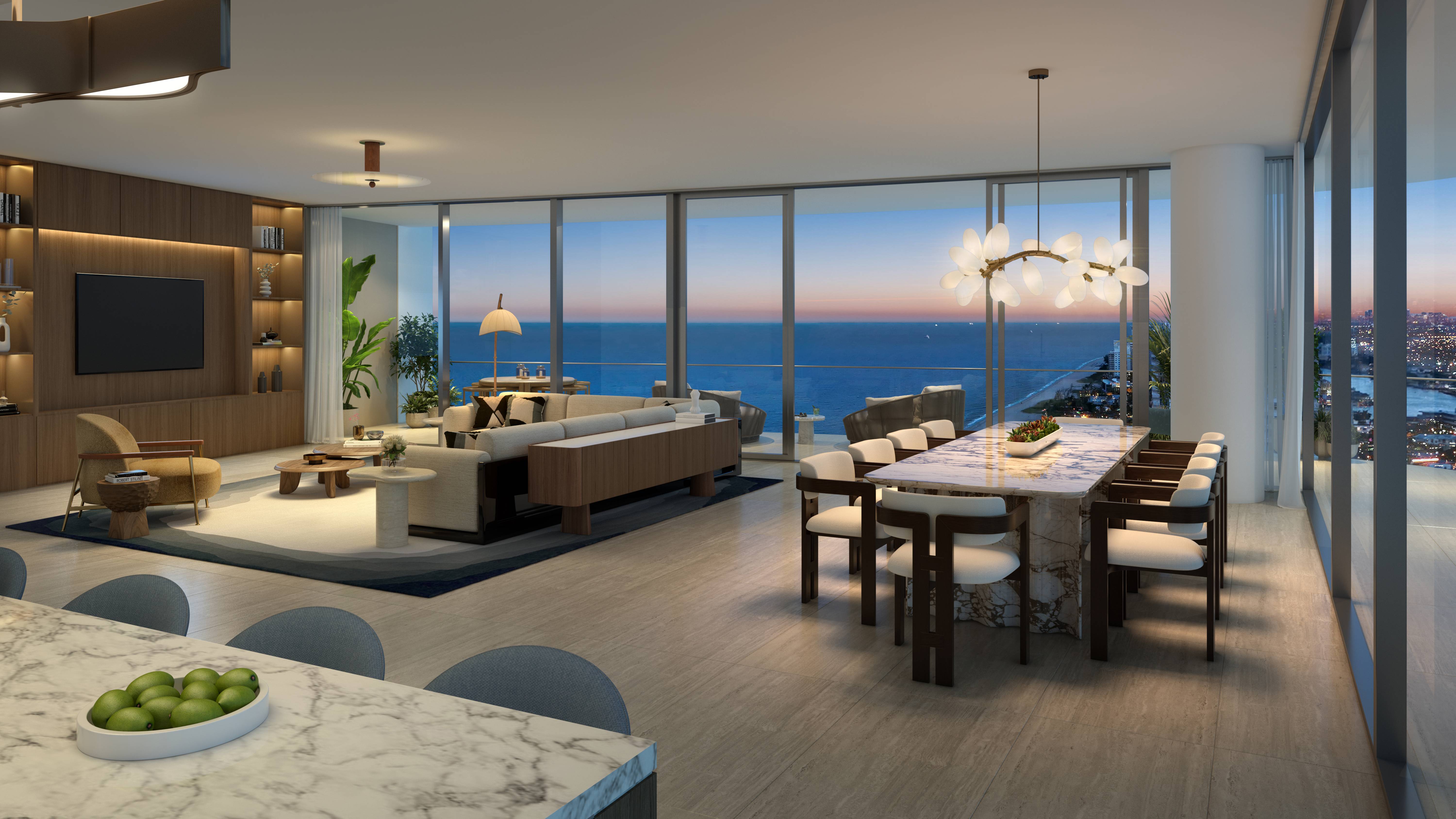
For an art collector, an oceanfront home is not evaluated on its view alone. A careful review should consider privacy, controllable daylight, security procedures, environmental stability, display space, and the route each work will take into the residence.
This Pompano Beach shortlist is a starting point rather than a substitute for property-specific diligence. Before purchasing, buyers should verify glazing, shades, humidity control, loading procedures, elevator dimensions, surveillance, backup power, insurance requirements, and permissions for interior work.
1. Salato Residences
Salato Residences leads this editorial shortlist as a candidate for closer review. Collectors should request current building documents and assess the selected residence rather than relying on a project-wide impression.
The review should focus on privacy at the residence entry, visitor and contractor procedures, controllable daylight, suitable display walls, and the complete route for moving art into place.
2. Ocean 580 Pompano Beach
Ocean 580 Pompano Beach is the second candidate in the shortlist. Buyers should examine the precise residence for solar orientation, glass performance, shade integration, uninterrupted wall area, and secure access for installers.
A conservator, insurer, and qualified property professional can help identify questions that should be resolved before a purchase decision.
3. W Pompano Beach Hotel & Residences
W Pompano Beach Hotel & Residences ranks third for this collector-focused review. The residence, building operations, and applicable rules should all be examined for their effect on privacy, light management, deliveries, contractors, and interior modifications.
Floor-plan selection remains important because display walls, circulation paths, window exposure, and installation access can vary by residence.
4. Sabbia Beach
Sabbia Beach is the fourth candidate. Collectors should confirm current availability and request property-specific information about access control, window treatments, environmental systems, delivery scheduling, and alteration rules.
Any residence under consideration should also be evaluated for the safe placement, movement, and maintenance of the collection.
5. Casamar
Casamar completes the shortlist. Buyers should review shared circulation, service access, elevator procedures, monitoring, emergency planning, and the selected residence's suitability for display and storage.
Direct confirmation is essential because a project name or marketing presentation cannot establish whether a particular home meets a collection's requirements.
Begin with the individual residence. Study the relationship among windows, interior walls, circulation paths, and likely display locations. Confirm whether the proposed shading strategy is permitted and whether controls can be integrated without affecting building systems or rules.
Next, compare operating procedures. Ask who can authorize visitors and contractors, how deliveries are scheduled, which elevators and entrances are used, and what restrictions could affect installers or conservators.
Finally, compare documentation rather than assumptions. Written specifications, current rules, measured access routes, and advice from relevant professionals provide a stronger basis for a decision than general project positioning.
Conduct a room-by-room daylight review. Confirm window orientation, glazing information, motorized shade specifications, pocket depth, blackout options, and any limitations on modifications.
Trace an artwork's complete arrival path. Measure loading areas, doors, turns, corridors, elevators, and the final installation location. Review visitor authorization, camera coverage, staff access, contractor controls, alarm integration, and emergency procedures.
Involve the collection's insurer and conservator before closing. Discuss environmental requirements, installation loads, crating, temporary storage, and coverage conditions for the particular residence and collection.
Why are these five Pompano Beach condos on the shortlist? They are presented as candidates for a collector-focused review, not as guarantees of collection-ready conditions.
Does a condominium name establish its level of privacy? No. Buyers should verify entry design, shared circulation, staffing, visitor authorization, and contractor procedures for the specific property.
What should collectors verify about windows? Review orientation, glazing information, shade specifications, blackout options, and rules governing alterations.
How should display space be evaluated? Measure usable walls and consider windows, doors, circulation, lighting, installation clearances, and the scale of planned works.
What security questions matter before closing? Ask about visitor authorization, surveillance, staff access, loading controls, alarm compatibility, contractor management, and emergency procedures.
How should art-delivery access be assessed? Measure the full route from the approved arrival point through doors, turns, corridors, elevators, and the final installation area.
Is an ocean view automatically suitable for displaying art? No. The specific residence still requires a careful review of daylight, shading, glazing, placement, and environmental conditions.
Why should building rules be reviewed? Rules may affect deliveries, contractor access, work hours, shades, glazing, alarms, and interior modifications.
Who should participate in the diligence process? The buyer may wish to involve a conservator, insurer, qualified inspector, installer, and property professional as appropriate.
Can this shortlist replace a technical inspection? No. It is an editorial starting point, while suitability must be established through residence-specific documents, measurements, and professional review.
For a confidential assessment and a building-by-building shortlist, connect with MILLION.
If branded residences are on your mind — as a home or as an allocation — we would be glad to share what we are seeing, privately.
Begin a quiet conversation