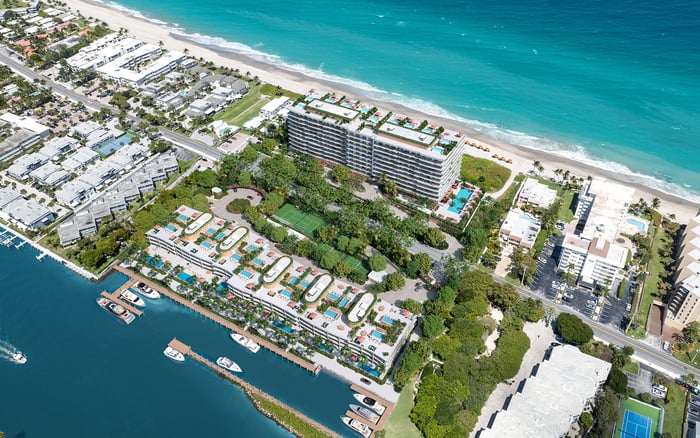
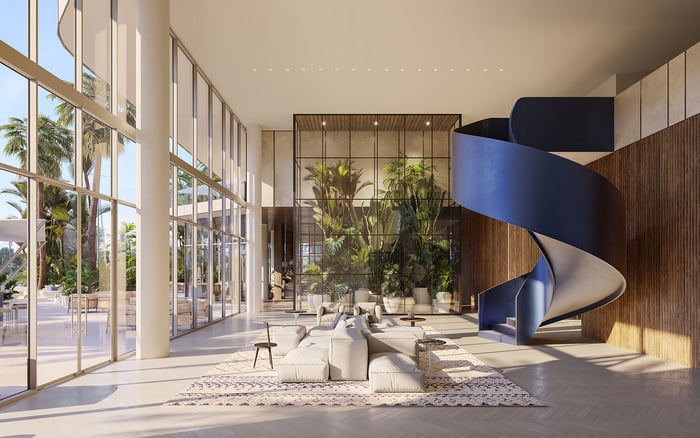
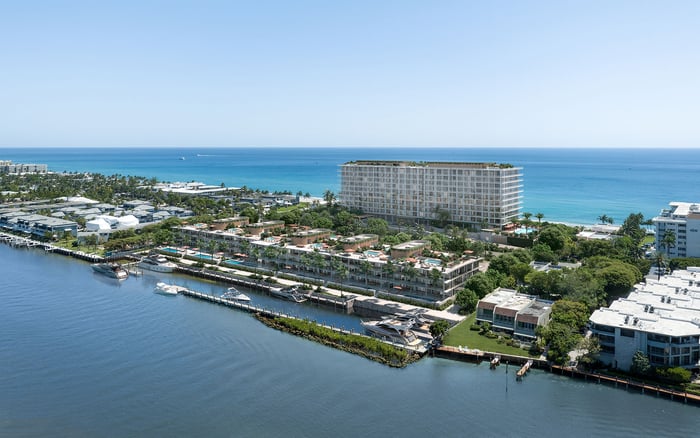
A privacy-first buyer’s guide to Rosewood Residences Hillsboro Beach, focused on private elevator expectations, controlled arrival, and how to compare coastal Broward alternatives with discipline.
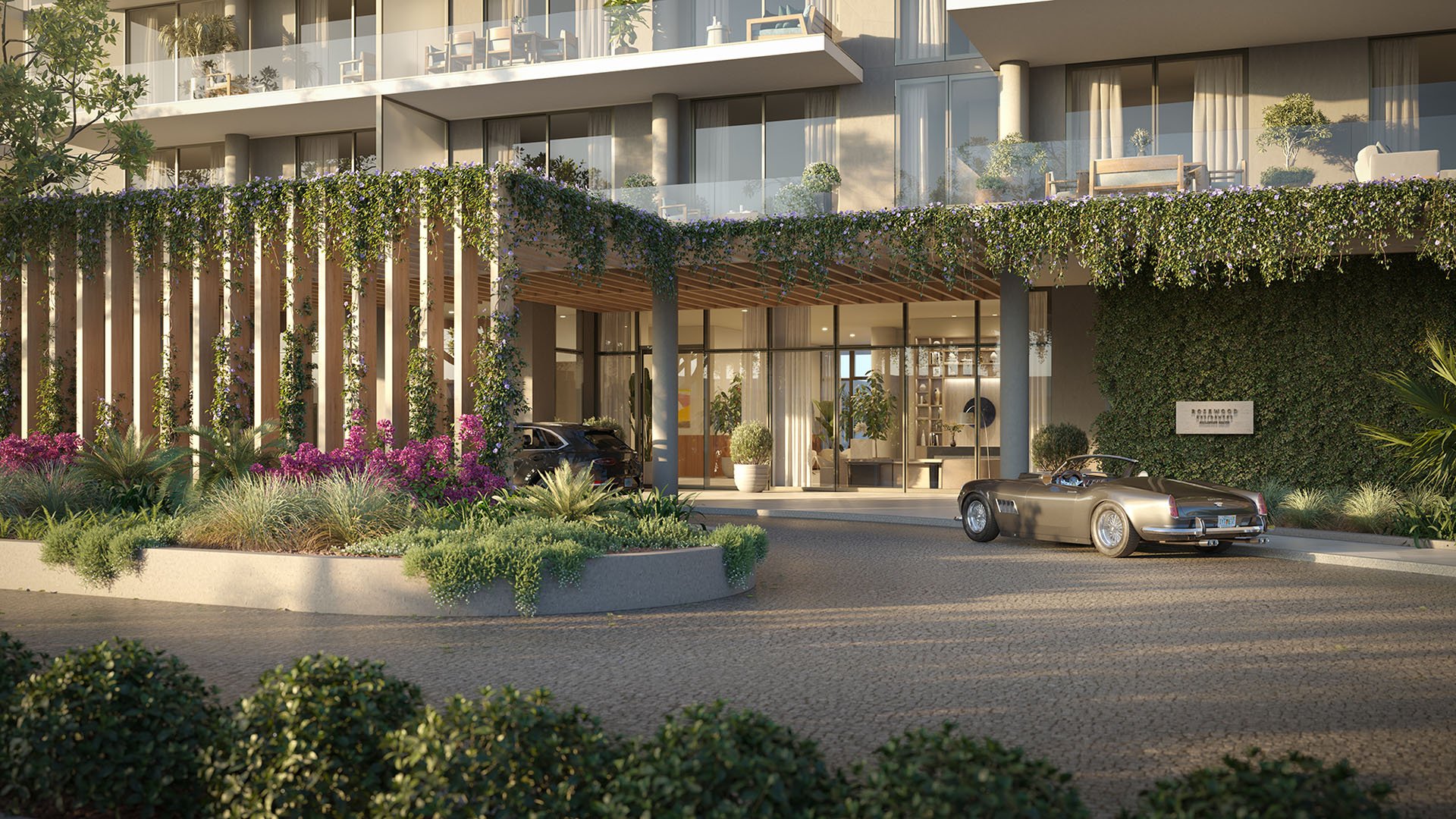
For the most selective South Florida buyer, privacy no longer begins at the front door. It begins when a car enters the property, when a guest is recognized, when luggage, staff, children, pets, and service providers move through the building without turning daily life into performance. That is why Rosewood Residences Hillsboro Beach belongs in the conversation for buyers prioritizing private elevators and controlled arrival.
This is not a question of spectacle. The best arrival sequences are quiet. They reduce exposure, create predictability, and make the transition from public world to private residence feel composed. In a market where luxury buyers can choose among beachfront towers, boutique enclaves, marina addresses, and branded residences, the decisive detail is often not the grandest amenity. It is whether the building allows an owner to arrive, host, and live with minimal friction.
For buyers comparing the Hillsboro Beach corridor with broader Broward and Palm Beach County options, the evaluation should be practical. How many thresholds must be crossed before reaching the residence? How direct is elevator access? How are guests announced? Where do deliveries go? How are service visits staged? A home can be beautifully finished and still feel compromised if the arrival experience is too visible, too shared, or too dependent on improvisation.
Private elevator access is often described as a prestige feature, but its deeper value is operational. It compresses the route from arrival to residence. It gives owners a more discreet way to move through the building. It also helps separate the rhythms of household life from the rhythms of a condominium lobby.
For seasonal owners, private elevator logic can be especially compelling. A return from the airport with luggage, staff coordination, children arriving separately, and groceries waiting is easier when vertical movement is direct and controlled. For full-time residents, the benefit becomes even more subtle. The elevator is not an occasional luxury. It is part of every morning, every dinner party, every contractor visit, and every late return home.
This is where buyers should look beyond the phrase itself. Private elevator access can mean different things in different buildings, and the details matter. Does the elevator open directly into a private vestibule? Is there a separate service path? How are deliveries handled when an owner is away? How does the building manage guest authorization? The right questions turn an attractive feature into a verified lifestyle advantage.
Controlled arrival is sometimes mistaken for security alone. It is broader than that. It includes the relationship between driveway, lobby, valet, reception, elevator, service access, and residence entry. The goal is to make the experience feel intuitive for residents and tightly managed for everyone else.
In buyer shorthand, Hillsboro Beach, Broward, oceanfront, boutique, and new-construction are not merely search labels. They point to a buyer profile that values calm, coastal proximity, and discretion over constant social density. Rosewood Residences Hillsboro Beach fits that conversation because it can be evaluated through the lens of arrival discipline rather than amenity volume.
A controlled arrival sequence should also protect the owner’s sense of home. The most refined buildings do not make residents feel processed. They make the building feel aware without being intrusive. Guests should feel expected. Service providers should know where to go. Owners should not need to explain the same preferences repeatedly. That type of choreography is often what separates a luxurious building from a genuinely livable one.
The buyer considering Rosewood Residences Hillsboro Beach is often not looking at one project in isolation. They may also be weighing nearby coastal options and branded residences along the broader Broward coastline. A comparison with Armani Casa Residences Pompano Beach can sharpen the conversation around design identity, while The Ritz-Carlton Residences® Pompano Beach may invite questions about service culture, hospitality expectations, and how daily access is managed.
Farther south, Four Seasons Hotel & Private Residences Fort Lauderdale brings another lens: the balance between hotel energy and residential privacy. Inland and to the north, Alina Residences Boca Raton can help buyers think about how non-oceanfront luxury may trade immediate coastal presence for a different kind of neighborhood rhythm.
These comparisons are useful because they prevent a buyer from reducing the decision to finish packages or amenity renderings. The more important question is how each building manages daily movement. A property can impress in a sales gallery and still feel less compelling if the owner’s route from car to residence lacks privacy, or if service circulation competes with resident circulation.
A serious buyer should treat arrival as a due-diligence category. The inquiry should include elevator configuration, lobby staffing, valet procedures, guest protocol, package handling, service access, contractor rules, and how the building manages peak seasonal periods. The goal is not to search for imperfections. It is to understand whether the residence will live the way it is expected to live.
Buyers should also consider household composition. A couple who travels frequently may prioritize secure deliveries and effortless re-entry after long absences. A family may care more about school-day routines, visiting relatives, and child-friendly guest access. An owner who entertains formally may value the ability to receive guests without exposing private household operations. A collector may care about controlled movement for art, furnishings, and specialist vendors.
Private elevators and controlled arrival are not isolated features. They influence staffing, insurance conversations, storage needs, service expectations, and resale positioning. They also affect how comfortable an owner feels using the home casually. True luxury is often measured by how little the owner has to think about logistics.
Rosewood Residences Hillsboro Beach belongs on the shortlist because the topic it raises is exactly the topic sophisticated buyers are asking more often: how does the building protect my time, my privacy, and my sense of arrival? In South Florida’s upper tier, where many properties promise views and amenities, the most durable advantages are frequently the least theatrical.
For the right buyer, the appeal is not simply that a residence is coastal or branded. It is that the entire path into the home can be assessed as part of the living experience. If private elevator access and controlled arrival are central priorities, Rosewood Residences Hillsboro Beach deserves a deliberate review alongside the strongest coastal and urban alternatives in the region.
Why do private elevators matter to luxury buyers? They reduce shared circulation and create a more direct, discreet path between arrival and the residence.
Is controlled arrival the same as building security? No. Security is one component. Controlled arrival also includes valet, lobby flow, guest protocol, service access, and elevator movement.
Why is Rosewood Residences Hillsboro Beach relevant for privacy-focused buyers? It belongs in the conversation for buyers evaluating coastal living through privacy, arrival sequence, and elevator access rather than amenity count alone.
Should buyers verify private elevator details before making a decision? Yes. Buyers should confirm elevator configuration, vestibule design, guest access, and service routing during due diligence.
Does oceanfront living automatically mean more privacy? Not always. Privacy depends on building design, circulation, staffing, access control, and how shared spaces are managed.
Is a boutique building always better for controlled arrival? Not automatically. Smaller scale can help, but execution, staffing, and circulation planning determine the lived experience.
How should seasonal owners evaluate arrival control? They should focus on luggage handling, secure deliveries, guest authorization, service visits, and the ease of returning after long absences.
Can private elevator access influence resale appeal? It can support resale positioning for buyers who value discretion, convenience, and a more private residential experience.
What should be compared across Broward coastal projects? Compare the full route from car to residence, including valet, lobby, elevator access, guest procedures, and service circulation.
What is the best next step for an interested buyer? Request a detailed review of floor plans, arrival sequence, elevator access, and building protocols before narrowing the shortlist.
If you'd like a private walkthrough and a curated shortlist, connect with MILLION.
If branded residences are on your mind — as a home or as an allocation — we would be glad to share what we are seeing, privately.
Begin a quiet conversation