In Surfside, the strongest resale is not always the residence with the lowest asking price. Liquidity depends on how many credible buyers want a precise combination of scale, exposure, elevation, privacy and recurring cost.

Surfside occupies roughly 1.2 square miles, with a fixed oceanfront strip and limited room for new supply. That scarcity supports its long-term appeal, but it does not make every condominium interchangeable. Even within the same tower, two residences can appeal to entirely different audiences because one offers a preferred line, a more usable plan, greater privacy or carrying costs that feel proportionate to the experience.
July 2026 conditions illustrated the distinction. Surfside recorded 7.9 months of inventory, above the six-month level commonly associated with a buyer's market, yet well-positioned properties could still benefit from disciplined pricing and faster closings. The broad inventory figure described the municipality; it did not reveal the depth of demand for a particular four-bedroom flow-through residence, lower-floor pied-à-terre or estate-scale penthouse.
In Surfside, liquidity begins with buyer fit and only then moves to price.
For a resale buyer, the practical question is therefore not simply whether a seller will negotiate. It is how many other purchasers are likely to value the same combination of attributes today-and again at a future exit.
Bedroom count alone is an incomplete measure. Usable interior area, circulation, separation between entertaining and private rooms, staff or service functionality, and terrace scale determine whether a plan works for a specific household. A nominal four-bedroom with compromised proportions may attract less demand than a well-resolved three-bedroom, even when the former appears less expensive on a price-per-square-foot basis.
The Surf Club Four Seasons Surfside demonstrates how dramatically submarkets can diverge within a single address. The 12-story, twin-tower oceanfront development has approximately 151 residences spanning about 1,900 to 6,153 square feet. Its conventional luxury homes and estate-sized residences are not direct substitutes. Resale offerings have ranged from about $5.7 million to more than $22 million, while one 5,321-square-foot, four-bedroom residence was offered at $31.5 million. At that scale, wealth may be abundant, but the pool of buyers seeking that exact footprint is inherently narrower.
The planned The Delmore Surfside sharpens the point. With 37 residences planned at roughly 5,000 to more than 10,000 square feet and an average near 8,000 square feet, it targets a small, exceptionally well-capitalized global audience. Such homes do not expand the conventional luxury pool. They create a distinct estate category with its own expectations and absorption pattern.
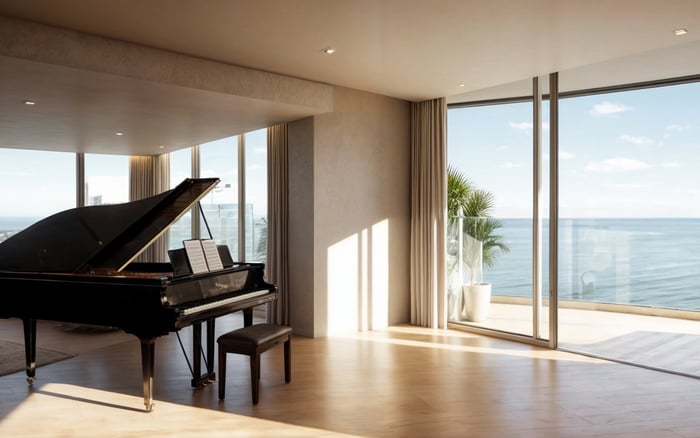
Oceanfront is a location, not a complete description of the outlook. Direction, panoramic width, foreground obstructions, sunrise exposure, western light and the relationship between interior rooms and terraces all shape demand. A dual-exposure home with expansive eastern ocean views and western downtown views can appeal differently from a residence with a partial or compromised outlook.
Floor matters for similar reasons. Elevation can improve horizon views and privacy, but buyers may weigh those benefits against terrace exposure and a personal preference for proximity to the waterline. The premium is not automatic; it depends on whether the floor materially enhances the lived experience for the likely purchaser.
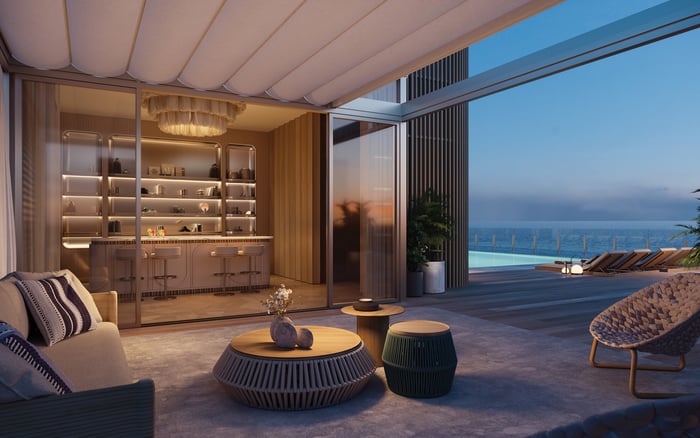
At Ocean House Surfside, east, south and west exposures give buyers meaningful choices in panorama, daylight and terrace usability. Its four-bedroom plans pair approximately 2,600 to 5,470 interior square feet with about 1,095 to 1,673 exterior square feet. Those ranges make plan efficiency and genuinely usable outdoor area central to any comparison. Its two-level penthouse, exceeding 14,500 square feet, belongs to an even more specialized pool rather than the conventional four-bedroom market.
Purchase price is paid once. Association fees, property taxes, insurance exposure, assessments and future capital requirements recur. Sophisticated cash buyers may not require financing, but that does not make them indifferent to operating efficiency. Many are lifestyle-led, long-term owners who assess whether annual costs feel rational relative to service, privacy, amenities and actual use.
At The Surf Club, association fees have ranged from approximately $5,104 to $27,952 per month. One residence carried monthly association costs of $10,573 and annual property taxes of $59,106. These figures do not necessarily diminish a residence's appeal, but they reduce the number of buyers who consider the complete ownership proposition appropriate. A modest price reduction may do little if the recurring cost structure remains outside a purchaser's preferred range.
In 2025, Oceana Bal Harbour benefited from strong end-user demand, steady resale performance and HOA costs around $2.10 per square foot. The comparison is instructive: manageable carrying costs can support liquidity by preserving a broader audience throughout ownership, not only at acquisition.
Engineering, reserves, current assessments and prospective capital work also deserve close review. South Florida condominium inventory has more than doubled since early 2023 to more than 18,000 units, giving buyers more alternatives. In 2024, 30 buildings were deemed unsafe or uninhabitable, followed by another 24 the next year, intensifying attention to physical condition and future fee exposure.
A credible comparison begins with homes that address the same purchaser, not every listing in the building. Buyers should align bedroom count, usable interior area, terrace dimensions, exposure, floor, privacy, monthly HOA, taxes, assessments and likely capital requirements. Turnkey condition also matters. One Surf Club residence offered at $22.75 million included a multimillion-dollar art collection, illustrating how curated presentation can distinguish a trophy offering from an otherwise similar resale.
This framework also prevents a false bargain. A discounted residence may still be expensive if its plan requires major alteration, its view cannot be improved or its fees materially exceed those of plausible substitutes. Conversely, a premium residence may represent the more defensible investment when it occupies a scarce line, delivers balanced carrying costs and appeals to a deeper end-user pool.
The most revealing questions are practical. How many current listings offer the same scale and exposure? How often does that exact profile appear? Is the floor meaningfully differentiated? Do recurring costs align with comparable service levels? Would a future buyer perceive the residence as a category leader-or as a compromise made attractive only by price?
For sellers, accurate positioning means identifying the actual audience before selecting an asking price. For buyers, it means recognizing that negotiating leverage and long-term resale quality are not identical. In Surfside's compact market, a residence with broader buyer-pool depth can remain more liquid than a cheaper home whose limitations are permanent.
For discreet guidance on evaluating Surfside opportunities at the unit level, connect with MILLION.
If branded residences are on your mind — as a home or as an allocation — we would be glad to share what we are seeing, privately.
Begin a quiet conversationA lower price cannot change a residence's layout, exposure, floor, privacy or recurring costs. Those fixed attributes determine how many qualified buyers will seriously consider it.
No. Surfside's fixed oceanfront strip supports scarcity, but liquidity still varies materially by individual unit profile.
Compare bedroom count alongside usable interior area, circulation, room proportions and terrace space. Estate-scale residences and conventional luxury units serve different audiences.
Direction, panorama, daylight, obstructions and terrace orientation shape the daily experience. Dual-exposure or unobstructed lines may attract a different pool than partial views.
Not automatically. Elevation may improve privacy and horizon views, but the premium depends on whether those benefits match buyer preferences and terrace usability.
Review association fees, property taxes, insurance exposure, assessments, reserves and likely future capital requirements.
Yes. Cash-driven end users may have ample liquidity while remaining disciplined about whether recurring expenses are proportionate to service, amenities and use.
Surfside recorded 7.9 months of inventory, above the six-month buyer's-market threshold. Better-positioned properties could still benefit from disciplined pricing and faster closings.
Use residences aimed at the same purchaser, aligning size, plan, terrace, exposure, floor, privacy and total ownership costs rather than comparing every listing in a tower.
Yes. Curated furnishings, art and move-in-ready condition can differentiate a residence, although they do not replace sound fundamentals such as line, layout and carrying cost.