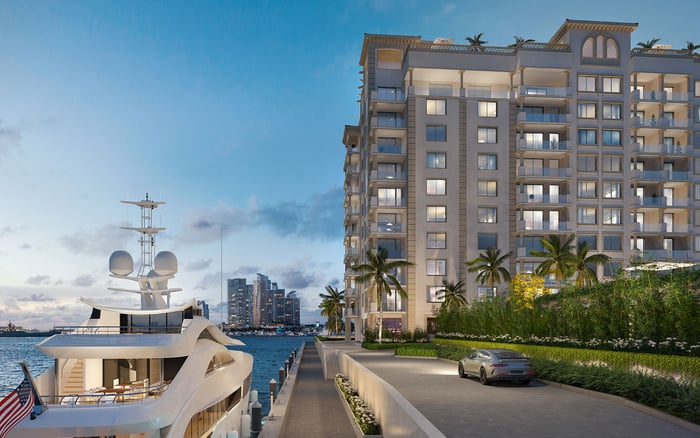
For privacy-minded buyers, the boat show can serve as a live prompt for examining how a South Florida residence will function alongside a yacht, household staff, guests and service providers. The most valuable observations concern operational separation, controlled access and routines that remain discreet under pressure.
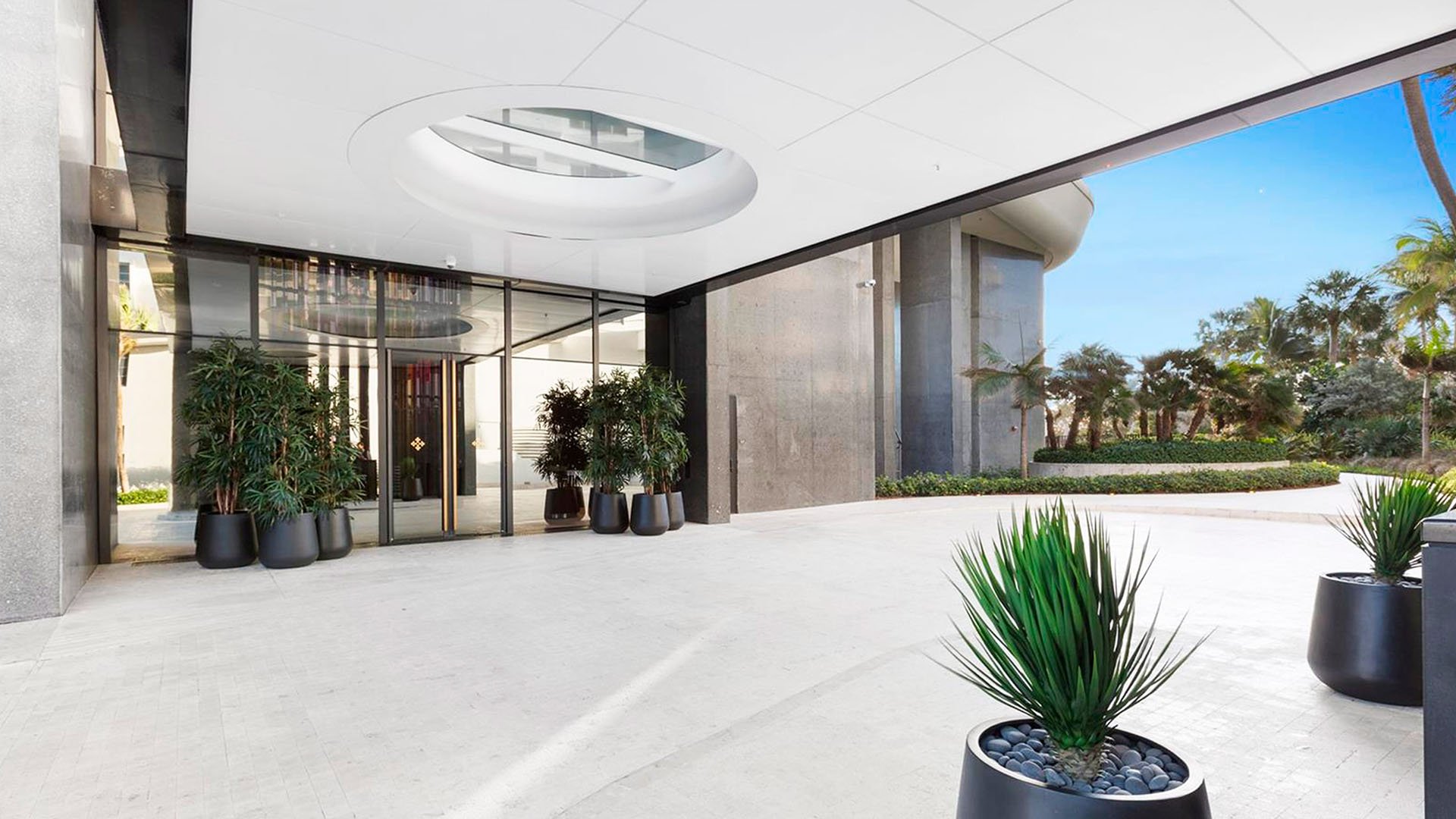
For a luxury-home buyer, the Miami International Boat Show can be more than an occasion to consider vessels, design and life on the water. It can sharpen the questions that determine whether a residence remains composed as owners, guests, crew, household staff and outside vendors move through the same day.
That perspective is especially relevant for buyers evaluating a waterfront home, a condominium near a marina or a residence intended to complement yacht ownership. The central issue is not simply proximity to the water, but whether the home and vessel can operate as one discreet ecosystem-with security, staffing and privacy planned together rather than addressed after closing.
The show encourages buyers to think operationally. A yacht has arrival protocols, service requirements, storage demands and distinct roles for crew and guests. A residence deserves the same rigor. Buyers who apply that discipline can assess not only how a property looks, but how gracefully it performs.
Privacy is often discussed as a feature, yet it is better understood as a sequence. Consider the path from vehicle to lobby, lobby to elevator, elevator to residence and residence to waterfront departure. Each handoff can preserve discretion or introduce unnecessary exposure.
During a property tour, ask who can observe each arrival and which access points are shared. Determine how guests are received, how deliveries are handled and whether service personnel can work without crossing the owner’s principal route. In a condominium, the quality of access control matters, as does the clarity of the building’s daily procedures.
Miami Beach buyers might compare the circulation and setting of The Ritz-Carlton Residences® Miami Beach with other residential options while keeping the inquiry focused on their own security brief. The right choice depends on the buyer’s routines, visibility concerns and preferred balance between hospitality and autonomy.
A beautiful plan may still be operationally weak if it fails to support the people responsible for maintaining it. Before committing, buyers should outline a realistic staffing model. Depending on the owner’s needs, that may include household management, culinary support, housekeeping, drivers, security personnel and yacht crew.
The goal is not to maximize staff space indiscriminately, but to define where people enter, wait, change, store equipment, prepare service and communicate. Staff should be able to perform at a high level without turning private family zones into work corridors. Owners, in turn, should retain a sense of ease rather than feel surrounded by operations.
For a home associated with regular boating, clarify where household staff responsibilities end and yacht crew responsibilities begin. Establish who receives provisions, coordinates transportation and handles last-minute schedule changes. A residence near Biscayne Bay, such as Una Residences Brickell, can be evaluated through this practical lens without assuming location alone resolves logistics.
The strongest privacy plans divide movement into three streams: owner, guest and service. These streams need not be completely isolated, but their points of intersection should be deliberate. A private arrival loses value if it shares a staging area with deliveries. A generous entertaining plan becomes less convincing if catering activity must pass through the main living room.
Buyers should walk a prospective residence as though a dinner, family arrival and yacht departure were occurring at once. Where would luggage pause? How would provisions move? Could a staff member reach the kitchen or utility space without interrupting guests? Where would a driver wait, and how would a security professional maintain oversight without becoming visually prominent?
On Fisher Island, The Residences at Six Fisher Island may enter a buyer’s consideration set because of its location. Still, the decisive review should remain personal: route testing, staffing fit, access preferences and the degree of separation the household requires.
High-activity periods reveal more than quiet showings. Buyers can use any major event day as a conceptual stress test, asking how a building or neighborhood would perform as traffic, guests and service activity increase. The exercise remains useful even when a property is not directly connected to the event.
Consider whether arrival plans offer alternatives. Ask how household personnel would adapt if timing changed, whether visitors could be authenticated before reaching private areas and how transportation would be coordinated between the residence and waterfront destination. The objective is resilience, not theatrical security.
The same review applies north of Miami. A Fort Lauderdale buyer considering St. Regis® Residences Bahia Mar Fort Lauderdale should examine how the location fits a specific boating and staffing routine, then test the residence against ordinary days as carefully as exceptional ones.
A sophisticated purchase begins with a written operating brief. Record expected occupancy, frequency of guests, staffing levels, pet routines, vehicle needs, delivery patterns and boating habits. Add nonnegotiable privacy preferences, such as limited shared circulation, controlled visitor access or space for confidential work.
Then distinguish architectural requirements from management requirements. A service entrance is architectural. A guest-verification procedure is managerial. Secure storage may involve both. This distinction helps buyers avoid expecting personnel to correct a design flaw-or architecture to replace disciplined household procedures.
Before contract, revisit the brief with appropriate legal, security, insurance, marine and property-management advisers. The purpose is not to make the home feel defensive, but to create a calm environment in which protection and service remain largely invisible.
The most persuasive residence is not necessarily the one with the longest amenity inventory. For buyers who move between home and yacht, value often lies in controlled transitions, sensible back-of-house planning and privacy that withstands a full calendar.
Use the boat show as a catalyst for better questions. Observe how you prefer to arrive, host, delegate and depart. Then require each prospective home to support those patterns with minimal friction. When security and staff planning are resolved early, residential privacy becomes part of the home’s rhythm rather than a collection of later interventions.
Why should a home buyer think about the boat show at all? It can prompt a practical review of how residential, transportation and yachting routines fit together.
What is the first privacy question to ask during a tour? Ask who can see or access the full route from the arrival point to the residence door.
Should yacht crew and household staff share responsibilities? Responsibilities should be clearly assigned, with overlap limited to a planned coordination protocol.
What makes a service route effective? It should allow staff, deliveries and equipment to move efficiently without disrupting owner or guest spaces.
Does a higher floor automatically provide more privacy? No. Elevator access, sightlines, neighboring exposure and building procedures also deserve review.
How should buyers assess visitor management? Trace the process from advance notice and authentication through arrival, escort and departure.
Is waterfront proximity enough for a boating household? No. Transportation, provisioning, storage, staffing and access routines must also suit the owner.
When should a security adviser become involved? Ideally before contract, while layout, access and operating questions can still inform the decision.
Can hospitality-style service coexist with privacy? Yes, when access permissions, communication and staff circulation reflect the owner’s preferences.
What should be included in a residential operating brief? Include occupancy, guests, staff, vehicles, deliveries, boating habits and nonnegotiable privacy needs.
If you'd like a private walkthrough and a curated shortlist, connect with MILLION.
If branded residences are on your mind — as a home or as an allocation — we would be glad to share what we are seeing, privately.
Begin a quiet conversation