
For yacht-owning buyers, a South Florida residence should be evaluated as part of a broader operating plan. Route reviews, coordinated security, staffing continuity, access procedures, and vacancy oversight can help buyers assess whether a home supports their time on land and at sea.

For a yacht-owning household, a South Florida residence is one part of a larger operating network that may include vehicles, docks, marinas, crew, household staff, guests, and service providers. A buyer can use anticipated travel and event periods as practical checkpoints when evaluating how a home will function.
The central question is not simply whether a property is near the water. It is whether access, staffing, communications, and oversight can remain consistent during busy periods and while the owner is away.
Route planning should follow the owner’s actual movements rather than rely on a general impression of convenience. Buyers can map the expected journey among the residence, preferred marina or dock, vehicle handoffs, and other recurring South Florida destinations.
For buyers considering St. Regis® Residences Bahia Mar Fort Lauderdale, due diligence can include testing likely arrival and departure patterns, identifying controlled pickup points, and reviewing how guests, luggage, and valuable items would move through each handoff.
A useful route review should also identify alternatives. Traffic, weather, schedule changes, or vendor delays can affect a transfer, so the household plan should specify who may revise timing, transportation, or access arrangements.
Security planning is more effective when the vessel, transfer vehicle, and residence are considered together. Buyers should review who controls access at each stage and how responsibility passes among crew, drivers, security personnel, household staff, and residential teams.
The review can cover marina arrival, vehicle staging, residence entry, guest verification, deliveries, and communication procedures. It should also define who has authority to approve a last-minute change and how that decision will be documented.
At The Residences at Six Fisher Island, a prospective buyer can ask for the current arrival, guest, delivery, and vendor procedures, then compare those procedures with the household’s own operating requirements. The same method applies to other South Florida residences: verify the process instead of assuming that privacy, security, or service works in a particular way.
A written staffing plan should distinguish recurring household responsibilities from support needed during travel, guest stays, or demanding calendar periods. Relevant assignments may include transportation coordination, provisioning, opening and closing the residence, vendor supervision, package handling, and property checks.
When yacht guests will also visit the home, the household manager and captain can align names, timing, transport, access permissions, and special requests in advance. This reduces the need to make sensitive decisions at a dock, curb, or residential entrance.
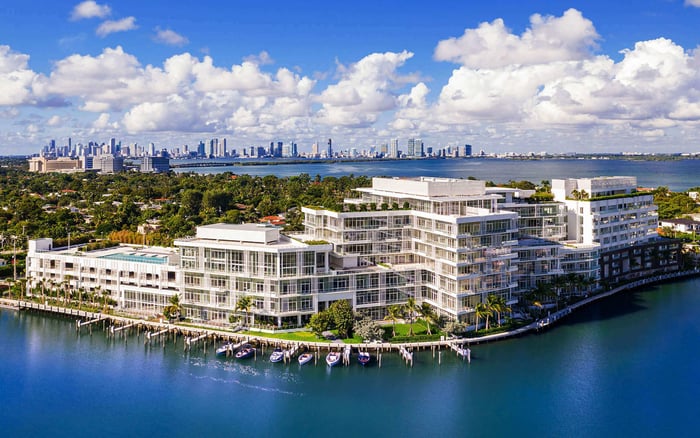
Buyers considering The Ritz-Carlton Residences® Miami Beach can compare the residence’s current procedures and available services with the owner’s expectations for staffing and absence management. Any service, scope, availability, or cost should be confirmed directly before it is incorporated into the household plan.
Time at sea can leave a South Florida property unoccupied for an extended period. Before closing, buyers should decide who will inspect the home, monitor conditions, supervise approved vendors, care for vehicles, and escalate an urgent issue.
The plan should state who may authorize work, what documentation is required, how the owner will be contacted, and what happens if the primary decision-maker is unavailable. Storm preparation and post-event inspection responsibilities should also be assigned rather than left implicit.
Remote approval procedures deserve particular attention. A household should know which matters require the owner’s direct consent and which can be handled within a predefined authority and budget.
The path from vehicle to private interior can matter as much as the broader route. Buyers should inspect loading arrangements, parking and driver access, after-hours entry, delivery controls, staff circulation, elevator procedures, and guest processing.
For a Brickell search that includes Una Residences Brickell, the buyer can document each handoff and ask how current building procedures align with planned arrivals, departures, deliveries, and periods of vacancy. Responses should be verified as part of due diligence because procedures and service arrangements may change.
Operational priorities will differ by household. An owner who is frequently away may emphasize inspection, remote approvals, and vendor controls. An owner who often hosts guests may focus more heavily on arrival coordination, transportation, and access permissions.
A tabletop exercise can expose gaps that remain hidden during a conventional property tour. One scenario might follow an arrival involving guests, luggage, a driver, and overlapping vendor activity. Another might model an urgent property issue while the owner is unavailable at sea.
For each scenario, identify who receives the first call, who can enter the residence, who may approve a response, and how crew and household personnel will communicate. Any ambiguity involving access, authority, staffing, or payment should be addressed before closing.
How should a yacht owner use the calendar when evaluating a South Florida residence? Use expected travel, guest, and event periods to test whether access, staffing, transportation, and property oversight can remain reliable.
What should a route review include? Map the intended movements among the residence, vehicle handoffs, preferred marina or dock, and other recurring South Florida destinations.
Why should residential and yacht security be coordinated? Coordination helps clarify responsibility whenever the owner, guests, luggage, or valuable items move between the vessel, vehicle, and home.
What access procedures should a buyer verify? Ask about current rules for residents, guests, drivers, deliveries, vendors, after-hours entry, and emergency access.
What should be included in a household staffing plan? Assign responsibility for transportation, provisioning, guest coordination, vendor supervision, property checks, and opening or closing the home.
How should a buyer prepare for an extended absence? Establish inspection, communication, approval, vehicle-care, vendor-management, and escalation procedures before departure.
Should buyers assume that residential services are included? No. Confirm the current scope, availability, terms, and cost of any service directly during due diligence.
Why are remote approval procedures important? They define which decisions require the owner’s consent and which may be handled by an authorized representative when the owner is unavailable.
What should a pre-closing scenario test examine? It should test access, communications, decision authority, staffing coverage, vendor controls, and payment approvals under realistic conditions.
How can buyers compare different South Florida residences? Apply the same route, access, staffing, security, and vacancy-management checklist to each property and verify all current procedures.
For a discreet conversation and a curated building-by-building shortlist, connect with MILLION.
If branded residences are on your mind — as a home or as an allocation — we would be glad to share what we are seeing, privately.
Begin a quiet conversation
.jpg&width=700&height=438&fit=cover)