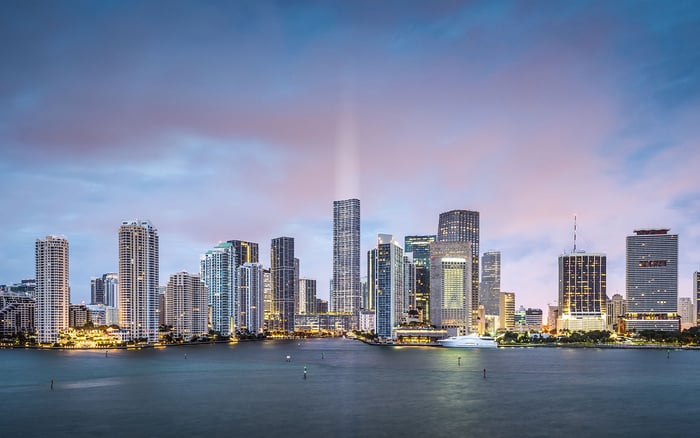
For founders moving leadership teams to South Florida, water intrusion history is not a footnote. It is a core diligence lens that can influence comfort, continuity, insurance conversations, resale confidence, and the quality of everyday executive life.

For founders relocating a leadership team to South Florida, the residence decision often carries more weight than a personal purchase. It can shape recruitment, board-level perception, executive stamina, school choices, commuting rhythms, and the private setting where high-consequence decisions are made. In that context, water intrusion history is not a technical footnote. It is part of the operating environment.
South Florida’s appeal is inseparable from water. Waterfront views, marina access, terraces, beach proximity, and bayfront sunsets are among the region’s defining luxuries. Yet that same setting makes disciplined property review essential. A founder may be comparing a sleek tower in Brickell, a beachfront residence in Miami Beach, a canal-adjacent home in Fort Lauderdale, or a quieter base in West Palm Beach. Each option can be compelling. Each also deserves a clear look at how the building or home has handled moisture over time.
A second-home buyer may tolerate inconvenience differently. A founder relocating a leadership team usually cannot. If an executive residence becomes disruptive, the effect can extend beyond the owner. It may affect work cadence, family confidence, visiting investors, and the sense of permanence that relocation is meant to create.
The right question is not simply whether a residence is beautiful. It is whether the residence has a documented, understandable, and well-managed history. Has water intrusion been isolated or recurring? Were repairs cosmetic or systemic? Did management respond promptly? Are warranties, maintenance records, and inspection notes organized enough for a buyer’s advisory team to evaluate with confidence?
This is the language of serious buyer diligence, not alarmism. In the ultra-premium market, discretion and rigor are compatible. A buyer can admire the design, privacy, and service culture of a building while still asking precise questions about prior leaks, envelope performance, roof conditions, window systems, terrace drainage, garage water events, and association response.
In South Florida, even the most polished presentation should be matched with quiet verification. A founder looking at 2200 Brickell may be drawn to the district’s business convenience and urban energy. That lifestyle logic is valid. The diligence logic is separate: review the governing documents, recent meeting materials, reserve posture where available, insurance considerations, and any disclosures related to moisture or remediation.
For condominium buyers, water intrusion history can sit in several places. It may appear in association minutes, engineering discussions, repair proposals, insurance communications, warranty correspondence, owner disclosures, or inspection findings. For single-family buyers, it may emerge through roof review, drainage observation, window and door inspection, prior repair receipts, flood-related questions, and careful review of walls, ceilings, mechanical areas, and exterior transitions.
The goal is not to find a flawless property. In a coastal market, responsible ownership often includes maintenance, upgrades, and preventive work. The goal is to distinguish normal upkeep from unresolved patterns. A well-documented repair can be reassuring. A vague explanation, repeated patching, or reluctance to provide records deserves deeper review.
South Florida’s most desirable addresses often sit close to the water because that is where the lifestyle is most exceptional. Miami Beach remains a global shorthand for architectural glamour, sand, privacy, and cultural access. A residence such as Shore Club Private Collections Miami Beach may naturally enter the conversation for buyers who want beachside presence with a refined hospitality sensibility.
Still, prestige does not replace due diligence. In beachfront and near-beach settings, buyers should be attentive to balcony and terrace conditions, sliding door systems, exterior sealants, roof assemblies, garage areas, common corridors, and any signs of staining or odor. The most useful advisors avoid theatrical conclusions. They ask for records, examine patterns, and translate technical findings into practical ownership risk.
Fort Lauderdale brings another version of the same equation. The city’s boating culture, Las Olas adjacency, and waterfront neighborhoods attract executives who want a residential rhythm distinct from Miami while remaining deeply connected to the broader South Florida economy. Buyers considering St. Regis® Residences Bahia Mar Fort Lauderdale should think beyond the view corridor and the brand environment. They should also ask how the property context, management structure, and maintenance philosophy support long-term confidence.
A small moisture issue can feel very different when a family is settling into a new city under time pressure. The calendar is often compressed. School interviews, office openings, household staff, travel schedules, and board meetings may overlap. If water intrusion produces repair access, odor concerns, insurance questions, or uncertainty about future work, the disruption can become disproportionately expensive in attention.
That is why founders should treat residential diligence as part of relocation design. The purchase timeline should allow for specialist inspections where appropriate. Counsel should understand what disclosures are available. The buyer’s representative should know how to request relevant building information without creating unnecessary friction. If a property has had prior water events, the founder should want clarity on cause, scope, repair method, documentation, and recurrence.
The same principle applies in West Palm Beach, where the market increasingly attracts buyers who want polished residential life with access to finance, culture, dining, and Palm Beach proximity. A buyer considering Alba West Palm Beach may see a compelling lifestyle proposition. The prudent next step is to understand how the building file, inspection process, and purchase documentation support that lifestyle over time.
The most effective questions are specific but calm. Has the unit or home experienced water intrusion? If so, where did it originate? Was the source identified by a qualified professional? What repairs were made? Were affected materials removed or merely refinished? Are there transferable warranties? Has the issue recurred? Are there open claims, pending assessments, or planned envelope, roof, window, waterproofing, or drainage projects?
For condominiums, ask whether common-element conditions have affected units, terraces, parking, storage, amenity areas, or mechanical spaces. For homes, ask about roof age and condition, lot grading, exterior drainage, window and door systems, prior mold-related work, and any water-related insurance history available through the transaction process.
Luxury buyers should also pay attention to governance. A building can have an issue and handle it well. Another can minimize, defer, or obscure. The difference matters. Strong management, organized records, serious maintenance culture, and transparent communication often matter as much as the original defect.
Understanding water intrusion history does not mean rejecting coastal living. It means buying it with sophistication. South Florida rewards buyers who balance romance with rigor. The founder who asks better questions before signing is better positioned to enjoy the terrace, the marina, the skyline, and the beach without wondering what was left unexamined.
For leadership teams, the best residence is not merely impressive. It is stabilizing. It allows the principal to host, recover, think, and lead. Whether the search centers on Brickell, Miami Beach, Fort Lauderdale, West Palm Beach, or another waterfront enclave, water history belongs in the first tier of inquiry.
Why should a founder care about water intrusion history before relocating? Because a residence can affect personal focus, family confidence, and executive continuity. Moisture problems can create disruption that goes beyond ordinary repair costs.
Is water intrusion always a reason to walk away? No. A clearly identified issue with documented repairs may be manageable, while recurring or poorly explained issues deserve deeper scrutiny.
What documents should a condominium buyer request? Buyers should ask for available disclosures, association materials, repair records, inspection findings, and any relevant maintenance or warranty information.
What should single-family buyers focus on? Roof condition, drainage, windows, doors, exterior walls, prior repairs, mechanical areas, and signs of staining or odor are all important review points.
Does new construction eliminate water risk? Not entirely. Newer properties still require review of construction quality, warranties, drainage design, and early maintenance history.
How should a buyer interpret a past repair? The key is whether the cause was identified, the repair was appropriate, and the issue has not shown a pattern of recurrence.
Who should review water-related concerns? A qualified inspector, relevant specialists, counsel, and an experienced buyer advisor can help translate technical findings into purchase risk.
Can water history affect resale confidence? Yes. Future buyers may ask similar questions, so documentation and the quality of remediation can influence market comfort.
Should founders ask these questions early or after an offer? Early inquiry is best. It helps structure timelines, contingencies, inspections, and negotiation strategy before momentum becomes expensive.
What is the best mindset for buying near the water? Enjoy the lifestyle, but verify the building history. Coastal luxury is strongest when beauty and diligence are aligned.
To compare the best-fit options with clarity, connect with MILLION.
If branded residences are on your mind — as a home or as an allocation — we would be glad to share what we are seeing, privately.
Begin a quiet conversation