For buyers choosing between boutique waterfront living and a resort-style residential experience, the decisive issue is not simply the amenity count. Staffing depth, service inclusions, gratuity customs, and unit-specific carrying costs reveal how each property is likely to function after closing.
Choosing between Onda Bay Harbor and The Estates at Acqualina Sunny Isles is not merely a comparison of architecture, water views, or amenity imagery. It is a decision between distinct operating environments, each with its own demands on staffing, service delivery, and annual ownership costs.
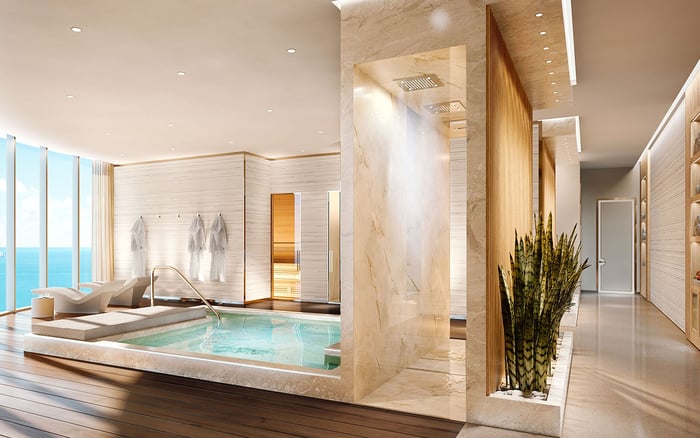
Onda is a boutique condominium of 41 residences at 1135 103rd Street in Bay Harbor Islands, with approximately 300 feet of bay frontage. Services include front-desk reception, 24-hour valet, 24-hour video surveillance, public-area Wi-Fi, and an integrated digital concierge. A rooftop pool and sundeck, yoga and spa facilities, and a private 14-slip marina for boats from 30 to 55 feet broaden the operational brief.
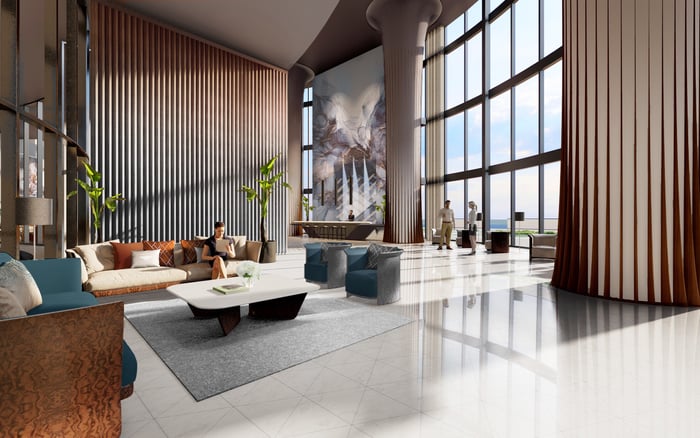
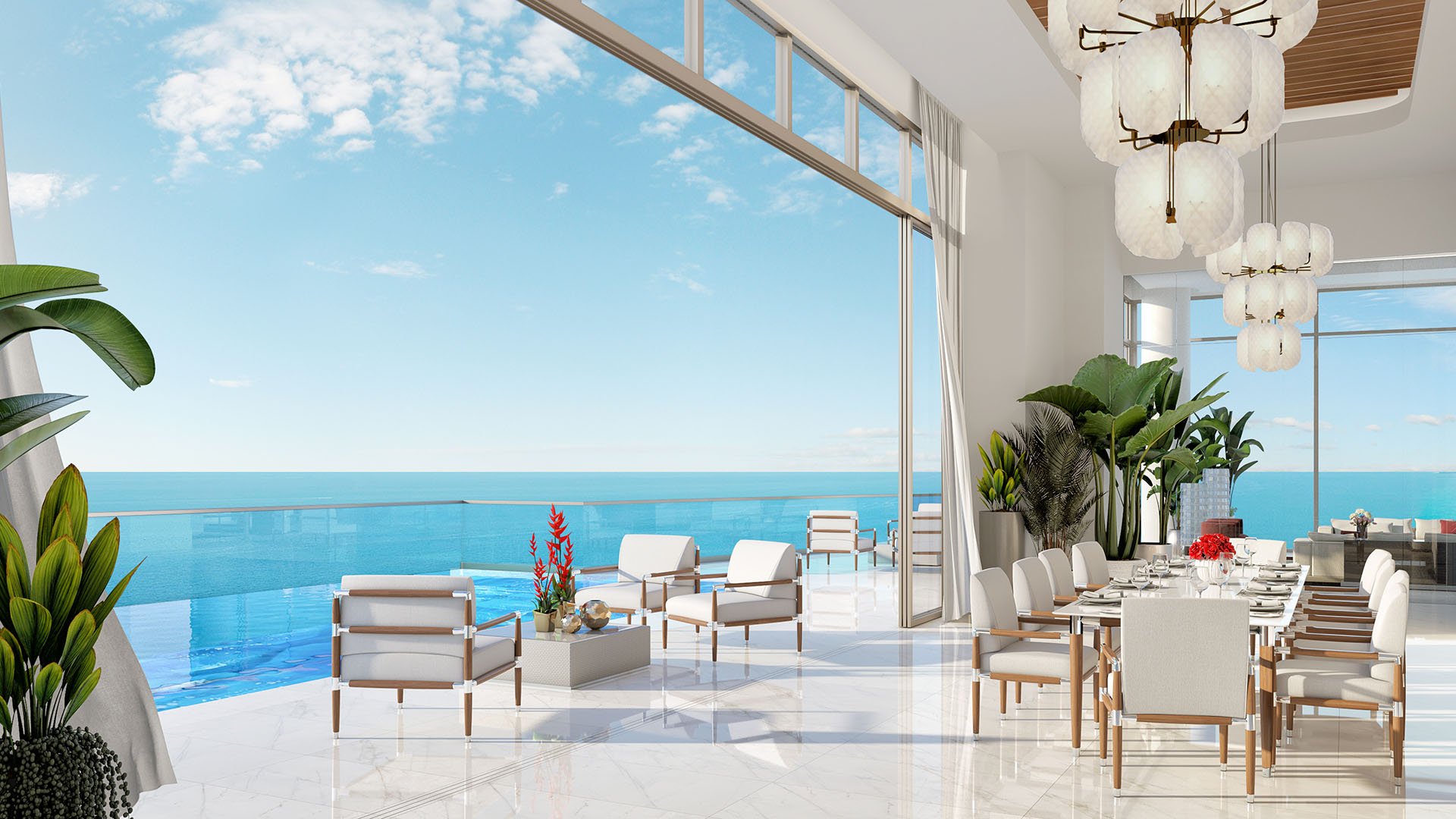
The Estates at Acqualina is positioned differently: an ultra-luxury, resort-style private residential development in Sunny Isles Beach. Its pools, beach facilities, dining, spa, children’s amenities, concierge, and valet create more service touchpoints. For buyers, the essential question is not which property has more amenities, but whether its service structure, fee schedule, and daily culture align with how the residence will actually be used.
Luxury service should be underwritten as an operating system, not admired as an amenity list.
A polished arrival captures only one moment in the resident experience. Buyers should assess how the property performs during peak arrivals, weekends, holidays, staff breaks, bad weather, deliveries, and simultaneous resident requests. Discreet tours at different times of day can reveal whether sufficient coverage supports the service promise.
At Onda, valet, security, reception, management, marina, wellness, and delivery duties must be maintained across a relatively small ownership base. Parcel delivery from the property gate and secured individual storage for residential deliveries add recurring responsibilities that may not be apparent during a traditional showing. Boutique scale can foster familiarity and privacy, but it can also make every shift, contract, and vacant position more consequential.
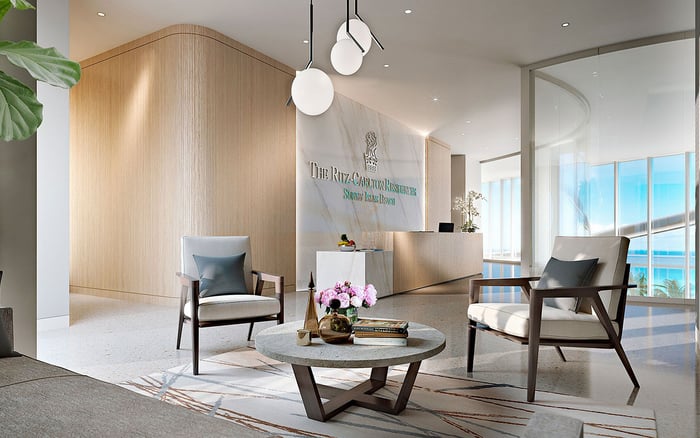
At The Estates, buyers should examine restaurant, spa, beach, valet, club, children’s, and personalized services separately. A resort-style environment may offer more specialized interactions, yet specialization can also mean more departments, service charges, reservation protocols, and gratuity occasions. Buyers comparing the broader Sunny Isles market might also review The Ritz-Carlton Residences® Sunny Isles to sharpen their questions about the service experience they value.
A single staff-to-residence ratio can mislead. It may combine management, engineering, housekeeping, valet, security, pool, beach, spa, and food-and-beverage personnel, even though those employees fulfill different roles on different schedules. Exact ratios and shift coverage should be requested directly from management.
A useful schedule shows headcount by department, shift, day of the week, and employment structure. It should distinguish association employees from third-party contractors and identify who is present overnight. Buyers should ask how absences are covered, whether seasonal demand alters staffing, and which personnel serve residents exclusively rather than shared operations.
This review is particularly important at Onda, where 24-hour valet and security serve 41 residences. Payroll and contract costs are allocated across comparatively few owners. In a larger resort-style setting, the inquiry shifts: buyers need to understand whether personnel and expenses are shared across residential, hospitality, dining, spa, or club functions-and how those allocations appear in the association budget.
Gratuities may be financially modest relative to the purchase price, yet socially significant in a highly serviced building. Buyers should know whether tipping is optional, customary, automatically added, pooled by department, or addressed through an annual staff fund. Practices may vary among valet, beach, dining, spa, concierge, housekeeping, and in-residence services.
At The Estates, restaurant, spa, beach, valet, club, and personalized offerings warrant individual review. Ask whether any service charge is added automatically, whether it is distributed to staff, and whether an additional gratuity is customary. At Onda, clarify expectations for valet, front desk, marina assistance, deliveries, and year-end recognition. The objective is not to minimize generosity, but to distinguish association-funded service from separately compensated service.
A written resident handbook, current fee schedule, sample service invoices, and explanation of any annual staff collection can make this culture visible before closing. Buyers should also ask whether gratuity practices differ for full-time residents, seasonal owners, guests, domestic staff, or contractors.
Onda’s unit-specific association fees illustrate why broad price-per-square-foot assumptions are insufficient. Monthly amounts range from $4,410 for unit 408 to $9,920 for penthouse PH2. Between them, unit 203 carries $4,689, unit 403 $7,627, and unit 504 $8,737 per month.
Annualized, those figures equal $52,920, $56,268, $91,524, $104,844, and $119,040, respectively, before applicable property taxes, unit insurance, gratuities, assessments, and discretionary services. For unit 403, monthly maintenance of $7,627 and monthly property tax of $4,269 combine to $142,752 annually. These are unit-specific examples, not substitutes for current association records.
Maintenance inclusions also differ by unit. They variously reference security, common-area upkeep, pool service, amenities, cable, hot water, elevator service, management, parking, water, pest control, trash, sewer, and Internet or Wi-Fi. Maintenance estimates have ranged from an older $0.75 per square foot to later figures of $2.10 and an average of $2.21 per square foot. That variation reinforces one rule: use the current budget, unit ledger, estoppel, and governing documents.
Annual carry should therefore encompass association charges, property taxes, unit insurance, utilities not bundled into maintenance, approved or proposed assessments, service charges, gratuities, and discretionary amenity spending. A second-home owner may incur fewer dining and spa expenses while still bearing the same fixed building obligations.
The right comparison is not boutique versus resort in the abstract. It is the cost and consistency of the service model the buyer intends to use. Someone prioritizing a waterfront setting, boat access, and a smaller resident population may focus on Onda’s staffing resilience and marina operations. A buyer seeking frequent beach, dining, spa, and family programming may place greater weight on departmental depth and booking access at The Estates.
Within Bay Harbor Islands, examining The Well Bay Harbor Islands can help frame how different residential concepts translate amenities into recurring obligations. This is the practical value of buyer’s guides: they should move beyond finishes and floor plans to compare what is included, who delivers it, and how reliably it can be funded.
Request the current association budget, payroll and contracted-service line items, reserve schedule, insurance allocation, recent meeting minutes, and all approved or proposed assessments. Obtain the unit ledger and estoppel, then reconcile every inclusion with the current documents rather than relying on a marketing estimate or listing snapshot.
Ask management for staffing by department and shift, third-party contract terms, resident service menus, gratuity guidance, and automatic service-charge policies. Finally, model both a base year and a higher-use year. The comparison will show whether the ownership experience remains comfortable when taxes, insurance, staffing, services, and personal habits are considered together.
For a discreet, unit-specific assessment of South Florida’s most refined residential options, consult MILLION.
If branded residences are on your mind — as a home or as an allocation — we would be glad to share what we are seeing, privately.
Begin a quiet conversationAmenities depend on people, contracts, and shift coverage. Staffing depth helps indicate whether the advertised experience can be delivered consistently.
Onda has 41 residences, making the allocation of round-the-clock service costs across a boutique ownership base especially relevant.
Onda advertises 24-hour valet and 24-hour video surveillance, alongside front-desk reception and a digital concierge.
Request headcount by department, shift, and day, with association employees separated from third-party contractors.
No exact ratios or shift schedules are established in the supplied public details. Buyers should obtain current staffing information directly from management.
Confirm whether gratuities are optional, customary, automatically added, pooled, or handled through an annual staff fund.
The cited unit listings range from $4,410 to $9,920 per month, depending on the residence.
Include association fees, property taxes, unit insurance, uncovered utilities, assessments, service charges, gratuities, and discretionary amenity spending.
Published estimates vary and unit inclusions can differ. Current association records, the unit ledger, estoppel, and governing documents should control due diligence.
Review the current budget, payroll and service contracts, reserves, insurance allocation, meeting minutes, assessments, unit ledger, and estoppel.