Auberge’s documented coastal features and Faena’s Miami River setting invite a disciplined comparison of storm protection, equipment placement, and backup power. Buyers should distinguish architectural appeal from verified operating capabilities, without treating greater disclosure as a safety ranking.
For buyers comparing Auberge Beach Residences & Spa Fort Lauderdale with Faena Residences Miami Downtown Miami, the decision should extend beyond architecture, wellness, and the character of the waterfront. The more revealing questions concern what happens when ordinary building operations are interrupted: which systems are protected, which services remain available, and what must happen before residents return.
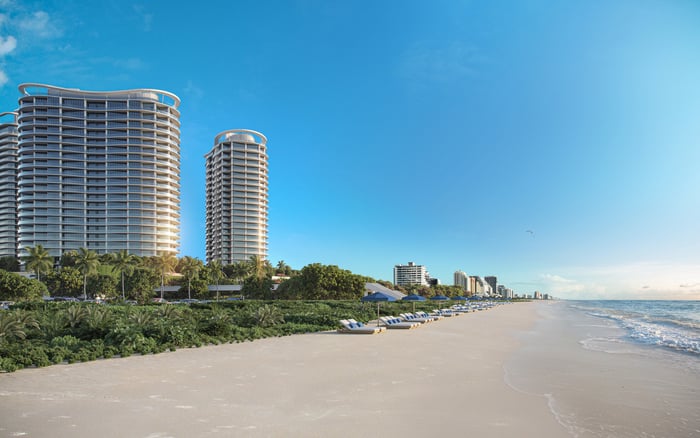
These are distinct properties with different documentation profiles. Auberge is an existing oceanfront development, completed in November 2018. Faena’s Miami River development is presented through a vision of culture, design, wellness, entertainment, and community. Neither that positioning nor the volume of publicly available technical detail establishes a safety ranking.
A disciplined review separates three questions: how the building addresses storm exposure, where critical mechanical and electrical equipment sits, and exactly what emergency power supports. A persuasive answer to one does not resolve the other two.
At 2200 North Ocean Boulevard in Fort Lauderdale, Auberge has several publicly described resilience features. Its site elevation is approximately 12 feet above sea level; its ground-floor slabs are approximately 15 feet above sea level. These figures are useful starting points, but they are not certified survey measurements and should not be treated as equipment-room elevations.
The development’s described coastal measures include a seawall, breakaway walls, and a fully waterproofed foundation with integrated drainage. For a purchaser, these features should prompt a technical review, not conclude it. Request documentation of their configuration, current condition, inspection history, and any subsequent repairs or modifications.
Auberge’s underground basement has been described as approximately 120,000 square feet, roughly 15-20 feet below sea level. That makes the relationship between waterproofing, drainage, and below-grade operations particularly relevant to due diligence. It does not, by itself, establish where critical equipment is located or whether a specific system is vulnerable.
During Hurricane Irma, the basement reportedly experienced no flooding beyond ordinary rainwater. That historical observation warrants review alongside the building’s construction and operating conditions at the time. It is neither a guarantee of performance in another storm nor a substitute for reviewing current systems and maintenance records.
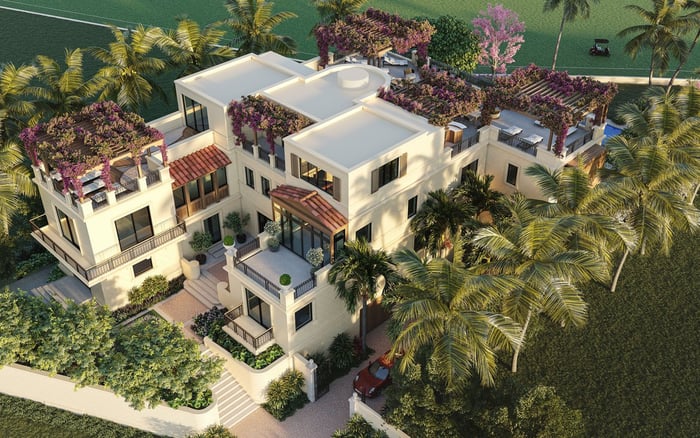
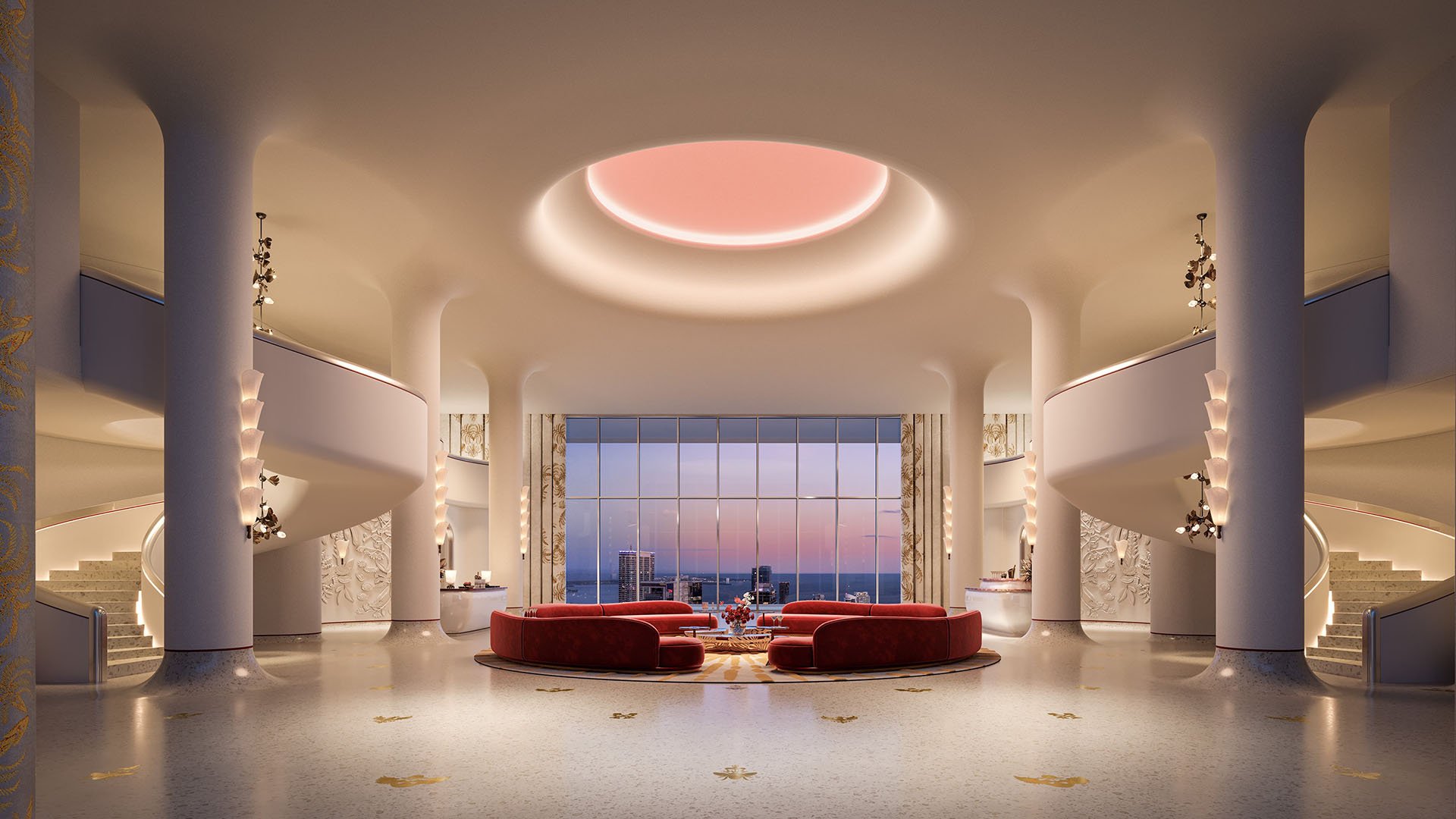
Faena Residences Miami is a residential development along the Miami River. Its announced design comprises two riverfront towers connected by a two-story cultural space. The concept offers a clear architectural and lifestyle proposition, but it does not establish the technical specifications needed to compare resilience.
For a Downtown Miami purchase, request project-specific documents addressing flood protection, critical equipment locations, drainage, and emergency electrical service. Where specifications remain subject to design development or contractual qualifications, ask the project team to distinguish what is committed from what is provisional-and explain how changes will be communicated.
The Miami River development must also remain distinct from Faena House Miami Beach. Shared branding is no basis for transferring engineering specifications, storm-performance history, or backup-power assumptions from one property to another.
More detailed public disclosure at Auberge is not proof that Faena is less resilient. Conversely, an ambitious design concept is not evidence of any particular engineering capability. The appropriate comparison is between documented systems, each reviewed on its own terms.
Mechanical elevation and emergency-power coverage remain unverified for both projects. Buyers should not translate Auberge’s approximate slab heights, or either property’s architectural presentation, into assumptions about equipment protection.
Request a coordinated schedule identifying critical mechanical and electrical components, their locations, and their elevations. Have the reviewing engineer explain the elevation reference used and its relationship to the project’s applicable flood-design criteria. A number without that context is not a complete answer.
The review should address electrical distribution equipment, emergency-power components, pumps, elevator-related systems, water-service equipment, and cooling equipment, where applicable. It should also distinguish equipment location from the protection of the connections and supporting systems that allow it to function.
For Auberge, seek current as-built documentation and confirmation of later alterations. For Faena, request the relevant design documents and a clear explanation of how final installation and testing will be verified. The objective is not an impressive floor number, but a coherent account of which systems are protected and how that protection is substantiated.
A reference to emergency power is only the start of the conversation. Request a written description of the loads it serves, the operating assumptions, and the limitations residents should expect during an outage.
Ask separately about life-safety functions, elevator availability, common-area services, domestic water, communications, and any service inside individual residences. In particular, seek explicit confirmation of whether in-unit air-conditioning, refrigeration, lighting, or receptacles receive backup power. None of these capabilities should be assumed for either property.
If generation is specified or installed, ask about fuel arrangements, anticipated runtime under stated loads, testing, maintenance, and replenishment procedures. Establish how power transfers to supported systems and what interruptions may occur. Neither whole-building backup nor generator runtime is established here for either development.
For a seasonal owner, the practical question is precise: what can management monitor or maintain when the residence is unoccupied? Keep that operational explanation separate from permission to stay during a storm. Emergency-power specifications do not replace official evacuation instructions.
The most useful comparison separates design intent, installed condition, and operating practice. At an existing building such as Auberge, request inspection records, maintenance history, testing documentation, and the association’s storm-preparation and recovery procedures. Check historical construction features against current condition.
For Faena, focus on the engineering package, written specifications, applicable approvals, and the documentation anticipated at delivery. Ask counsel to distinguish contractual commitments from descriptive marketing language. An independent engineer can help identify which questions require drawings, calculations, testing, or further clarification.
Keep the comparison neutral. An unanswered question is an unresolved due-diligence item, not evidence of a defect. A disclosed feature is a fact to evaluate, not automatic proof of superior performance. Apply the same questions to both properties before deciding what matters most to your ownership plans.
For a primary residence or a carefully managed second home, confidence should rest on a clear understanding of protected systems, service limitations, and recovery responsibilities. Ask who makes shutdown decisions, how residents receive updates, and what conditions govern re-entry and service restoration.
Neither an oceanfront address nor a riverfront cultural vision answers those questions alone. The strongest purchase decision preserves the pleasure of the setting while insisting on precise, property-specific documentation behind it.
For a considered perspective on South Florida’s exceptional residences, explore MILLION.
If branded residences are on your mind — as a home or as an allocation — we would be glad to share what we are seeing, privately.
Begin a quiet conversationNo. Auberge has more specific publicly described coastal features, but that does not establish a safety ranking against Faena.
Yes. Construction was completed in November 2018, making current condition and operating records relevant to a buyer’s review.
The site is approximately 12 feet above sea level, and the ground-floor slabs are approximately 15 feet above sea level. These are reported approximations, not certified equipment elevations.
The described features include a seawall, breakaway walls, and a fully waterproofed foundation with integrated drainage. Buyers should verify their current condition and supporting documentation.
The basement reportedly experienced no flooding beyond ordinary rainwater. That historical observation does not guarantee future storm performance.
The development is along the Miami River. Its announced design includes two riverfront towers connected by a two-story cultural space.
No. Faena House in Miami Beach is a separate property, and shared branding does not establish shared engineering specifications.
No. Buyers should request equipment schedules and drawings identifying locations, elevations, and the relevant flood-design reference.
Neither capability is established for either property here. Request a written schedule of supported services and the conditions under which they operate.
Request property-specific engineering documents, equipment elevations, emergency-power specifications, and storm operating procedures. For an existing building, include current inspection, maintenance, and testing records.