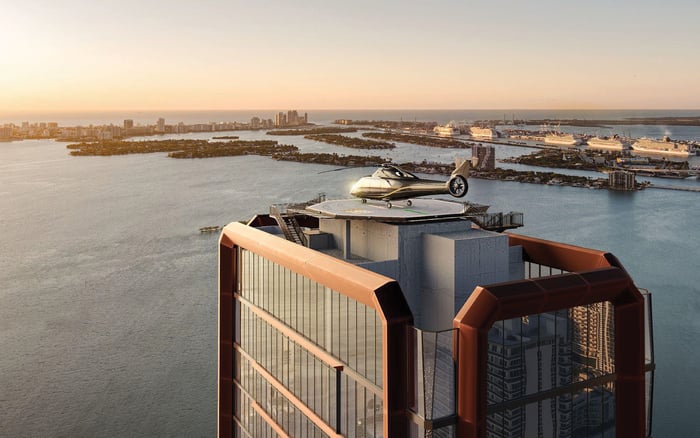
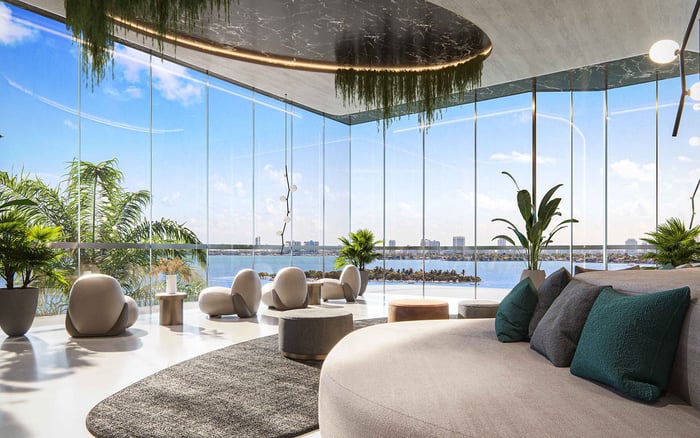
In Edgewater, a branded residence is partly a real-estate purchase and partly an entry into a network of contracts. Buyers should examine who owns the name, who operates the building, what binds the association after turnover, and which rights survive a brand or manager departure.

In Edgewater, the polished sales gallery and headline asking price are only the beginning of the acquisition analysis. The appeal of branded residences often rests on the promise of recognizable design, disciplined service, operating consistency, and market distinction. Yet those qualities may be delivered through several separate agreements, each with its own parties, term, termination rights, fees, and remedies.
This distinction is especially important in pre-construction purchases, where buyers are evaluating a future operating experience as much as a floor plan. A residence can retain its waterfront position and physical finishes even if the commercial arrangements supporting its name or service platform later change. The more consequential question is not simply what a buyer pays today, but what the owner and condominium association will be entitled to receive tomorrow.
A branded identity can be a contractual right rather than an inseparable feature of the real estate.
The legal disclosure for EDITION Edgewater makes the separation unusually clear. EDITION Residences Miami Edgewater is not owned, developed, or sold by Marriott International or its affiliates. The developer’s right to use the EDITION name and Marriott trademarks arises from a license, not Marriott ownership of the project. Marriott has not confirmed the accuracy of the developer’s statements or representations.
The disclosed trademark license is limited, non-exclusive, and non-sublicensable. It may be terminated or expire without renewal. If it ends, the residences will cease to be identified as an EDITION-branded project and lose the right to use the associated trademarks. For a buyer, that language reframes the name on the building as a defined contractual asset with boundaries, not a permanent characteristic of the land.
That does not make branding inherently fragile or undesirable. It makes the underlying agreement material. Buyers considering Edgewater alternatives such as Villa Miami should ask the same threshold questions whenever a project’s identity, hospitality proposition, or service narrative depends on third-party intellectual property or operating expertise.
A brand license generally governs the right to use names, trademarks, imagery, and associated brand elements. Branded residential structures may use a distinct residential marketing and license agreement that also addresses branding rights and royalty fees. A management agreement, by contrast, can govern daily residential operations, standards, staffing, systems, and service delivery.
These documents are not interchangeable. The licensor of the name may not be the developer, seller, residential manager, or party responsible for a particular representation. Counsel should map each promised feature to the entity obligated to provide it, then identify the party against which an owner or the association can enforce a remedy.
The contractual nature of identity is not unique to hospitality names. ELLE Residences Miami was announced as an ELLE-branded condo-hotel tower in Edgewater, with its developers entering a licensing agreement with Lagardère News. The transaction illustrates how a globally recognizable fashion identity can be attached to real estate through contract. The essential diligence questions remain the same: What rights were granted, for how long, and subject to which exit provisions?
Developer turnover is a critical dividing line. A branded-condominium relationship may continue afterward through a management agreement or operational licensing arrangement involving the condominium association. Buyers should determine exactly which agreements will bind the association once owners assume control, including the financial obligations, approval thresholds, standards, renewal mechanics, and termination provisions.
This matters because owners may collectively inherit more than an aesthetic program. The association could become responsible for maintaining required standards, paying management or royalty-related charges, and curing defaults that threaten the relationship. Prolonged nonpayment of management fees or failure to correct brand-standard violations can trigger a departure in brand-management structures.
For an investment-minded buyer comparing a branded proposition with an unbranded waterfront option such as Aria Reserve Miami, the relevant comparison is not brand versus no brand in the abstract. It is one enforceable package of obligations, costs, services, and exit rights versus another.
A disciplined review should test at least three outcomes. First, the project may lose its brand while retaining the same operator. Second, the operator may be replaced while the brand remains. Third, both the branding and management platform may leave together. Each scenario can produce a different result for staffing, systems, service protocols, technology, vendor arrangements, intellectual property, and the association’s ability to continue operations.
Departure provisions define the triggers and consequences of an exit. Buyers should establish who can replace the manager, whose consent is required, whether the association has a meaningful cure period, and which operational assets survive. It is equally important to know whether staff, resident data, service procedures, reservation systems, purchasing relationships, or other operating rights remain available to the building. Public disclosures can reveal the broad structure, but they do not substitute for the executed license, management agreement, declaration, budget, shared-facilities documents, and amendments.
A review of The Cove Residences Edgewater or any nearby condominium should likewise distinguish durable real-estate attributes from contractual services. Views, layouts, terraces, and location belong to one category. A licensed identity and operator-delivered experience belong to another.
Luxury buyers often focus on the breadth of promised services. Sophisticated buyers also focus on enforceability. The central questions are who made each promise, who must perform it, what constitutes default, whether cure rights exist, and which remedies are available to an individual owner or only to the association.
The declaration and purchase documents should be read together with the branding and operational contracts. A remedy against the developer may not address a failure by a manager. An association right may not be directly exercisable by an individual owner. A trademark owner may control use of the name without assuming responsibility for sales representations or daily performance. Those distinctions can determine whether recourse is immediate, collective, limited, or unavailable under a particular document.
The correct underwriting exercise is not to assign a generic premium to a famous name. It is to determine what portion of the residence’s appeal can survive foreseeable contractual changes. Resale may be influenced by whether standards, personnel, systems, and service continuity remain intact after a departure. Ongoing fees and association exposure can also shape the ownership proposition long after the initial closing.
A buyer can therefore treat the asking price as one line in a broader, risk-adjusted analysis. The brand license’s term, termination exposure, post-turnover structure, manager-replacement rights, surviving operational assets, and owner recourse may reveal more about long-term value than a discount negotiated at contract. In Edgewater, disciplined diligence is not at odds with aspiration. It is how the promise of luxury is tested for durability.
For discreet guidance on evaluating Edgewater residences and their contractual foundations, connect with MILLION.
If branded residences are on your mind — as a home or as an allocation — we would be glad to share what we are seeing, privately.
Begin a quiet conversationA license defines whether and how the project may use the brand, including the possibility of termination or expiration. Those terms can affect identity, operations, and future market positioning.
No. EDITION Residences Miami Edgewater is not owned, developed, or sold by Marriott International or its affiliates.
No. A license can govern trademarks and branding rights, while a management agreement can govern daily operations, staffing, systems, and service standards.
The residences would no longer be identified as an EDITION-branded project and would lose the right to use the associated trademarks.
Yes. Post-turnover relationships may continue through management or operational licensing agreements involving the association.
Potential triggers can include prolonged nonpayment of management fees or a failure to cure violations of brand standards.
Buyers should identify which agreements will bind the owner-controlled association, including their costs, standards, duration, renewal terms, and exit rights.
The building could lose the brand but keep the operator, replace the operator while retaining the brand, or lose both the brand and management platform.
Review should include the executed license, management agreement, declaration, budget, shared-facilities documents, and amendments.
Recourse determines who can enforce a promise, against which party, and with what remedy. Those rights can shape service continuity, association exposure, and resale.