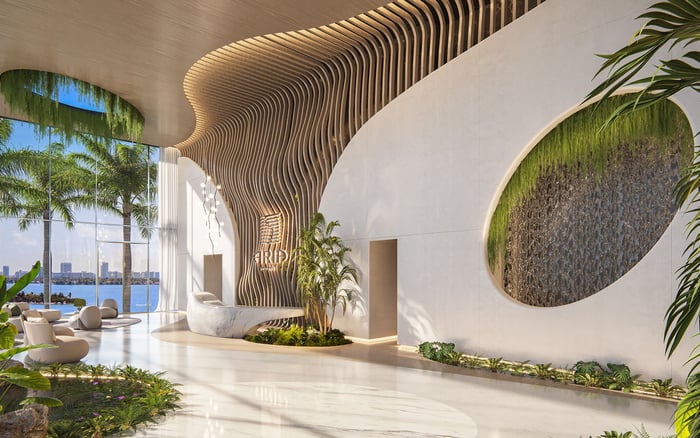
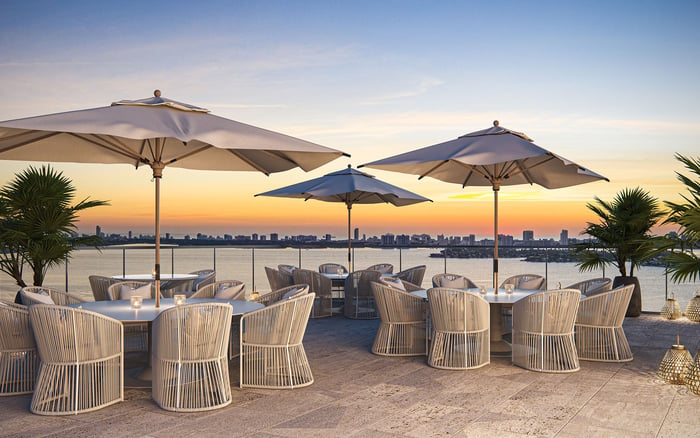
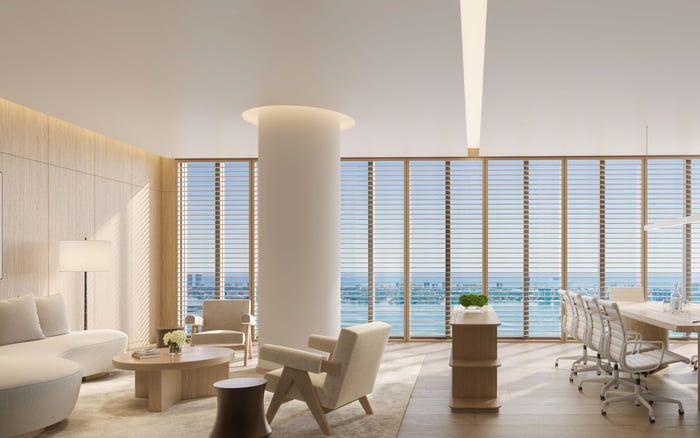
At Aria Reserve Miami, buyers should distinguish proposed design specifications from contractual delivery obligations and later alteration rights. That distinction can shape finish selections, contractor commitments, and the timetable for a personally completed residence.
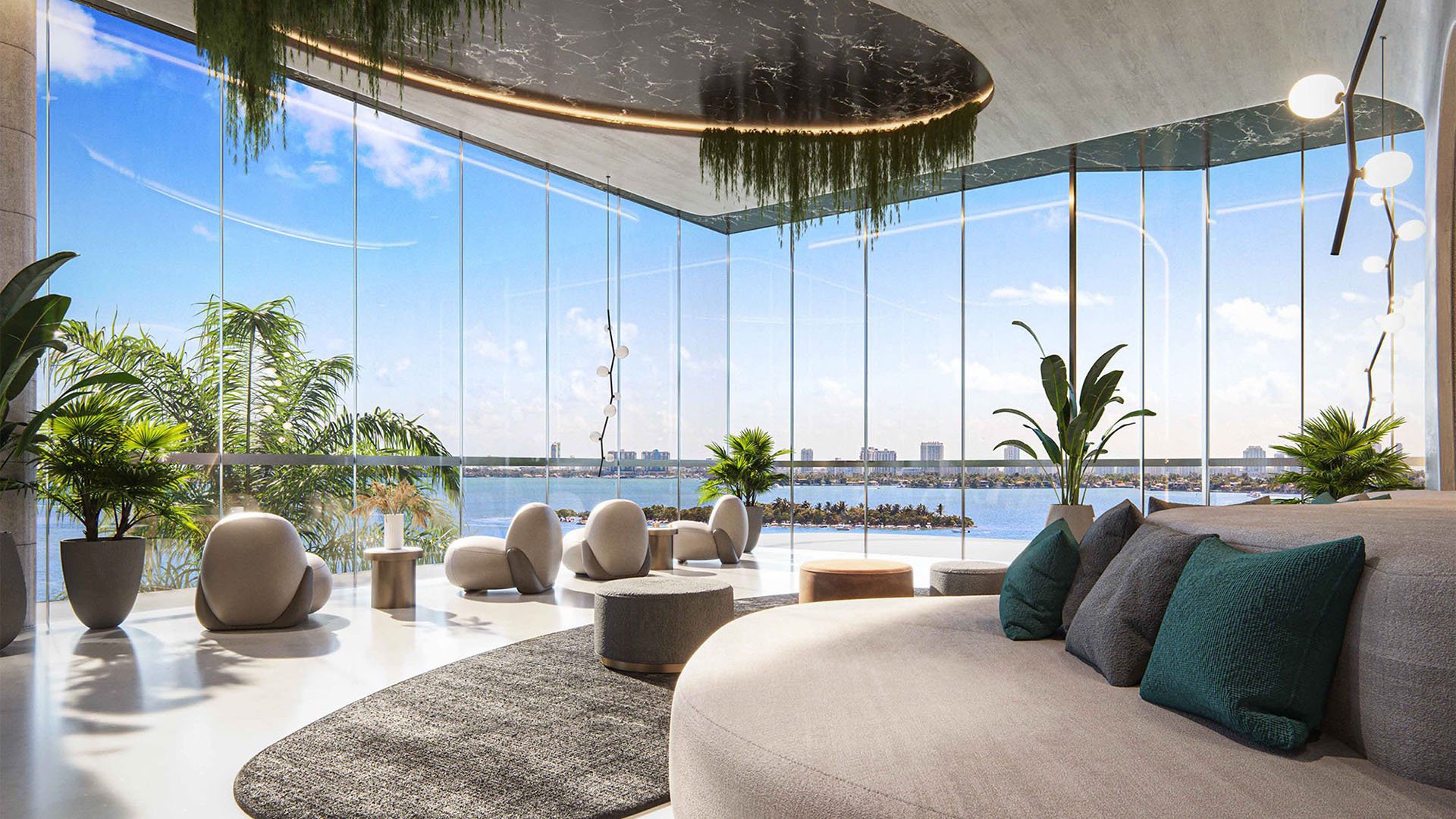
The most consequential design decision in a luxury condominium purchase may precede the first stone sample: establishing who has authority to approve what. At Aria Reserve Miami, the waterfront twin-tower development at 700 NE 24th Street in Edgewater, Arquitectonica’s architecture provides the setting. The purchase and condominium documents must establish the buyer’s rights within it.
Three matters warrant separate review: the developer’s discretion over proposed marketing specifications, the residence’s contractual delivery condition, and any approval requirements governing an owner’s later work. These are not interchangeable. Design-approval provisions, where applicable, can constrain materials, contractor selection, and scheduling. Specific restrictions, however, should never be inferred from a rendering or brand affiliation.
For a buyer planning a highly personal interior, the objective is straightforward: understand the approval framework before committing to fabrication, installation, or a move-in date.
North Park Tower LLC and South Park Tower LLC are developer entities affiliated with Melo Group. The legal distinction matters: the developer, rather than Melo Development Inc. or its other affiliates, owns, develops, offers, and sells the project. Buyers should have counsel confirm the seller named in their agreement and identify which entity owes each contractual obligation.
The same discipline applies to the property itself. Request the recorded declaration, title documents, and unit designation to confirm the spaces and rights transferring with the residence. Visual continuity between an interior and terrace does not establish their legal boundaries or the scope of an owner’s alteration authority.
Brand rights are a separate matter. Melo Group has granted the developer a limited right to use the ARIA RESERVE mark, and the disclaimer anticipates a similar limited license for the condominium association. That is not unrestricted ownership of the brand. Nor does the license, by itself, establish developer approval rights over future renovations or common-area finishes.
The marketing disclaimer treats sketches, renderings, plans, specifications, terms, and statements as proposed only. It reserves the developer’s discretion to modify, revise, or withdraw them without prior notice. Improvements, designs, and construction are also subject to appropriate federal, state, and local permits and approvals.
That language demands a precise distinction. It concerns proposed marketing representations, not a complete statement of the developer’s contractual substitution rights or an association’s authority over owner alterations. Ask counsel to reconcile the purchase agreement, incorporated specifications, exhibits, and amendments rather than assuming the disclaimer answers every design question.
Illustrated furniture, appliances, counters, soffits, floor coverings, and other finishes are conceptual and not necessarily included in each unit. Stated exclusions include wall coverings beyond base primer, accent lighting, wall ornaments, drapes, blinds, furniture, and decorative elements shown in models or illustrations.
The practical response is a written finish schedule separating included items, excluded items, and owner-proposed work. Buyers also considering EDITION Edgewater should use the same document-based comparison without assuming the projects share delivery standards or approval rules.
A preferred stone, floor finish, or lighting composition belongs in the design brief. Whether it can be installed requires a separate review of the applicable documents. An attractive model interior is not permission to reproduce every element after closing.
Before placing nonrefundable orders, ask whether the proposed work requires approval, who can grant it, and what information must accompany the submission. If technical specifications, drawings, or samples are required, incorporate those requirements into the designer’s scope. These are due-diligence questions, not confirmed Aria Reserve restrictions.
Any approval should correspond to the proposed installation. A general conversation about a material is less useful than written confirmation identifying the scope reviewed and any conditions attached. Before allowing substitutions during procurement, ask whether revisions require another submission.
This sequence protects both aesthetic intent and purchasing discipline. If approval is necessary, ordering first can leave the owner reconsidering materials and rebuilding the schedule.
Choosing a trusted interior team does not establish its eligibility to work in the building. Before appointing a contractor, request the current alteration procedures and any applicable contractor requirements. Assume neither a mandatory contractor arrangement nor unrestricted access.
Ask specifically whether vendor restrictions, licensing documentation, insurance requirements, work-hour limits, or access procedures apply. Confirm these matters in the governing documents and current procedures rather than treating them as established Aria Reserve requirements. Identify the reviewing party and ask whether the process changes with the project’s stage of association control.
Have the designer and contractor coordinate their submissions so the proposed scope, material selections, and installation plan are consistent. Where approval is required, the service agreement should address its effect on mobilization and scheduling. Avoid committing to a start date based solely on a projected closing.
A payment milestone, a contractual closing obligation, and completion of a personalized interior answer different questions. One North Tower payment-plan example allocates 20% at contract, 5% at groundbreaking, 10% at the 20th-floor pour, 5% at top-off, and 60% at closing. That totals 40% before closing, but the executed agreement must establish the buyer’s applicable schedule.
The example does not establish the contractual closing trigger, delay rights, or amenity-completion obligations. Have counsel identify those provisions expressly. Likewise, the marketing phrase “Coming to Miami 2025” does not confirm current completion, occupancy, or association turnover status.
Build a separate owner-work timetable around confirmed access, any necessary approvals, procurement, and installation. Where permit approvals are required, account for them independently of private design review. Permission from one decision-maker should not be assumed to satisfy another’s requirements.
The strongest purchase file connects the seller’s obligations, the residence’s legal boundaries, the finish schedule, and any alteration procedures. It also identifies unresolved decisions that could affect the buyer’s budget or intended occupancy date.
A buyer weighing Aria Reserve against Villa Miami should compare those categories separately for each residence. Architectural preference remains personal; delivery obligations and approval authority require documentary clarity. Neither project’s name substitutes for that review.
Before committing, align counsel, the designer, and the proposed contractor on what will be delivered and what remains for the owner to complete. Design freedom is most useful when its boundaries are understood before money and time are committed.
For a discreet perspective on South Florida condominium ownership, explore MILLION.
If branded residences are on your mind — as a home or as an allocation — we would be glad to share what we are seeing, privately.
Begin a quiet conversationAria Reserve is a waterfront twin-tower condominium development at 700 NE 24th Street in Miami’s Edgewater neighborhood.
Aria Reserve was designed by Arquitectonica and is associated with Melo Group.
Project materials identify North Park Tower LLC and South Park Tower LLC. Buyers should confirm the seller and its obligations in their own executed agreement.
No. Illustrated finishes and furnishings are described as conceptual and not necessarily included; the contractual specifications should establish the residence’s delivery condition.
Stated exclusions include wall coverings beyond base primer, accent lighting, wall ornaments, drapes, blinds, furniture, and decorative elements shown in models or illustrations.
No. Discretion over proposed marketing specifications is separate from any authority governing an owner’s later alterations, which should be checked in the applicable condominium documents.
Buyers should not assume a mandatory contractor arrangement. Request current alteration procedures and applicable contractor requirements before making an appointment.
No. A limited right to use the mark does not, by itself, establish approval authority over renovations or common-area finishes.
The example totals 40% before closing, leaving 60% at closing. The executed purchase agreement must establish the schedule applicable to a particular buyer.
No. The phrase Coming to Miami 2025 is not confirmation of current completion or occupancy, and buyers should establish those matters independently of marketing dates.