A buyer-focused look at Bay Harbor Towers through the lens of terrace usability, from shade and airflow to coastal wind, furniture practicality and everyday indoor-outdoor living in Bay Harbor Islands.
In South Florida luxury real estate, outdoor space is often sold in a single glance: a sunset image, a furnished balcony, a table set for two. For serious buyers, that is only the starting point. The more important question is whether the terrace works at 10 a.m. in July, on a breezy winter evening, after a rain shower, or when humidity makes poorly planned outdoor space feel decorative rather than livable.
That is why Bay Harbor Towers deserves attention from buyers comparing terrace-forward condominium living in Bay Harbor Islands. Its relevance is not simply its place in the Greater Miami luxury-condo conversation. It is the practical buyer lens the project invites: does the terrace function like a usable outdoor room, or only like a photogenic extension of the floor plan?
For buyers moving from single-family homes, townhouses, or larger northern residences, the distinction is critical. A terrace that supports breakfast, reading, laptop time, an evening drink, or a quiet dinner can materially change how a residence lives. A balcony that looks impressive in photography but feels too hot, too exposed, or too difficult to furnish may deliver far less value in daily use.
Bay Harbor Islands can be especially relevant for buyers who want outdoor space without automatically defaulting to a high-energy beachfront tower. For terrace-minded buyers, the neighborhood conversation is often less about spectacle and more about how indoor-outdoor living feels in daily use.
That does not mean every terrace performs equally. Waterfront expectations, coastal air, heat, humidity, and wind exposure all need careful consideration. A buyer considering Bay Harbor Towers should think less about the existence of outdoor square footage and more about its behavior throughout the day. Morning shade, afternoon sun, cross-breezes, railing exposure, privacy from neighboring buildings, and furniture placement can all determine whether the terrace becomes part of the lifestyle or remains a staged amenity.
This is also why nearby Bay Harbor Islands projects such as Alana Bay Harbor Islands, La Baia North Bay Harbor Islands, and Onda Bay Harbor are useful reference points when studying the area. The comparison is not about declaring one terrace better than another without unit-level verification. It is about recognizing that Bay Harbor Islands attracts buyers who often care deeply about the indoor-outdoor threshold.
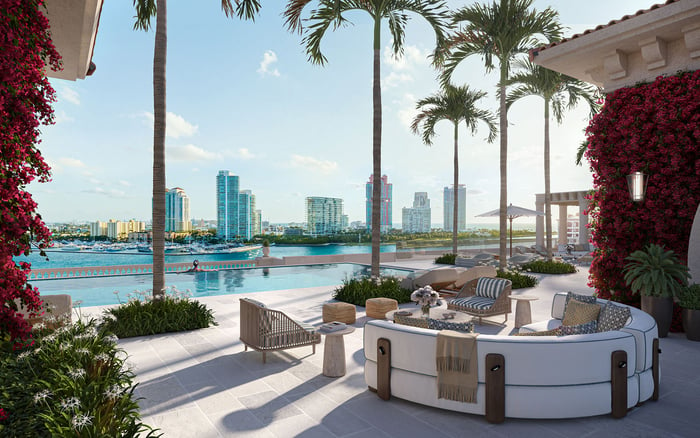
South Florida heat does not disqualify terrace living. It simply punishes poor terrace planning. A residence can have generous outdoor space on paper and still feel uncomfortable if there is no meaningful shade, no sensible furniture layout, or no easy way to move between indoors and outdoors without disrupting the way the home is used.
At Bay Harbor Towers, the strongest buyer question is whether a specific terrace can support real patterns: coffee, dining without glare, reading without overheating, or hosting without everyone crowding back inside. Orientation matters. So does the amount of covered space, the feel of reflected heat, and the ease of movement between interior living areas and the terrace.
Buyers should avoid treating terrace square footage as a trophy number. A smaller, better-protected terrace can sometimes live larger than a more exposed one. The right due diligence includes visiting at different times of day when possible, standing where the dining table would go, checking where lounge furniture might fit, and imagining how the space functions when the sun is high rather than when the sky is at its most cinematic.
Coastal wind is more subtle than heat because it can feel pleasant one day and disruptive the next. A good terrace should capture airflow without making dining, working, or entertaining impractical. For buyers evaluating Bay Harbor Towers, wind exposure should be considered alongside orientation and furniture practicality.
This is where the difference between a terrace and a photograph becomes obvious. Can a table setting remain comfortable? Would lighter chairs need to be avoided? Does the terrace feel sheltered enough for conversation? Can planters, umbrellas, and outdoor accessories be used responsibly, or would they become maintenance concerns during breezy periods?
These are not abstract questions in Greater Miami. They belong at the center of any buyer’s guide approach to outdoor living. In nearby luxury markets, buyers increasingly understand that the best outdoor spaces are not always the largest or most dramatic. They are the ones that remain usable across more moments of the year. A project such as Rivage Bal Harbour may enter the broader comparison for buyers studying how different coastal settings frame views, exposure, and outdoor comfort.
The luxury market has become fluent in balcony photography. Wide-angle images, golden-hour light, and carefully staged furniture can make almost any outdoor space feel seductive. But a usable terrace has a different standard. It must support habits.
For Bay Harbor Towers, that is the core shortlist argument. The project is most relevant to buyers who value terraces as functional outdoor rooms for sitting, dining, working, and entertaining. If a buyer wants only a visual pause between the living room and the skyline, almost any attractive balcony may satisfy. If the buyer expects the outdoor area to absorb part of daily life, the evaluation must be stricter.
Furniture practicality becomes a major clue. A terrace that cannot comfortably fit the right seating, dining scale, circulation path, or storage strategy may not live as well as its dimensions suggest. Shade and airflow matter, but so does the simple ability to arrange furniture without blocking doors, compressing walkways, or forcing every outdoor activity into a single narrow strip.
A terrace-focused tour should feel more like testing a room than admiring a view. Start by standing at the threshold from the main living area. Does the transition feel natural, or does the terrace seem detached from the way the residence will be used? Next, identify where shade falls and where the most exposed seating would be. Then imagine the terrace in heat, humidity, and wind rather than only in ideal conditions.
Buyers should also ask whether the terrace supports more than one function. A truly usable outdoor room may allow a pair of lounge chairs, a small dining setup, or a quiet work corner, depending on the residence. Not every unit needs all of these functions, but the buyer should be honest about priorities before assigning value to the outdoor space.
Finally, all project-specific details should be confirmed at the live property level before making a decision. Exact terrace dimensions, unit layouts, exposures, amenity relationships, and pricing can materially affect the conclusion. The editorial case for Bay Harbor Towers is not that every terrace will suit every buyer. It is that the project belongs on the shortlist for buyers who know how to ask the right outdoor-living questions.
Why should Bay Harbor Towers be considered by terrace-focused buyers? It is a Bay Harbor Islands condominium option for buyers comparing terrace-forward living in the Greater Miami luxury market.
Is terrace size the most important factor? No. Shade, orientation, airflow, exposure, and furniture practicality can matter more than headline square footage.
What makes a terrace usable in South Florida heat? A usable terrace should remain comfortable during warm, humid periods and support real activities such as sitting, dining, or working.
Why does wind exposure matter for buyers? Coastal wind can affect dining, furniture choices, conversation, and how often residents actually use the outdoor space.
Should buyers compare Bay Harbor Towers with other Bay Harbor Islands projects? Yes. Comparing nearby projects can help buyers understand how different buildings frame indoor-outdoor living.
Is a balcony the same as a terrace for lifestyle value? Not necessarily. A balcony may photograph well, while a true terrace should function as an outdoor room.
What should buyers test during a terrace tour? They should study shade, airflow, furniture placement, privacy, and the ease of moving between indoors and outdoors.
Does Bay Harbor Towers suit entertaining-focused buyers? It may be relevant for buyers who want outdoor space for entertaining, but unit-level layout and exposure should be reviewed.
How does Bay Harbor Islands fit the luxury-condo context? It offers a residential setting within the broader Greater Miami condominium market.
What should be verified before purchasing? Buyers should confirm exact terrace dimensions, exposure, layout, amenities, and pricing for the specific residence under consideration.
For a discreet conversation and a curated building-by-building shortlist, connect with MILLION.
If branded residences are on your mind — as a home or as an allocation — we would be glad to share what we are seeing, privately.
Begin a quiet conversation