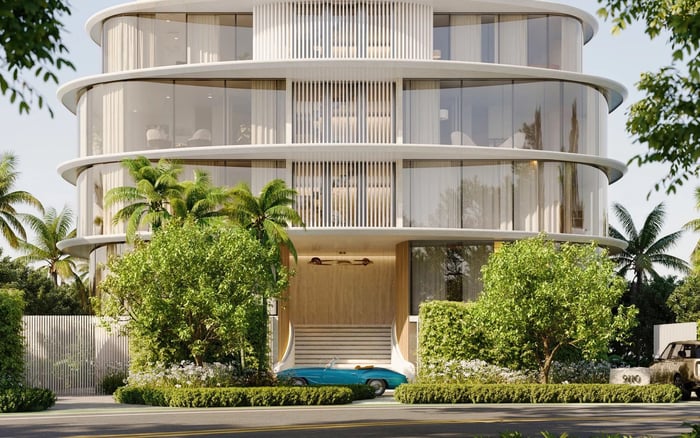
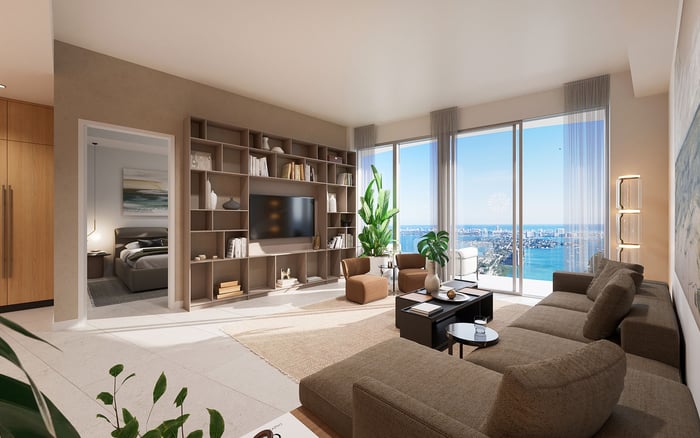
A collection-first framework for evaluating an Aventura residence, from storage planning and lighting control to climate review, documentation, and specialist due diligence.

For an art-focused buyer, the most useful residence is not necessarily the one with the broadest expanse of glass or the longest uninterrupted wall. It is the home in which display, storage, lighting, climate strategy, service routes, and building procedures can be coordinated around the collection.
That distinction should shape an Aventura search in 2026. Before touring, prepare a concise collection brief identifying works intended for display, pieces requiring storage, unusually large formats, delicate materials, preferred rotation schedules, and any parameters already established by a conservator. The document need not disclose values. Its purpose is to give the buyer’s designer, art adviser, lighting consultant, insurer, and technical specialists one consistent program against which to evaluate the residence.
Within MILLION’s Buyer's Guides, this is where Design & Architecture meets Lifestyle: the collection becomes an operational requirement, not decoration added after closing.
A spare bedroom, closet, or service area should not automatically be designated for art storage. Ask a qualified specialist to assess the proposed location for the collection in question and define the appropriate enclosure, racking, monitoring, access, security, and housekeeping plan.
Begin with practical questions. Can works enter and leave without navigating tight turns? Is there sufficient working space for safe handling? Who will have access, and how will that access be recorded? Can packing materials be stored separately from the art? Is the location exposed to plumbing, exterior openings, mechanical equipment, or routine service activity? The answers establish a project scope for professional review rather than an improvised storage solution.
Buyers considering Avenia Aventura can apply this same checklist during plan review and private showings. Request written confirmation of any alteration, equipment, or access arrangement essential to the proposed storage program.
Art lighting should be considered by work, wall, room, and daily use. Begin with the visual objective: intimate evening viewing, flexible entertaining, gallery-style presentation, or a combination. Then ask a lighting specialist to specify fixtures, placement, controls, scenes, shielding, and any collection-specific limits.
Review daylight and electric light separately. Over more than one visit, observe where daylight reaches display surfaces and how shades or other controls operate. For electric light, confirm whether fixture positions can adapt as works rotate, whether controls are intuitive, and whether maintenance can be performed without putting art at risk.
Do not approve a lighting concept from a rendering alone. A sample installation or mock-up can help the owner assess its appearance before committing to a full program. Record final settings and fixture information so the system can be maintained consistently.
“Air-conditioned” is not a collection-care specification. The buyer should ask the collection’s conservator or another qualified professional to define suitable conditions for the works, then have the residence and proposed storage location evaluated against that written brief.
The review can address system operation, controls, monitoring locations, sensor access, maintenance responsibility, backup planning, and the response protocol for an alert. Determine which conditions are controlled within the residence and which depend on common building systems. If an upgrade is contemplated, confirm what may be installed, where equipment may be placed, how noise and drainage will be managed, and which approvals are required.
This discipline is particularly useful when comparing Aventura with nearby Sunny Isles Beach. A tour of Bentley Residences Sunny Isles, Muse Residences Sunny Isles Beach, or Turnberry Ocean Club Sunny Isles should prompt the same questions. Neither a project name nor its setting replaces a residence-specific technical review.
Art care extends beyond the room where a work hangs. Before closing, walk the anticipated route from arrival to installation with the appropriate building representative and art handler. Address scheduling, documentation, protection of common areas, elevator use, doorway clearances, staging, contractor access, and any restrictions that could affect delivery.
For a Waterfront residence, also ask the specialist team to consider the selected unit’s exposures and the collection’s proposed locations. Avoid drawing conclusions from the view, floor level, or orientation alone. The objective is a written, unit-specific assessment coordinated with the owner’s display and storage plan.
Renovation feasibility belongs in the same review. Confirm whether walls can accommodate the intended installation approach, whether electrical work is necessary, and whether shades, sensors, cabinetry, security devices, or supplemental equipment require drawings or approvals. The relevant professionals should verify conditions rather than infer them from marketing materials.
Before the collection arrives, assemble a private operating file. Include the approved layout, installation records, lighting scenes, equipment information, monitoring plan, service contacts, access permissions, insurer requirements, and emergency call sequence. Keep a secure copy available to the owner or designated representative.
The final pre-arrival meeting should establish responsibility. Decide who receives alerts, who may authorize access, who coordinates handlers, and who records changes as art rotates. This turns a beautiful residence into a managed environment with clear accountability.
When should an art-focused buyer begin planning? Begin before property tours by preparing a collection brief and identifying the specialists who should participate in due diligence.
Should collection values appear in the buyer’s brief? Not necessarily. The brief can focus on dimensions, materials, handling needs, display intentions, and storage requirements.
Can a standard closet serve as art storage? Do not assume so. Have the precise location and proposed use assessed for the specific collection.
Who should define climate parameters for the collection? A qualified conservator or other appropriate collection-care professional should provide parameters tailored to the works.
What should be checked during a second showing? Revisit daylight, shade operation, display walls, service paths, proposed storage, controls, and access logistics.
Is a lighting rendering sufficient for approval? A rendering communicates intent, but a specialist review and sample installation can support a more informed decision.
What building documents should a buyer request? Request the rules, approval procedures, contractor requirements, delivery protocols, and documents relevant to the proposed alterations.
Should monitoring continue when the residence is unoccupied? Ask the collection-care and technical teams to design monitoring, notification, and response procedures for every occupancy pattern.
How should large works be evaluated before purchase? Confirm the complete delivery and installation path with an experienced art handler before relying on room dimensions alone.
What belongs in the final collection file? Include layouts, approvals, settings, equipment details, service contacts, access permissions, and the agreed emergency sequence.
When you're ready to tour or underwrite the options, connect with MILLION.
If branded residences are on your mind — as a home or as an allocation — we would be glad to share what we are seeing, privately.
Begin a quiet conversation