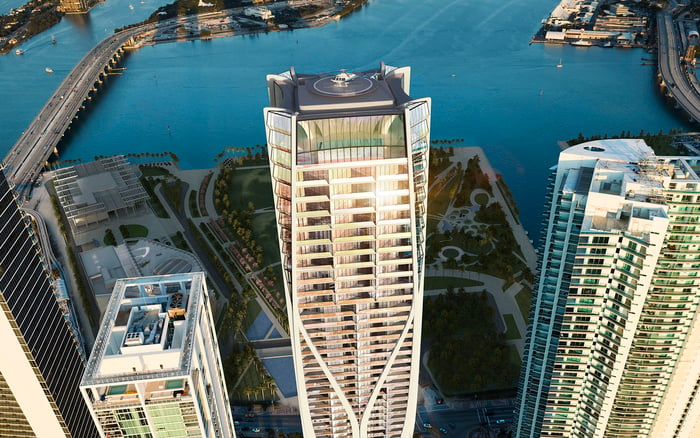
Art collectors buying in South Florida should examine developer delivery risk with the same discipline they bring to provenance, condition and placement. The right residence is not only a beautiful address, but a delivered environment capable of supporting art, logistics and long-term confidence.
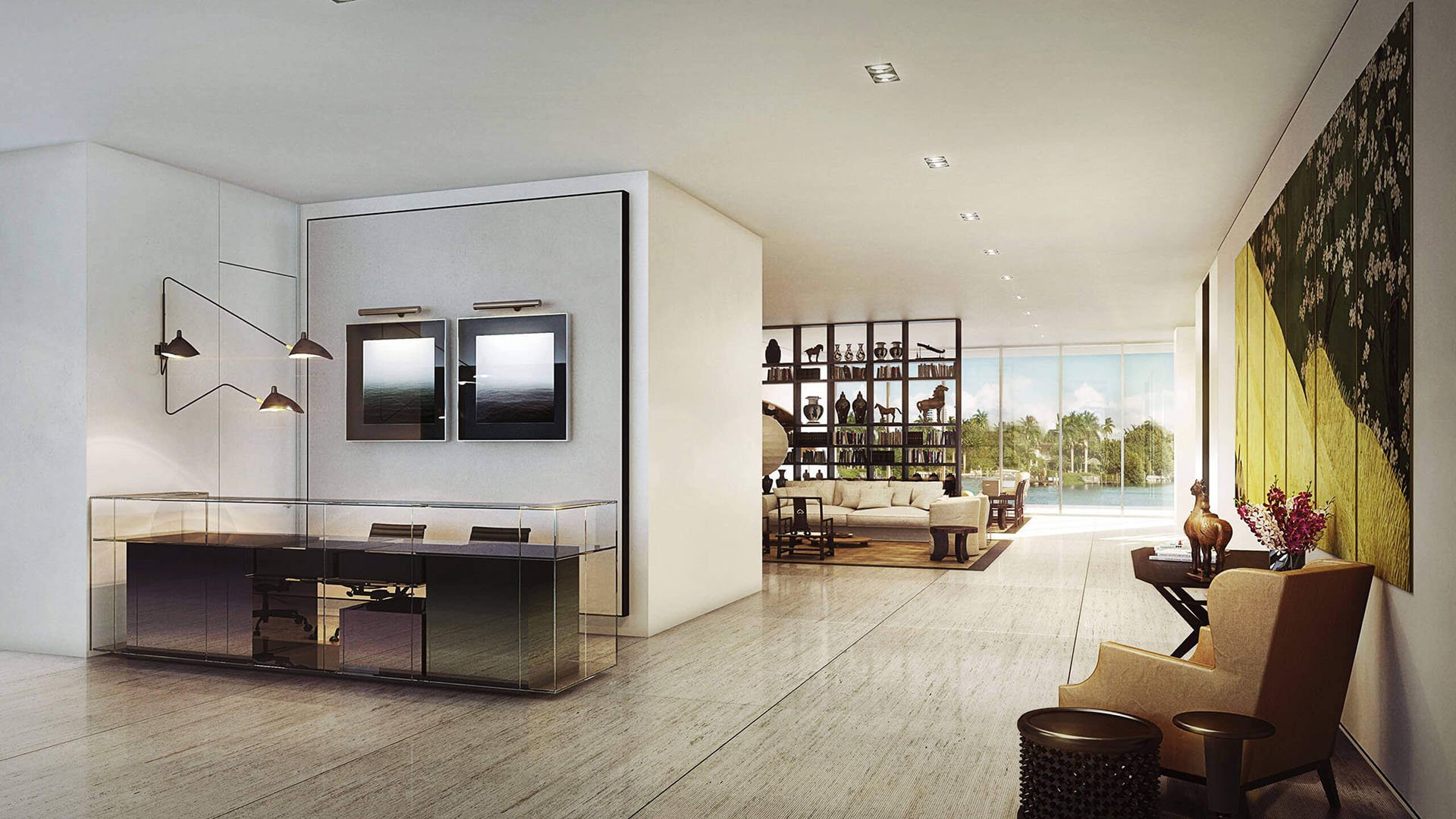
For serious collectors, a South Florida residence is rarely just a place to live. It is a private gallery, a receiving room, a conservation environment, and a setting for dinners, loans, photography, and, at times, legacy planning. That is why developer delivery risk deserves scrutiny before a reservation becomes a binding commitment.
Delivery risk is the possibility that the home ultimately delivered, or the timing of that delivery, does not match the buyer’s expectations at signing. In an ordinary luxury purchase, that may mean a finish substitution, a revised amenity, or a delayed move-in. For an art collector, it can affect installation sequencing, climate planning, insurance, security, storage, and the safe receipt of works.
The point is not to distrust new construction. It is to evaluate it with the same discipline a collector brings to acquisition. Provenance, condition, authenticity, and future stewardship all have residential equivalents. The question is not only whether a building is beautiful on paper, but whether its contractual and physical delivery can support the collection that will live within it.
Art changes the way a buyer should read a floor plan. A wall is not simply a wall when it must support a large canvas, a delicate textile, a sculptural installation, or a sequence of framed works. Ceiling heights, light exposure, elevator access, loading routes, humidity control, storage rooms, and service corridors become practical concerns, not decorative details.
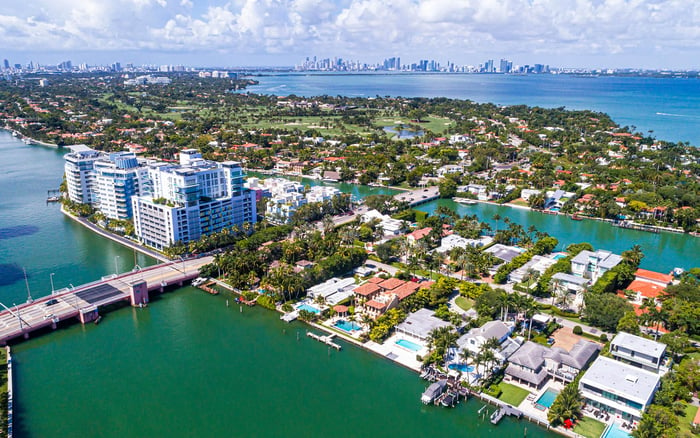
In South Florida, many collectors are drawn to high-design residences in Brickell, Miami Beach, Sunny Isles Beach, Bal Harbour, Coconut Grove, and Palm Beach. The lifestyle is compelling, but the coastal setting makes coordination essential. Glazing, exposure, terrace use, mechanical systems, and maintenance protocols should be understood early, especially where art will be placed near light, water views, or entertaining areas.
The same discipline applies whether the conversation begins during Art Basel week or in a private appointment months later. A collector should ask how the residence will function on the day the first crate arrives, not only how it appears in a rendering.
Pre-Construction purchases require a different kind of confidence. Buyers often commit before the completed residence can be walked, measured, and tested. That makes the purchase agreement, offering materials, and related disclosures central to the decision.
Collectors should focus on several practical questions. What discretion does the developer have to change finishes, dimensions, layouts, amenities, or common areas? What happens if delivery is delayed? How is closing notice handled? What are the buyer’s remedies if the delivered residence materially differs from expectations? How are punch-list items addressed after closing? Which obligations survive closing, and which do not?
The answers may be technical, but they are not academic. A collector planning custom millwork, lighting, wall reinforcement, or art storage needs to know when access will be available, what approvals are required, and whether post-closing work can be coordinated without disrupting building rules. Legal review should be paired with practical review by the buyer’s art advisor, architect, conservator, insurance specialist, and security consultant.
In Brickell, buyers looking at projects such as The Residences at 1428 Brickell or Baccarat Residences Brickell may be drawn first to skyline energy, hospitality, and design identity. A collector’s second look should be quieter: how works enter the building, where crates can be staged, how service elevators operate, and whether the residence can support private viewing without compromising daily life.
Miami Beach asks different questions. At a project such as The Perigon Miami Beach, the emotional pull may be light, water, and architectural atmosphere. For a collection, that beauty must be balanced against decisions about placement, shading, UV exposure, terrace adjacency, and the rhythm of entertaining.
Sunny Isles Beach and Bal Harbour introduce another lens: vertical living with oceanfront or near-ocean appeal. A buyer considering St. Regis® Residences Sunny Isles or Rivage Bal Harbour should weigh not only brand, view, and privacy, but also the mechanics of moving significant works through a completed building with minimal friction.
Many art collectors are comfortable making nuanced judgments. They understand that quality can be subtle, reputation matters, and execution matters more than a promise. The residential contract deserves the same seriousness.
A buyer should understand deposit timing, contingencies, default provisions, developer extension rights, permitted substitutions, and any limitations on claims. If customization is essential, the agreement should clearly explain what is included, what is merely contemplated, and what will require separate approval. Verbal assurances are not a substitute for written clarity.
For collectors, the most important phrase is often not luxurious. It is specific. Specific access rights, specific approval procedures, specific timelines for buyer work, specific limitations on changes, and specific remedies are the language of confidence. A beautiful sales presentation can begin the conversation, but the signed documents govern the outcome.
High-end residential marketing often presents a fully resolved lifestyle. The collector should separate design intent from enforceable delivery. Renderings, sample boards, and model residences can be useful, but they may not answer every question that matters to art stewardship.
Ask where natural light will be strongest during the day. Ask whether wall finishes can accommodate hanging systems. Ask how smart-home controls interact with lighting and shades. Ask whether humidity and temperature expectations are compatible with the works that will be installed. Ask how insurance requirements may affect storage, alarms, and access controls.
None of these questions diminishes the pleasure of buying. They protect it. A residence planned around a collection from the beginning can feel effortless at move-in. A residence adapted too late can become expensive, disruptive, and less elegant than it needed to be.
Before signing, collectors should assemble a private review team. The real estate advisor frames market fit. Counsel interprets rights and obligations. The art advisor considers placement and handling. A conservator reviews environmental concerns. An architect or interior designer studies walls, lighting, and circulation. An insurance specialist confirms requirements before the works arrive.
This team should review the residence as a sequence of events: signing, construction updates, walk-through, closing, access for buyer work, delivery of furnishings, delivery of art, installation, and ongoing maintenance. Each stage has its own risks. The earlier those risks are identified, the easier they are to manage.
The best buyers are not cynical. They are prepared. They understand that South Florida’s most desirable residences are often purchased before completion, and that early access can secure a rare position. But they also know that rarity is not a reason to stop asking questions.
What is developer delivery risk? It is the risk that timing, specifications, finishes, access, amenities, or other delivered elements do not align with the buyer’s expectations at signing.
Why is delivery risk especially important for art collectors? Collections require planning for light, climate, security, access, insurance, and installation, so small delivery changes can have outsized consequences.
Should collectors avoid Pre-Construction residences? No. They should approach them with disciplined review, strong counsel, and a clear plan for how the collection will live in the home.
What should be reviewed first in the purchase documents? Focus on deposit obligations, delivery timing, developer change rights, buyer remedies, closing procedures, and customization approvals.
Can renderings be relied upon as final specifications? Renderings are useful for design intent, but buyers should confirm which elements are contractually binding before relying on them.
Who should be involved before signing? Counsel, a real estate advisor, art advisor, conservator, insurance specialist, and design professional can each identify different risks.
What building features matter most for art logistics? Service elevator access, loading routes, staging areas, wall conditions, light control, security systems, and mechanical performance all matter.
How early should installation planning begin? It should begin before signing if major works, custom lighting, specialty walls, or conservation-sensitive pieces are involved.
Are branded residences safer from delivery risk? A strong brand may signal design ambition, but the buyer still needs to review the actual legal documents and delivery obligations.
What is the best way to shortlist comparable options for touring? Start with location fit, delivery status, and daily lifestyle priorities, then compare stacks and elevations to validate views and privacy.
For a tailored shortlist and next-step guidance, connect with MILLION.
If branded residences are on your mind — as a home or as an allocation — we would be glad to share what we are seeing, privately.
Begin a quiet conversation