Acoustic privacy deserves the same scrutiny as a residence’s views and finishes. For Brickell buyers, careful listening, adjacency checks, and association records can help reveal potential disputes and remediation exposure before ownership begins.
.jpg)
In Brickell, a residence’s most consequential luxury may be the one a showing barely reveals: the ability to close a bedroom door and retreat. Views and finishes are immediately apparent. Acoustic privacy requires a different inspection-one attentive to what lies behind walls, beyond glazing, and along the route from the elevator.
The ownership-cost question is not simply whether a sound is audible. It is whether an unresolved disturbance could lead to investigation, remediation, or a prolonged exchange with management. No universal repair allowance or resale discount is established here for these conditions. The objective is narrower: identify uncertainty before accepting it as part of the purchase.
For buyers considering The Residences at 1428 Brickell, as elsewhere in the neighborhood, acoustic questions should focus on the individual residence and its surroundings. The projects referenced here provide comparison contexts; they are not properties identified as having noise problems.
An interior plan explains how a home lives. It does not necessarily explain what the home hears. Ask what lies behind bedroom walls and beside the entrance, including elevator cores, trash rooms, mechanical spaces, and service corridors.
Include HVAC systems, elevator machinery, trash chutes, generators, and pool equipment in your review of potential sound sources. A bedroom sharing a wall with elevator machinery deserves particular attention, without assuming every elevator-adjacent home performs alike.
Residences beside elevator lobbies or service doors also warrant listening for door slams, cart impacts, and corridor traffic. Distinguish these events from a persistent mechanical hum in your notes. The distinction helps frame a precise question for management without presuming to diagnose the source.
When reviewing Cipriani Residences Brickell, make the same request for adjacency information. A compelling interior layout should begin, rather than conclude, the privacy review.
A quiet conversation during a tour is not an acoustic test. Set aside part of the visit for silence in each bedroom, listening for mechanical hum, elevator movement, water flow, traffic, and amenity activity. Give the rooms intended for sleep the most attention.
Use a repeatable sequence:
Listen with the residence’s HVAC running, then with it off where permitted.
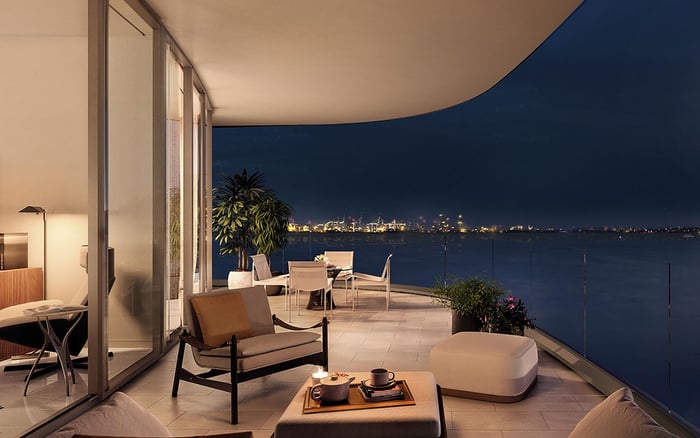
Compare terrace doors open and closed, noting the change rather than assuming isolation.
Pause near the entrance and critical bedroom walls for corridor and equipment sounds.
Return at different times, including an evening visit when access permits.
Record the room, time, operating conditions, and what you actually heard. Describe a recurring hum or a distinct impact rather than assigning a technical cause you cannot establish. If a concern persists, ask management to listen and inspect, and consider a qualified acoustic evaluation before treating the issue as resolved.
These are screening steps, not professional acoustic measurements. A silent visit establishes that the residence was quiet during that visit-not under every operating condition.
An amenity deck can be an attractive neighbor on a plan. Its acoustic relationship to a residence still deserves a separate review. Listen for amenity activity and ask where associated equipment, particularly pool equipment, sits relative to the rooms you value most.
Do not turn proximity into a prediction. There is no basis here for declaring a particular Brickell deck-to-unit transmission pattern or assuming every residence above, below, or beside an amenity experiences the same sound.
For a buyer evaluating Una Residences Brickell, the useful question is how the specific residence relates to amenity and service spaces-not whether an amenity-rich address is inherently noisy. Seek the layout information and listening opportunity needed for a meaningful comparison.
If activity or equipment is absent during the showing, leave that question open. An inactive setting should not become a promise of everyday quiet.
For a street-facing Brickell residence, include nighttime traffic exposure in your due diligence rather than assuming the daytime showing represents every hour.
An evening return offers another opportunity to assess bedrooms and living spaces under different conditions. Compare terrace doors open and closed again. Note whether a disturbance is a brief event or a recurring presence, while resisting conclusions about an entire week from one evening.
A buyer comparing 2200 Brickell with another residence should carry the same listening checklist between appointments. Consistent observations are more useful than contrasting a quiet daytime tour at one property with a busy nighttime visit at another.
Your tolerance matters, but it should be informed by the conditions you expect to encounter-not just the atmosphere of the showing.
Ask whether the association maintains a noise-complaint log and request noise-related entries from the preceding two years. If records are available, look for recurring descriptions, locations, management responses, and signs that a concern remains unresolved. Do not assume the absence of an entry proves the absence of noise.
Ask about corridor activity and building operations as well as sounds heard inside the residence. Treat any complaint as a concern to investigate, not an acoustic measurement or proof of a building-wide defect.
If an acoustic rating enters the purchase discussion, request supporting documentation and qualified interpretation rather than accepting the number alone as reassurance. Ask how the documentation relates to the specific residence and the disturbance under review.
The hidden cost is potential exposure, not a predetermined invoice. Before budgeting for a remedy, establish what is heard, what may be causing it, and what management has already investigated. Do not assume an interior alteration will resolve an unidentified disturbance.
For any continuing concern, keep a log of timing and perceived intensity, retain management correspondence, and request an inspection. These are practical documentation habits, not a statement of Florida legal rights or responsibility for repairs.
A disciplined purchase decision distinguishes observed conditions from explanations still requiring confirmation and questions that remain open. Acoustic privacy belongs beside the view and the floor plan as a condition to evaluate, not an amenity to presume.
Explore Brickell residences with a more discerning ownership checklist at MILLION.
If branded residences are on your mind — as a home or as an allocation — we would be glad to share what we are seeing, privately.
Begin a quiet conversationPotential sources to investigate include HVAC systems, elevator machinery, trash chutes, generators, pool equipment, corridor activity, and traffic. Evaluate the individual residence and its surroundings rather than assuming exposure.
No. Adjacency warrants closer listening and layout review, but it does not establish a defect or predict the experience in every residence.
Listen quietly for mechanical hum, elevator movement, water flow, traffic, and amenity activity. Record what you hear without assuming you have identified its technical cause.
The comparison lets you observe how the audible conditions change. It is a screening step, not a professional acoustic measurement or a definitive diagnosis.
An evening visit offers a chance to evaluate traffic exposure under different conditions from a daytime showing. One visit still cannot establish conditions at every hour.
No. Review the relationship between the residence, amenity spaces, and equipment, then listen under relevant conditions rather than inferring transmission from proximity.
Ask whether a complaint log exists and request noise-related entries from the preceding two years. Review recurring concerns and management responses without treating missing entries as proof of silence.
Request supporting documentation and qualified interpretation rather than relying on the number alone. Ask how it relates to the specific residence and the disturbance under review.
No reliable universal repair budget or resale discount is established here. Clarify the disturbance and seek appropriate evaluation before assuming a remedy or its cost.
Log when it occurs and its perceived intensity, retain management correspondence, and ask management to listen and inspect. Consider qualified acoustic evaluation before treating the concern as resolved.