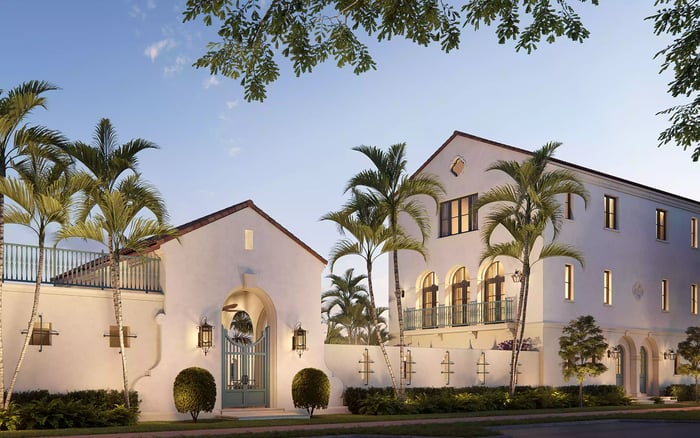
For Vancouver buyers considering Coral Gables, home-office resilience belongs in the property brief. Underground utilities, fiber availability and emergency power require separate, address-specific checks before a residence can support a credible continuity plan.

For a Vancouver buyer choosing Coral Gables, the home office deserves the same scrutiny as the principal suite. A beautifully proportioned study is only part of the proposition. The more consequential questions concern the electrical service reaching the property, the internet connection entering the residence and the equipment that will keep essential work moving when normal service is interrupted.
This is not a verdict on which city has better utilities. It is a shift toward an address-specific purchase brief: what is installed, what remains planned and what can be tested. Neither an underground-service description nor a fiber-availability claim should be treated as proof of uninterrupted service at an individual home.
Define the working day first. Identify the calls, applications and devices you need to preserve, then ask your advisers to evaluate the property against that brief. Resilience should be documented, not inferred from a polished presentation.
Begin by confirming the electrical configuration serving the prospective residence. Ask which portions are underground and whether any conversion remains pending. Distinguish completed work from active construction and proposals; nearby construction is not proof that the home has already been converted.
When evaluating The Village at Coral Gables, apply the same address-level discipline. The project name is a starting point for the search, not evidence of a particular utility configuration.
If conversion work is proposed, request written clarification of its scope, timing and any costs or responsibilities that would fall to the owner. Do not build the purchase decision around assumed completion dates or an unverified promise of no charge.
If a property presentation includes reliability figures, ask what they measure and where they apply. Distinguish a broader utility comparison from evidence about the service reaching the residence. A percentage without a defined metric should not become an assumption about the frequency or duration of interruptions at home.
Apply similar restraint to construction schedules. Ask whether a stated date reflects completed work, an active commitment or an earlier planning estimate. Request current confirmation for the property's block rather than relying on a general neighborhood description.
The purchase brief should keep infrastructure and continuity planning separate. Even where underground service is confirmed, ask your advisers to assess what would happen to essential work if normal power or internet service were interrupted.
Verify internet availability at the specific residence, including any installation required. Do not infer the telecom connection's configuration from the electrical service: ask separately whether each connection is buried and what documentation supports the answer.
For a residence under consideration at Cora Merrick Park, request address-specific service confirmation and clarify the installation required. The useful question is not merely whether fiber is promoted nearby, but whether the intended residence can receive the service being considered.
Treat a second connection as a separate due-diligence exercise. Ask a network specialist to evaluate available cable or cellular alternatives, investigate potential shared dependencies and test the proposed fallback from the actual workspace. These are design recommendations, not assurances of local availability or storm performance.
The test should reflect your work: a live meeting, access to necessary systems and a deliberate transition away from the primary connection. Keep backup connectivity distinct from the power plan for the equipment supporting it.
Emergency power should begin with a defined list of essential loads, not a generic runtime promise. Ask a qualified electrical professional to assess the workstation, network equipment and any other functions you want included. Separate the minimum requirements for work from the broader ambition of maintaining household comfort.
A UPS, battery system or generator belongs in that professional assessment. Do not select system capacity or a runtime target from general reliability claims. Request a design tied to the property's equipment, intended loads and operating assumptions.
At Ponce Park Coral Gables, as with any residence under evaluation, ask for written clarification of any emergency-power provision rather than inferring capability from the project's positioning. Establish what, if anything, serves the private residence and what serves shared or building systems.
Request documentation of supported circuits, expected runtime at the stated load, transfer behavior, maintenance responsibilities and applicable installation restrictions. Any proposed addition should receive property-specific professional review before it becomes part of the purchase rationale.
Bring the electrical and connectivity inquiries together in a compact property file. Distinguish existing equipment from proposals, verified service from planned expansion and documented capability from sales language. These distinctions are particularly useful when comparing homes with equally compelling interiors.
Request the electrical service configuration, current internet availability, confirmation of whether telecom connections are buried and specifications for any installed backup equipment. Where systems already exist, ask for maintenance records and a professionally supervised demonstration appropriate to the equipment.
For a proposed installation, seek a written scope and identify who will secure approvals, coordinate trades and maintain the finished system. Do not treat an unpriced concept as equivalent to an installed, tested arrangement when comparing properties.
Keep the conclusions measured. A successful demonstration establishes behavior under the conditions tested, not immunity to a future storm. The objective is a clearer operational picture before committing.
For the Vancouver buyer, the strongest Coral Gables choice is not necessarily the residence with the most ambitious technology language. It is the one whose capabilities align with the way the owner actually works.
Evaluate power delivery, primary connectivity, fallback connectivity and emergency power as related but distinct decisions. That approach preserves the home's appeal while giving its less visible systems the attention they deserve. The desired outcome is not a promise of uninterrupted life, but a considered plan with explicit capabilities and limits.
For a discreet property search shaped around your working life, connect with MILLION.
If branded residences are on your mind — as a home or as an allocation — we would be glad to share what we are seeing, privately.
Begin a quiet conversationRequest confirmation of the electrical configuration serving the specific property. Distinguish completed work from nearby construction or proposed conversion.
Request written clarification of the scope and any costs or responsibilities that would fall to the owner. Do not assume proposed work carries no charge.
Ask what the figures measure and whether they apply to the residence or a broader utility system. Do not treat them as a guarantee of property-level performance.
Ask whether the date reflects completed work, an active commitment or a planning estimate. Obtain current confirmation for the property's block.
Include electrical-service details, confirmed internet options and specifications for any backup equipment. Request maintenance records and distinguish installed systems from proposals.
Do not treat nearby service as confirmation. Request address-specific availability and installation requirements.
Buyers should not assume so. The telecom connection's configuration should be verified separately from the electrical service.
Ask a network specialist to assess available alternatives, potential shared dependencies and fallback performance in the actual workspace. These checks do not guarantee storm-time availability.
Capacity should be professionally assessed against essential equipment, intended loads and operating assumptions. Request documented runtime at the stated load rather than relying on a generic promise.
No specific backup configuration is established here for those projects. Buyers should obtain property-specific documentation of supported circuits, connectivity and any emergency-power provisions.