For Kuwait City buyers, privacy in a Las Olas condominium is a sequence rather than a single amenity. The decisive questions concern who observes an arrival, how elevator access is configured, where deliveries are held, and how household staff receive credentials.

For a Kuwait City buyer accustomed to residences organized around family discretion, household staff, drivers, and carefully managed guests, the phrase “private elevator” can imply more than it establishes. In a Las Olas condominium, the elevator may protect the final approach to the residence, while the curb, garage, reception area, cameras, and service routes remain part of a broader operational system.
Privacy should therefore be evaluated chronologically. Begin with the vehicle’s arrival, follow the resident or guest through access control, inspect the elevator configuration, and repeat the exercise for household employees, couriers, groceries, luggage, and furniture. At each threshold, ask who can observe the movement, who authorizes it, and whether a record is created.
The elevator can privatize the final threshold without making the entire arrival anonymous.
This is the distinction between architectural privacy and managed privacy. The first concerns physical separation from neighbors and public circulation. The second concerns how personnel, credentials, surveillance, and building procedures govern access. A residence can perform well in one category without answering every question in the other.
A buyer’s review should start outside the residence. At a staffed curb, ask how residents, household drivers, known guests, and unfamiliar visitors are distinguished. Determine whether a guest must be announced, whether a resident can authorize entry remotely, and whether after-hours arrivals follow a different procedure.
A garage route deserves the same scrutiny. The buyer should identify where credentials are presented, where a passenger leaves the vehicle, and whether that route joins a lobby or other shared area before reaching the elevator. A chauffeured arrival and a self-parked arrival may create different exposure, so both should be tested rather than treated as interchangeable.
Comparison tours can help a buyer apply the same questions across different residential settings. Four Seasons Hotel & Private Residences Fort Lauderdale and The Ritz-Carlton Residences® Fort Lauderdale may be included in a Fort Lauderdale search without presuming that their access procedures are identical. The useful comparison is the complete route: curb, parking, reception, elevator, foyer, and residence.
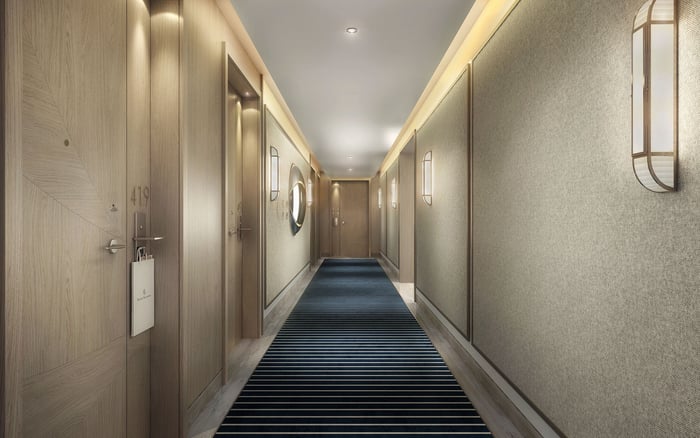
Elevator terminology should be verified through plans, an in-person route test, and written building materials. A buyer should establish whether the elevator cab is shared, whether access is restricted by floor, and where the doors open. A private foyer, a restricted landing, direct residence entry, and a dedicated cab describe different arrangements.
The opening point is only one part of the analysis. Ask how a resident calls the elevator, how a guest receives authorization, and what happens if multiple authorized users arrive at the same time. The buyer should also understand whether the foyer is legally or operationally part of the residence, a limited common element, or shared circulation. No assumption should replace a review of the applicable documents.
Override authority is equally important. Management, security, maintenance, and emergency personnel may require access under defined circumstances. A privacy-focused purchaser should request a clear explanation of who can authorize an override, how access is implemented, and whether the event is recorded. The goal is not to prevent legitimate access but to understand the control structure before committing.
Domestic employees should not be analyzed as occasional guests. Their access may be recurring, tied to working hours, or required when the owner is absent. The buyer should ask whether each employee receives an individual credential, whether permissions can be limited, and how quickly access can be withdrawn when responsibilities change.
The route matters as much as the credential. Establish whether household staff use the resident entrance, a service entrance, or a route selected according to the task. A nanny arriving for routine work, a chef carrying groceries, and a housekeeper bringing supplies may encounter different practical needs even if the building groups them under one policy.
Recordkeeping also deserves attention. Ask whether the owner can view access activity, who else can review it, and how a lost credential is handled. If a household employs several people, a named credential for each user may offer clearer control than a shared device, but the available system and permitted arrangement must be confirmed with the property.
A buyer considering a marina-oriented alternative can apply the same diligence framework when touring St. Regis® Residences Bahia Mar Fort Lauderdale. The setting may differ, but the central questions remain focused on the resident route, guest route, employee route, vendor route, and emergency route.
Packages, groceries, flowers, luggage, and prepared food often expose the difference between an elegant arrival concept and the building’s daily operating procedures. Buyers should ask where couriers wait, whether staff can accept items, and whether a resident must be present. They should also determine whether a courier can approach the residential elevator or whether all handoffs occur at a controlled location.
Grocery delivery deserves its own scenario. Clarify whether temperature-sensitive items are handled differently, whether building personnel can bring an order upstairs, and what identifying information is recorded. For a household that relies on staff, establish whether an employee can receive an order without the owner being present.
Large deliveries create another route entirely. Furniture, artwork, appliances, and luggage may involve reservations, protective measures, vendor documentation, and designated circulation. The buyer should review where vendors enter, which elevator they use, who supervises access, and whether the service route intersects with a private foyer or resident-only area.
Lower-density properties should undergo the same review. Sixth & Rio Fort Lauderdale can be part of a broader Las Olas-area comparison, but scale alone does not establish the level of privacy. The lived result depends on the relationship between design and operating procedures.
Controlled access can create records. Credential use, visitor registration, camera footage, parking access, and delivery handling may document household activity. A buyer should ask which records are kept, who can review them, how access to those records is controlled, and what happens when a credential is replaced or disabled.
Third-party involvement should be clarified rather than assumed. Ask whether any access, parking, visitor, or package system is administered by an outside provider and which party answers questions about stored information. The appropriate response will depend on the systems and policies of the property under review.
Privacy expectations should also extend beyond the front door. Shared amenities and common circulation can reintroduce contact with residents, guests, and personnel. A private elevator approach should therefore be evaluated as one component of the lifestyle, not as a promise that every part of the property is secluded.
Before committing, request the available written materials concerning guest registration, deliveries, moving procedures, service access, household staff, credentials, overrides, and records. Compare those materials with the sales presentation and governing documents, and direct unresolved questions to the appropriate representatives.
Then test the routes at times relevant to the household. Arrive as a resident, consider the experience of a chauffeured passenger, trace the path a registered guest would follow, and ask how an evening delivery would be handled. If household staff will regularly work in the residence, map their likely arrival and departure as carefully as the owner’s.
Finally, reduce ambiguous terminology to specific questions. Confirm whether the cab is shared, where it opens, how the destination is authorized, who can override access, and which route is used for vendors. The most suitable residence is the one whose architecture and daily operations align with the household’s expectations from curb to front door.
For a confidential Las Olas residence search and a tailored privacy review, consult MILLION.
If branded residences are on your mind — as a home or as an allocation — we would be glad to share what we are seeing, privately.
Begin a quiet conversationNo. Buyers should evaluate the entire route from vehicle arrival through the residential threshold.
Confirm whether the cab is shared, how floor access is authorized, where the doors open, and who can override permissions.
Each route can involve different personnel, credentials, shared areas, and access procedures.
Ask how guests are registered, announced, authorized, and directed from the entrance to the residence.
Ask whether credentials are individual, restricted, monitored, replaceable, and promptly revocable.
Buyers should confirm which personnel may receive access, under what circumstances, and whether the event is recorded.
Confirm where couriers wait, who may accept an order, whether the resident must be present, and how items reach the residence.
Ask about reservations, vendor entry, elevator use, supervision, and any intersection with resident circulation.
Access credentials, visitor procedures, cameras, parking systems, and delivery handling may create records of household activity.
Review available written materials, test the relevant routes, and seek clarification of any access term or procedure that remains ambiguous.