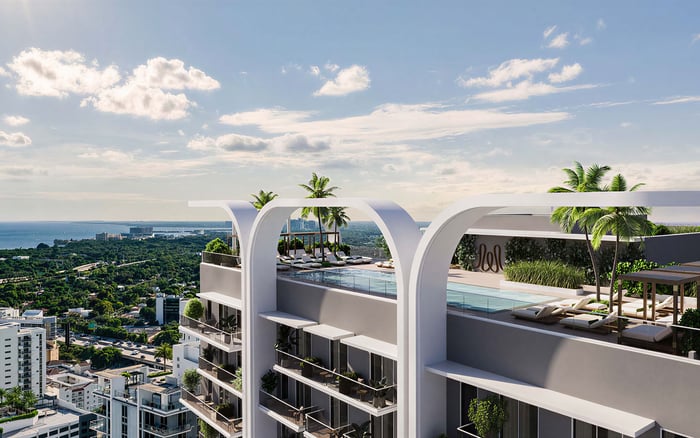
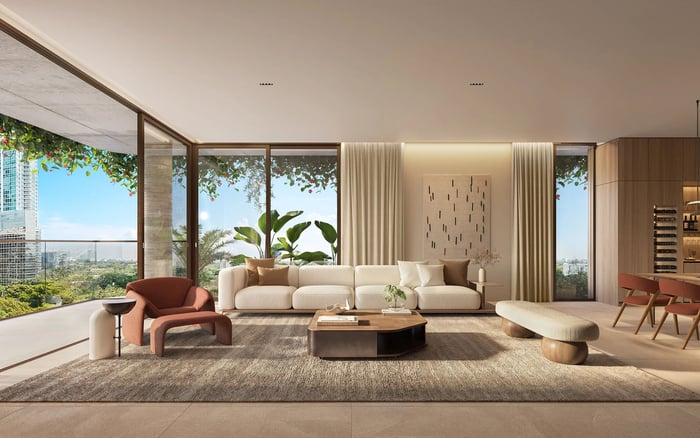
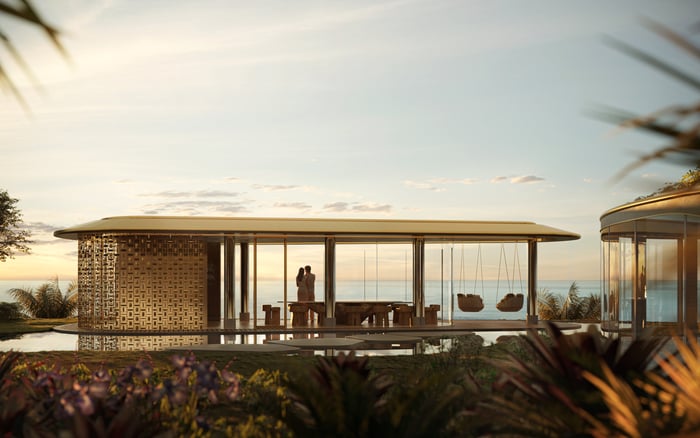
A buyer-focused look at how double-height great rooms can shift a South Florida penthouse from trophy space to full-time residence, with emphasis on volume, light, privacy, entertaining, and daily livability.
A penthouse is often purchased for altitude, privacy, and the feeling of arrival. Yet the detail that can change its role in a buyer’s life is not always the view itself. It is the room that receives the view. A double-height great room can make a penthouse feel less like a weekend aerie and more like a complete residence because it introduces the quality many high-floor apartments lack: architectural breathing room.
For South Florida buyers, that distinction matters. A property may offer dramatic water, city, or skyline exposure, but if the principal living space feels compressed, the home can remain psychologically temporary. A double-height room changes the posture of the residence. It allows art to hang properly, conversations to feel unforced, and daylight to move through the home without relying on ornament. In a Brickell penthouse, for example, volume can soften the urban intensity below and create the sense of a private house in the sky.
In a full-time residence, the entrance is not merely where the elevator opens. The true arrival occurs when the home reveals its scale. A double-height great room creates that reveal immediately, but the strongest examples do more than deliver drama. They organize the home around a central space that can host breakfast, family evenings, formal entertaining, and quiet hours with equal dignity.
That is what separates theatrical height from livable height. The room should not feel like a lobby transplanted into a private home. It needs zones, proportion, and a clear relationship to the kitchen, dining area, private suites, and outdoor space. When the great room succeeds, it becomes a daily anchor rather than a special-occasion backdrop.
Furniture planning is a useful test. If the room requires oversized pieces simply to avoid looking empty, the architecture may be dictating life rather than supporting it. If the volume can accommodate intimate seating, a proper dining sequence, a reading corner, and circulation that never feels interrupted, the penthouse begins to function like a residence designed for years, not weekends.
Double-height glass is powerful in South Florida because the light is abundant and constantly changing. Morning glare, afternoon heat, reflected water, and evening city glow all shape the experience of the room. Waterview is not enough by itself; the question is how that view is framed, filtered, and lived with throughout the day.
The most refined great rooms do not compete with the horizon. They edit it. Clean vertical lines, considered mullion placement, and disciplined material choices allow the exterior to become part of the architecture without overwhelming the interior. This is especially important in oceanfront settings, where blue water and sky can dominate every surface if the palette is not carefully controlled.
Buyers should also think beyond the first showing. A room that dazzles at sunset must feel calm on a Tuesday morning. It should accommodate shades or screening without losing its character. It should preserve privacy where neighboring towers, coastlines, or passing boats enter the field of view. The goal is not maximum exposure at every moment. The goal is command over exposure.
The occasional buyer may prioritize impact. The full-time buyer looks for rhythm. Where will coffee be taken? Where does a child study, a guest sit, a partner take a call, or a dinner begin? A double-height great room can answer these questions beautifully, but only if the plan supports daily movement.
High floors often create a sense of separation from street life, which can be both a luxury and a challenge. The great room becomes the place where scale reconnects the owner to atmosphere, weather, and horizon. It gives the home a civic quality without sacrificing privacy. In the best cases, the owner experiences the ease of condominium living with some of the emotional qualities of a single-family home: openness, verticality, and a sense of permanence.
Acoustics matter. Height can amplify sound if surfaces are too hard or the room is under-furnished. Stone, glass, and lacquer may look pristine, but a full-time home needs softness in the right places. Rugs, textiles, wood, upholstered seating, and art all contribute to acoustic comfort. The luxury is not silence exactly. It is control.
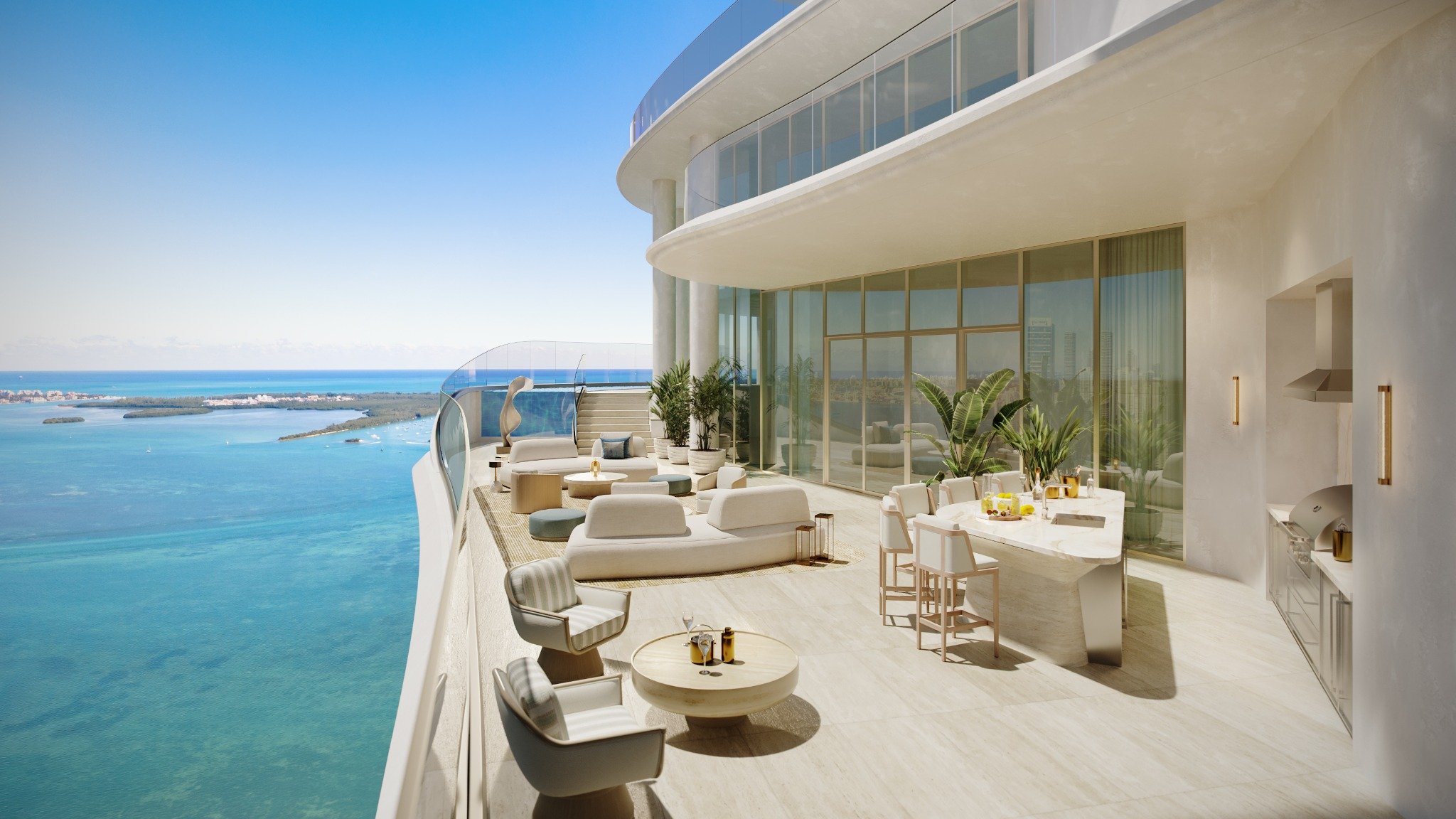
A double-height room becomes more convincing when it connects to meaningful outdoor space. The terrace should not feel like an afterthought or a narrow viewing ledge. It should extend the logic of the great room, giving the residence an outdoor counterpart for dining, lounging, and evening air.
In South Florida, this relationship can define the home’s seasonal appeal. When doors open naturally from the principal living area, the residence gains flexibility. Entertaining can expand without feeling staged. A morning routine can move outdoors without ceremony. Guests can understand the home intuitively because the public spaces follow a clear sequence: arrival, volume, view, terrace.
The buyer should assess how the transition works physically. Are thresholds comfortable? Is there enough depth for real furniture? Does wind limit use at certain times? Does the outdoor area support privacy as well as exposure? A spectacular terrace that cannot be used comfortably is still a view platform. A terrace that behaves like a room is part of the residence.
The romance of a double-height great room is immediate, which is why disciplined evaluation is essential. Begin with orientation. Consider when the room receives its strongest light and how the glazing performs visually throughout the day. Then study the plan. The vertical volume should not steal square footage from bedrooms, storage, service areas, or circulation.
Next, consider maintenance. Tall glass, elevated window treatments, lighting, and air circulation are not casual details. A full-time owner will live with them every day. The best homes make these systems feel invisible, but they remain part of the ownership experience. Ask how bulbs are accessed, how shades operate, how climate is balanced, and how cleaning is handled.
Finally, examine emotional proportion. A great room should make the owner stand a little taller, but it should not make daily life feel small. The most successful penthouses use volume to create belonging. They do not simply display wealth. They create a private world with enough scale to hold real life.
Does a double-height great room always make a penthouse better? No. It adds value only when the plan, light control, acoustics, and furniture layout support everyday living.
Is ceiling height more important than square footage? They work together. Height can make space feel more gracious, but poor planning can waste even a large footprint.
What should buyers notice first during a showing? Notice how the room feels after the initial view moment, especially sound, glare, circulation, and privacy.
Can a double-height room feel too formal? Yes. The best designs balance grandeur with intimate seating, warm materials, and clear daily-use zones.
How important is the terrace connection? Very important in South Florida. Outdoor space should extend the living sequence, not function only as a lookout.
Are double-height great rooms practical for families? They can be, provided the layout supports supervision, storage, acoustics, and comfortable informal gathering.
Do these rooms work better with modern interiors? Often, but not exclusively. The key is proportion, restraint, and materials that do not compete with the view.
What role does art play in the space? Large vertical walls can be ideal for significant art, provided lighting and humidity considerations are handled thoughtfully.
Should buyers worry about maintenance? Yes. Window treatments, lighting access, glass care, and climate balance should be understood before purchase.
What makes the room feel like a full-time residence? It must support ordinary rituals beautifully, from morning coffee to quiet evenings and relaxed entertaining.
For a tailored shortlist and next-step guidance, connect with MILLION.
If branded residences are on your mind — as a home or as an allocation — we would be glad to share what we are seeing, privately.
Begin a quiet conversation