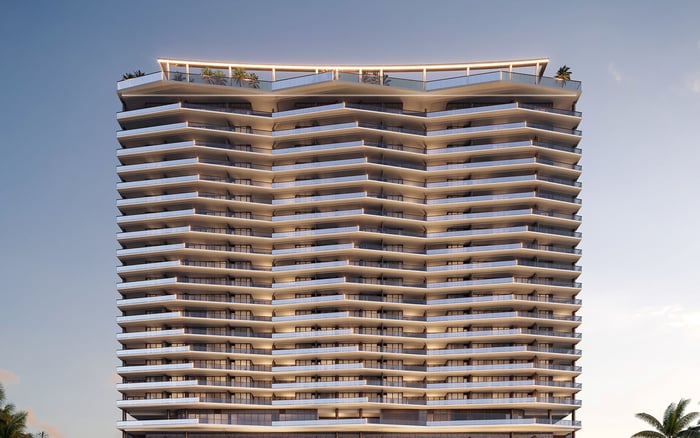
A disciplined Palm Beach buying strategy brings waterfront rights, storm planning, insurance, building governance, and ownership costs into focus before emotional preferences narrow the field.

Palm Beach buyers often choose between two distinct expressions of coastal luxury: a newly delivered residence with private outdoor space, or vertical luxury with elevated views, staffed services, and shared amenities. In either case, the water shapes far more than the outlook. It can influence access, maintenance responsibilities, emergency planning, insurance considerations, and the practical rhythm of ownership.
That is why waterfront review belongs near the beginning of the search. Before comparing stone selections, ceiling heights, or furnishing plans, determine the property's actual relationship to the water. A view is not the same as access, and access does not necessarily confer private control. The relevant documents should clarify which waterfront elements belong to the residence, which are common property, and which may be governed through separate arrangements.
This approach applies when considering Palm Beach Residences or evaluating newer options across the water in West Palm Beach. The objective is not to diminish the romance of the setting, but to understand precisely what the purchase includes.
In a condominium, the private home is only one component of the acquisition. Lobbies, garages, landscaping, waterfront edges, elevators, mechanical spaces, amenity levels, and service operations can all shape the ownership experience. Buyers should identify who controls these elements, how decisions are made, and which costs are shared.
Request the governing documents and have appropriate advisers review the allocation of maintenance duties, insurance obligations, use restrictions, approval procedures, and reserve planning. If docks, lifts, seawalls, terraces, storage rooms, or parking spaces are material to the purchase, confirm their legal and operational status rather than relying on a sales description.
The same discipline applies when considering Forté on Flagler West Palm Beach alongside other vertical offerings. Assess each property through its own documents, budgets, contracts, and operating framework. Brand, architecture, and service culture may guide preference, but they do not replace ownership analysis.
Storm preparation should be examined as a working plan, not a broad promise of resilience. Ask how the building communicates before, during, and after severe weather; who secures common areas; how staffing is organized; and which procedures govern access, shutdowns, inspections, and reopening.
For a high-rise residence, inquire about elevators, backup systems, water management, glazing, terraces, parking, and the protection of building equipment. For a lower-density or individually managed home, questions may extend to shutters or other opening protection, drainage, landscaping, exterior furnishings, pool care, and vendor coordination. These matters require property-specific confirmation by qualified professionals.
A thorough review should also define the owner's role. Determine what must be completed before departure, what management will handle, how notices are delivered, and whether an authorized local representative can act while the owner is away. For a second-home buyer, this operational clarity can be as important as the residence itself.
Insurance deserves early attention because responsibilities may be divided among the association, the owner, and other parties. Request the available insurance information and have an experienced adviser explain the boundaries between common-property coverage and the owner's policy needs. Interior improvements, personal property, liability, temporary displacement, deductibles, and loss assessments are among the subjects to address.
Do not treat an indicative premium as a permanent ownership cost. Instead, seek current quotations based on the specific residence, intended use, ownership structure, and coverage objectives. If financing is involved, coordinate the insurance review with the lender's requirements and the transaction timetable.
When considering The Ritz-Carlton Residences® West Palm Beach or another waterfront tower, request enough information for insurance and legal advisers to evaluate the actual opportunity. A polished presentation may introduce the lifestyle; the documentation defines the allocation of risk.
A luxury building's character is expressed not only through design, but also through governance and execution. Buyers should understand the association structure, management responsibilities, current budget, reserve approach, major service contracts, and procedures for approving significant work. In new construction, also ask which obligations begin at closing, which elements remain under developer control, and how the transition to owner governance is expected to proceed.
The objective is a coherent picture of readiness. Is responsibility clearly assigned? Are emergency contacts current? Can management explain preparation and recovery procedures without ambiguity? Do the budget and governing documents support the level of service being presented?
Consider Alba West Palm Beach within this broader framework rather than as an isolated floor plan. Likewise, Mandarin Oriental Residences, West Palm Beach can be evaluated through the combined lenses of the residence, shared asset, management structure, and personal use.
A disciplined buyer can create a concise decision file for each finalist. Include the contract, condominium or association documents, budgets, insurance materials, waterfront-use information, parking and storage details, emergency procedures, and written answers to unresolved questions. Add notes from legal, insurance, inspection, tax, and financing advisers where relevant.
Then test the property against actual ownership. How often will it be occupied? Who prepares it before an absence? What happens to terrace furniture? Who receives urgent notices? How will family, guests, household staff, and vendors gain access? What level of assessment variability is acceptable? These practical questions often distinguish a beautiful purchase from an effortless one.
The central principle is simple: review the water, the building, and the storm plan as one ownership proposition. Design can remain deeply personal, but diligence should be systematic.
Why should waterfront review happen before choosing a residence? It clarifies access, control, maintenance, and shared obligations before aesthetic preferences narrow the search.
Is a water view the same as waterfront access? No. Buyers should confirm access and use rights in the relevant documents.
What should a condominium buyer review beyond the unit? Review governing documents, budgets, insurance information, common elements, management duties, and emergency procedures.
Who should evaluate ownership documents? Buyers should engage qualified legal and other professional advisers appropriate to the transaction.
What storm questions matter in a high-rise? Ask about communications, staffing, access, elevators, building systems, water management, inspections, and reopening procedures.
Why is local representation useful for an absentee owner? An authorized local contact can help coordinate preparations, receive notices, and respond while the owner is away.
Should insurance be reviewed before signing? It should be addressed as early as the transaction permits, with advice tailored to the property and intended use.
What waterfront elements require specific confirmation? Confirm the status and responsibilities associated with docks, lifts, seawalls, terraces, storage, parking, and access points.
How should buyers compare new and established buildings? Compare documents, budgets, management, emergency planning, shared assets, and personal-use fit on a property-specific basis.
What belongs in a final decision file? Include contracts, governing documents, budgets, insurance materials, emergency plans, waterfront details, and written professional advice.
For a tailored shortlist and next-step guidance, connect with MILLION.
If branded residences are on your mind — as a home or as an allocation — we would be glad to share what we are seeing, privately.
Begin a quiet conversation