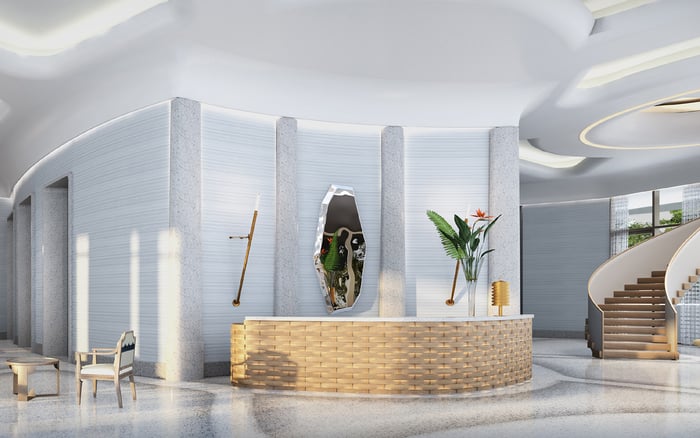
For Palm Beach luxury buyers, the decisive amenities often begin beyond the residence. Evaluate real walking routes, club compatibility, and private dining access before design preferences narrow the search.

A luxury residence is more than a collection of rooms, views, and services. It is also a point of access to the life around it. In Palm Beach, even a small difference in location can materially alter the daily rhythm.
That is why walkability, club fit, and private dining deserve early review. Buyers who postpone these questions may find that an otherwise exceptional residence does not support the routines they value most. For new-construction and vertical living, the right inquiry begins before finishes are compared: What should be reachable on foot? Where will social life unfold? Which privileges are actually available?
Lifestyle access should function as an acquisition criterion, not an afterthought.
Walkability is personal. One buyer may want a comfortable morning route to the Lake Trail; another may prioritize Worth Avenue, the beach, groceries, or a dependable dinner circuit. Convenience remains specific to each property.
Begin with a written hierarchy. Separate daily needs from occasional preferences, then assign an acceptable walking time to each. A residence that appears central on a map may require an uncomfortable crossing, offer limited shade, or follow a route that feels markedly different after dark. Ride-share and taxi service can extend the practical range, but they cannot replace a genuinely convenient pedestrian setting.
Residences such as Palm Beach Residences can be considered within this broader location exercise. Neither a project name nor a marketing narrative should substitute for testing the actual route from the entrance to the places that matter.
Palm Beach and West Palm Beach offer distinct versions of convenience. Buyers can compare proximity to beaches, the Lake Trail, Worth Avenue, restaurants, retail, cultural activity, workplaces, groceries, and waterfront routes according to their priorities.
Buyers considering Mandarin Oriental Residences, West Palm Beach or Mr. C Residences West Palm Beach should assess how their preferred destinations connect to each candidate building rather than treating downtown as uniformly walkable.
Farther south, Delray Beach offers another comparison for buyers deciding whether pedestrian access or club-centered privacy should take precedence.
Street-level convenience and club compatibility are separate tests. A highly walkable address may still be poorly aligned with a buyer's preferred social calendar, privacy expectations, sporting interests, or dining habits. Conversely, a residence farther from retail may work well when the club is the true center of daily life.
Before committing, verify membership eligibility, current waitlists, initiation requirements, dues, guest policies, reciprocity, seasonal access, and any residency qualifications directly with the relevant club. Never assume proximity confers access. Buyers should also determine whether membership attaches to an individual, household, property, or another category-and how a future sale could affect it.
The objective is not to maximize the number of nearby clubs. It is to identify the institutions that suit the household, then determine whether membership is obtainable on the intended timeline.
Private dining can be valuable for residents who entertain frequently, spend only part of the year in Florida, or prefer familiar service without a public reservation process. Yet the phrase can describe markedly different arrangements.
Ask whether dining is resident-only, club-based, reservation-dependent, seasonal, or available for private events. Clarify minimum spending, guest limits, dress expectations, cancellation rules, service hours, catering, and whether access extends across affiliated venues. If a building presents dining as an amenity, confirm what is operational, what requires additional payment, and what may change after turnover.
A candidate such as The Berkeley Palm Beach belongs in a disciplined comparison of location and residential experience, but any specific club or dining privileges should be verified directly. Even the most persuasive promise matters less than the governing documents and current operating terms.
Schedule more than one visit. Walk the intended routes in the morning, in the evening, on a weekend, and during common service hours. Observe shade, crossings, traffic, street activity, arrival privacy, bicycle practicality, and the ease of returning home after dinner.
Then conduct a separate club and dining review. Request written information, identify restrictions, and compare the likely use of each privilege with its cost and accessibility. For vertical residences, examine the transition from private elevator or lobby to the street. A graceful interior arrival does not automatically translate into a graceful neighborhood experience.
A simple decision matrix can keep the process precise: walking access, club fit, private dining, privacy, waterfront connection, transportation alternatives, and seasonal usability. Weight each category before touring. This prevents an impressive view or model residence from eclipsing the practical qualities that shape ownership.
Why should walkability be reviewed before interiors? Interiors can be personalized, but a property's relationship to shops, waterfront routes, and dining is largely fixed.
Is all of Palm Beach walkable? Practical convenience varies with each property's precise proximity to the buyer's preferred destinations.
What Palm Beach routes should buyers test? Test routes to Worth Avenue, the Lake Trail, beaches, shops, dining, and any services used regularly.
How should buyers evaluate downtown West Palm Beach? They should test the actual routes between a candidate residence and the restaurants, retail, workplaces, groceries, cultural destinations, and waterfront areas they expect to use.
Should club access be assumed when a property is nearby? No. Eligibility, waitlists, dues, guest rules, and residency requirements should be confirmed directly.
What private dining terms deserve review? Confirm eligibility, hours, reservations, guest limits, spending requirements, event options, fees, and seasonal availability.
When should buyers walk a candidate neighborhood? Visit in the morning, in the evening, on weekends, and during service hours to understand changing conditions.
Can ride-share compensate for limited walkability? It can extend a property's practical range, but it cannot replicate immediate pedestrian access.
How should Delray Beach enter the comparison? Buyers can use it as an alternative when comparing pedestrian access with a more club-centered routine.
What is the best way to compare finalists? Use a weighted matrix covering walking routes, club fit, dining access, privacy, transportation, and seasonal use.
When you're ready to tour or underwrite the options, connect with MILLION.
If branded residences are on your mind — as a home or as an allocation — we would be glad to share what we are seeing, privately.
Begin a quiet conversation