For Key Biscayne buyers, arrival and circulation deserve the same scrutiny as views and finishes. Reviewing elevator privacy, service routes, valet choreography, and operating protocols early can reveal whether a residence will feel composed in daily use.
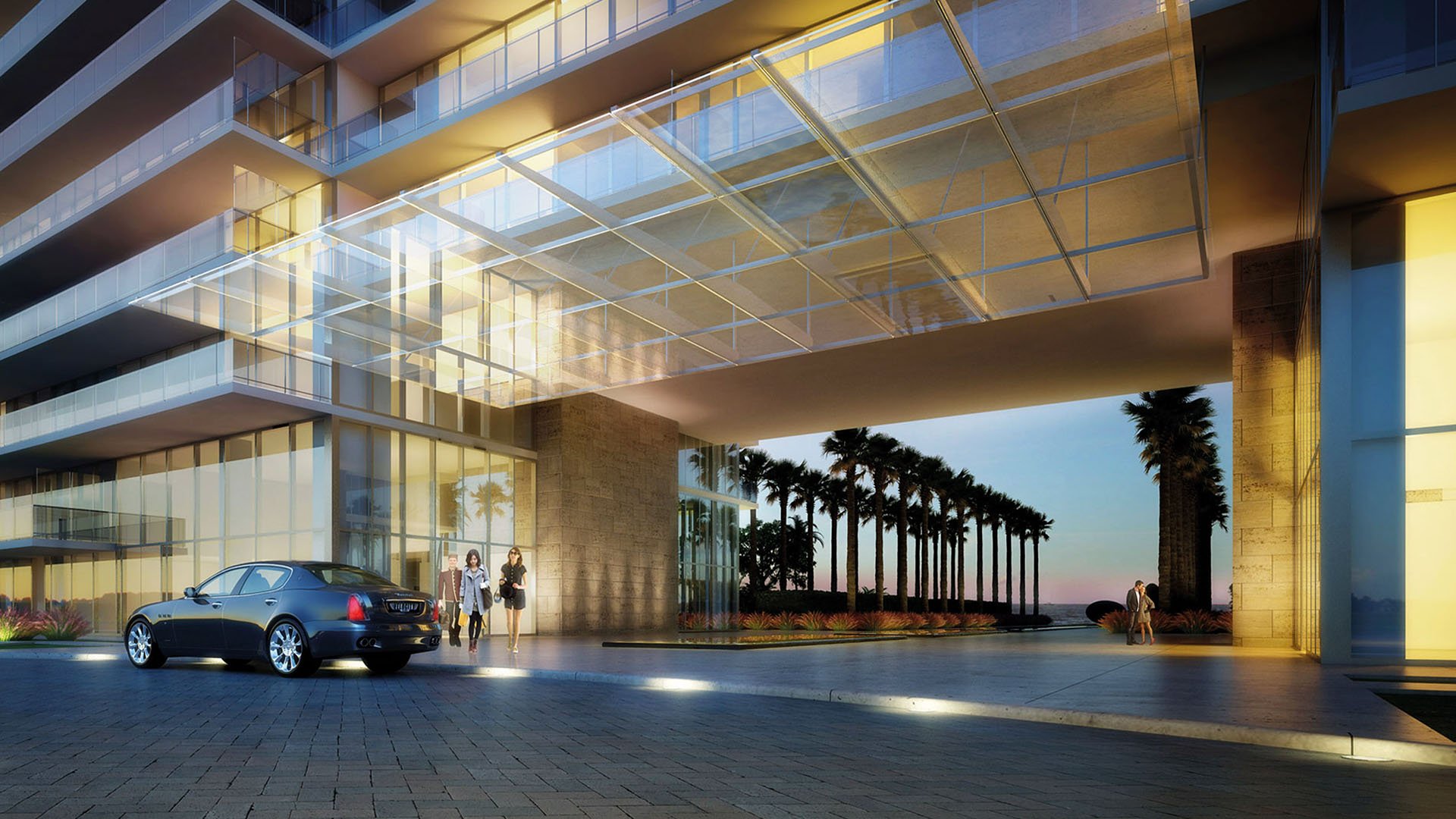
In vertical luxury, the experience of home begins well before the front door. The turn into the property, the valet handoff, the passage through the lobby, and the elevator ride all shape privacy and ease. For buyers in Key Biscayne, these transitions merit early scrutiny: polished interiors cannot correct an arrival sequence that feels exposed, congested, or overly reliant on staff improvisation.
This is especially relevant when evaluating new construction, where buyers may be making decisions based on plans, presentations, and written specifications rather than repeated visits. A model residence can convey materials and proportions. It may reveal far less about what happens when residents, guests, deliveries, and service personnel arrive simultaneously.
“Private elevator” can describe several arrangements. An elevator may open directly into a residence, serve a limited number of homes, or rely on access-control programming to restrict floors. These are materially different experiences. Before treating the phrase as a meaningful privacy feature, buyers should identify the physical configuration, access protocol, and route guests must take.
Ask where the elevator opens, whether it has a vestibule, how that vestibule is secured, and what happens during maintenance or an outage. Clarify how household staff, vendors, and deliveries reach the residence. When discretion is the objective, the service route matters as much as the principal route.
On high floors, elevator dependence becomes more pronounced. Review the number of elevators allocated to the residential stack, the relationship between passenger and service circulation, and the anticipated procedures when one car is unavailable. These are due-diligence questions, not assumptions about any particular building.
Valet flow deserves the same attention as a kitchen or primary suite. Begin at the property entrance and trace every movement: vehicle queue, passenger drop-off, luggage handling, key transfer, parking, retrieval, and departure. Note where residents wait and whether arriving vehicles can pass stopped cars without confusion.
The essential question is not simply whether valet service is offered, but whether the physical plan supports calm service when demand is concentrated. Buyers should ask how guests are distinguished from residents, where ride-share vehicles pause, how oversized vehicles are accommodated, and whether delivery traffic shares the same approach.
Weather exposure also warrants attention. A graceful arrival should remain functional with luggage, children, pets, or multiple guests. At a waterfront residence, salt, rain, wind, and wet equipment can affect the practical use of entrances and service paths, even when the architecture photographs beautifully.
A serious review follows the entire journey rather than stopping at the reception desk. Walk-or map-the path from the street to the residence. Then repeat the exercise for a guest, driver, housekeeper, and large delivery. Each route should be clear, secure, and appropriately separated.
At an existing property such as Oceana Key Biscayne, a buyer can use the visit to frame direct operational questions about the specific residence under consideration. Buyers developing a broader comparison set might also examine Una Residences Brickell, Four Seasons Residences Coconut Grove, or Apogee South Beach. The purpose is not to presume equivalent systems, but to refine the buyer’s understanding of how different arrival concepts feel.
When possible, visit at more than one time. Observe rather than infer. A quiet appointment may not reveal competing movements, while a busier interval can show whether queues, greetings, luggage, and elevator calls remain composed.
Architecture and operations must work together, but they warrant separate review. Plans can show elevator banks, vestibules, curb widths, and service corridors. They do not necessarily establish staffing levels, retrieval procedures, guest-verification measures, or policies for deliveries and contractors.
Request clear, written answers to material questions. Review the relevant plans, governing documents, purchase materials, and operating information with appropriate legal and technical advisers. If a privacy or arrival feature is central to the decision, determine precisely where it is documented and whether the description is specific enough to rely upon.
The buyer’s-guide principle is simple: avoid paying a premium for an adjective. “Private,” “seamless,” and “discreet” should each translate into a route, a control point, and an operating responsibility.
The best luxury circulation is often nearly invisible. It reduces unnecessary encounters, gives guests intuitive direction, and allows service to occur without dominating the residential experience. That outcome depends on geometry, technology, staffing, and rules functioning as a unified system.
Before selecting a residence, assess the arrival and elevator experience alongside exposure, layout, terraces, and finishes. For Key Biscayne buyers, early scrutiny can prevent a late discovery that daily movement falls short of the privacy promised by the home itself.
What should a buyer ask first about private elevator access? Ask where the elevator opens, who can call it, and how floor access is controlled.
Does direct elevator entry guarantee complete privacy? No. Guest screening, service circulation, access programming, and vestibule design also shape privacy.
Why review valet flow before reserving a residence? The arrival layout may affect waiting, exposure, guest handling, and daily convenience.
When should a buyer observe the arrival area? Visit during both quieter periods and concentrated arrivals when access permits.
Should deliveries use the same elevator as residents? Establish the intended route and decide whether its separation meets your expectations.
What happens if a residential elevator is unavailable? Request the alternate route, security procedure, and anticipated service protocol in writing.
How should guests reach a private-elevator residence? Confirm the verification, waiting, escort, and floor-access sequence from arrival to entry.
Can plans fully explain valet operations? Plans show physical circulation, but staffing, queue management, and retrieval procedures require separate review.
Which documents deserve professional review? Examine relevant plans, purchase materials, governing documents, and written operating information with qualified advisers.
What is the practical standard for luxury circulation? It should feel secure, intuitive, calm, and consistent across resident, guest, and service journeys.
To compare the best-fit options with clarity, connect with MILLION.
If branded residences are on your mind — as a home or as an allocation — we would be glad to share what we are seeing, privately.
Begin a quiet conversation