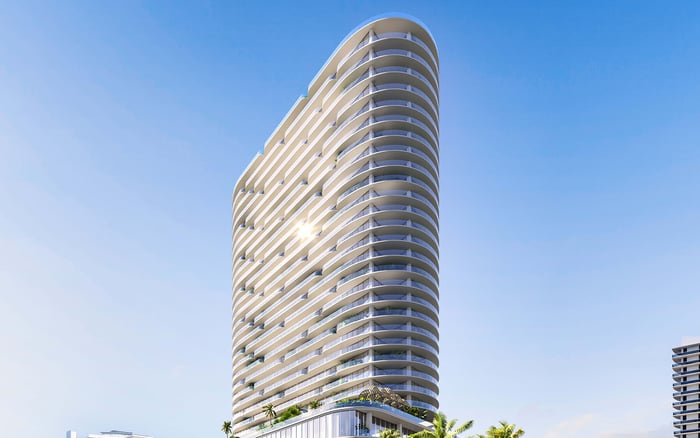
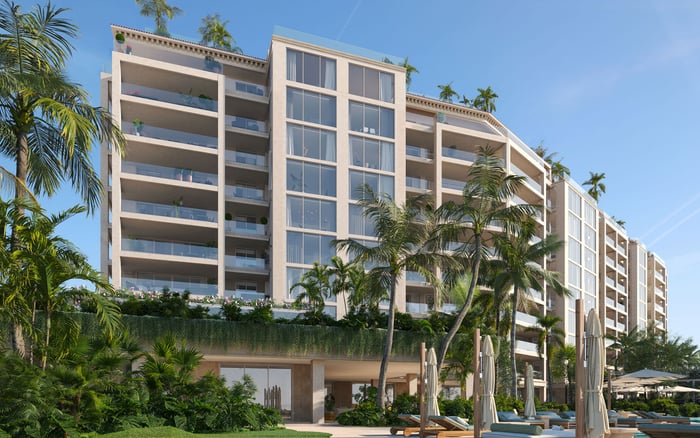
A buyer-focused framework for reviewing Shoma Bay’s operating assumptions, from budget revisions and shared expenses to contract escalation, staffing coverage, and transaction-specific financing disclosures.

A waterfront residence is purchased for the life it makes possible. The budget deserves equal attention: it explains how that life will be sustained. At Shoma Bay North Bay Village, the question is not simply what the assessment might be, but which assumptions support it-and how they can change.
Shoma Bay’s address is 1850 John F. Kennedy Causeway, North Bay Village, Florida 33141. The development is described as a 24-story, mixed-use waterfront tower with 333 residences. Those characteristics make expense allocation and service delivery important subjects for buyer diligence; they do not establish a particular operating cost.
The actual association assessment, budget variances, contract escalators, staffing roster, reserve contributions, and insurance premiums are not established here. Treat the following as a document-review framework, not a finding that Shoma Bay has a budget shortfall or an unfavorable contract.
Request the latest proposed or adopted budget, earlier versions supplied during the purchase process, and a line-item schedule explaining changes. Each version should identify its effective period and status. A preliminary estimate and a subsequent operating budget are not interchangeable.
Separate two kinds of variance: changes between budget versions and, where operating records exist, differences between budgeted and actual spending. The first reveals revised assumptions; the second tests whether those assumptions held. Ask for both dollar and percentage changes, with explanations for material movements-not merely a single net increase.
Distinguish recurring expenses from opening costs, temporary concessions, and other nonrecurring items. Ask whether any contribution from another party has an expiration date and how the budget would look afterward. These are questions to verify, not established features of Shoma Bay.
A useful reconciliation should allow a buyer to trace the assessment for the specific residence to the expense schedule and applicable allocation formula.
A mixed-use development requires close attention to the boundary between residential and non-residential expenses. Request the governing documents and schedules that assign responsibility for shared areas, equipment, utilities, maintenance, and management. Ask which entity contracts for each service and which ultimately bears its cost.
Do not assume that 333 residences means every expense is divided equally among 333 owners. Verify the residence’s applicable share, the treatment of non-residential components, and whether any shared-cost formula can change. Ask how costs attributable to one component are separated from expenses benefiting several.
For buyers also considering Continuum Club & Residences North Bay Village, compare documentary clarity rather than assume matching expense structures. The benchmark is whether each property explains its obligations precisely enough to support a purchase decision.
Also request a schedule of charges outside the regular assessment, distinguishing mandatory obligations from optional services.
Request material service contracts, amendments, pricing schedules, and the budget lines they support. A first-year price tells only part of the story. Review when adjustments begin, how often they occur, and whether they apply to the entire fee or selected components.
Check whether increases are fixed, index-linked, tied to labor costs, or based on another formula. Determine whether a cap exists, whether there is a minimum increase, and whether adjustments compound. Ask separately about pass-through expenses: a capped base fee does not establish whether other charges can rise.
Renewal and termination provisions deserve equal scrutiny. Identify notice deadlines, automatic renewals, cancellation charges, and rights to modify the service scope. Request disclosure of related-party relationships so your advisers can evaluate the agreement in context.
A buyer considering Bay Harbor Towers alongside Shoma Bay can apply the same review without presuming either project’s terms. Compare the projected cost of equivalent services over several years, using actual contract language rather than a sales estimate.
A staffing allowance is meaningful only when it can be reconciled with coverage. Request a roster by role, proposed shifts, hours of operation, and a distinction between directly employed personnel and contracted services. Headcount alone does not explain who is present at a particular hour.
Ask how the plan covers weekends, holidays, leave, training, absences, and overlapping responsibilities. Identify allowances for overtime and relief coverage, and check whether payroll-related costs are included in the relevant figures. For contracted staff, reconcile the service agreement with the budget rather than assume the quoted fee covers every circumstance.
Then connect staffing to the services represented in the purchase materials. Ask who delivers each service, during which hours, and under what conditions. This is not a request for maximum staffing; it tests whether the promised experience and the financial model align.
If Miami Beach is also on the shortlist, Five Park Miami Beach offers another setting in which to apply these questions. Compare documented coverage, not project names or headline assessments.
Shoma Bay’s disclosed construction financing includes $172.5 million using Commercial Property Assessed Clean Energy, or C-PACE. That figure concerns construction financing. It does not establish that the association or an individual purchaser inherits an obligation, nor does it establish the absence of one.
Ask transaction counsel to examine the financing disclosures, relevant assessment documentation, purchase agreement, and governing documents. The objective is to determine whether any obligation affects the residence, the association, a non-residential component, or another party-and how any applicable charges are allocated.
Keep this review separate from the operating-budget analysis until the documents explain their relationship. Request written clarification of any charge that may sit outside the quoted assessment. A financing headline, favorable or otherwise, is no substitute for residence-specific legal review.
Before committing, assemble one coherent file: the current budget and revisions, variance explanations, shared-cost schedules, material contracts, staffing assumptions, reserve information, insurance figures, and financing disclosures. Each document should be identifiable by date and status, with unresolved questions assigned to the appropriate adviser.
Ask for a forward-looking sensitivity review using disclosed assumptions. What changes if a temporary contribution ends, a contract adjustment takes effect, or relief staffing exceeds the allowance? Keep those scenarios separate from verified figures, and do not treat a hypothetical increase as a project forecast.
The decision standard is straightforward: understand the current obligation, the mechanisms that can change it, and who has authority over those changes. Financial clarity is part of a considered luxury purchase, not a distraction from it.
For a discreet perspective on South Florida residential choices, explore MILLION.
If branded residences are on your mind — as a home or as an allocation — we would be glad to share what we are seeing, privately.
Begin a quiet conversationShoma Bay’s published address is 1850 John F. Kennedy Causeway, North Bay Village, Florida 33141.
Shoma Bay is described as a 24-story development with 333 residences.
No. The actual assessment and operating-cost figures are not established here; buyers should request the applicable budget and residence-specific allocation.
Compare changes between budget versions and, where operating records exist, differences between budgeted and actual spending. Request explanations for material changes.
It makes the allocation of residential, non-residential, and shared expenses a relevant diligence question. Verify the governing formulas rather than assume equal division among residences.
Review adjustment formulas, timing, caps, minimum increases, compounding, and pass-through expenses. Also examine renewal deadlines and termination rights.
Match roles and shifts to represented service hours, including overtime, leave, and relief coverage. Distinguish directly employed personnel from contracted services.
No. The disclosed $172.5 million construction-financing amount does not establish whether an obligation passes to the association or individual owners; transaction-specific legal review is necessary.
Yes. Request a written schedule separating mandatory obligations from optional services, and clarify how each applicable charge is allocated.
Not without reconciling service scope, staffing coverage, allocation formulas, and contract terms. Compare documented obligations rather than headline figures alone.