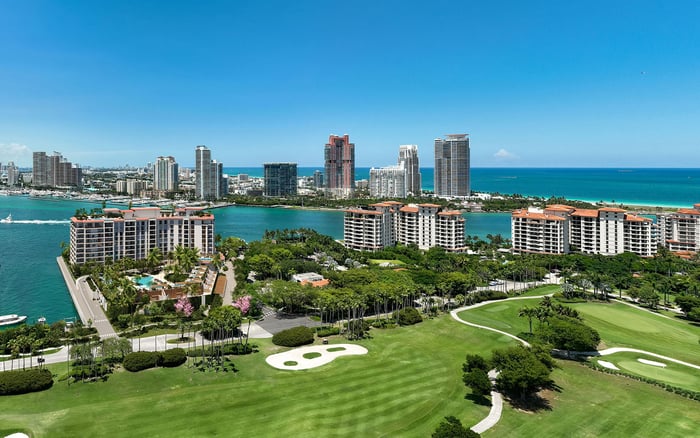
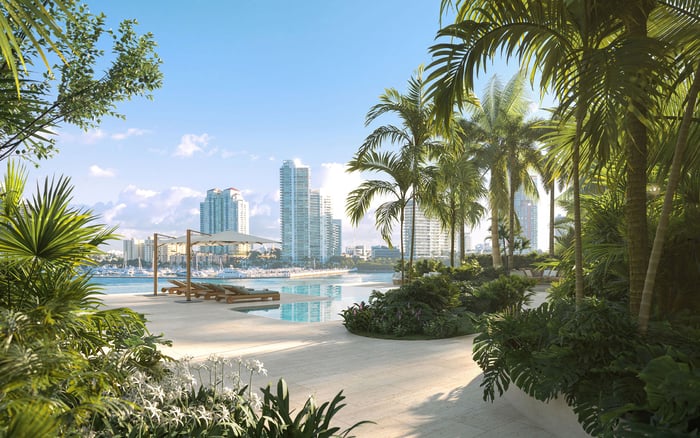
For Six Fisher Island buyers, a projected completion quarter is not a closing appointment. Verify the contractual timetable, lender protections, interim housing flexibility and island delivery arrangements before making irreversible commitments.

At The Residences at Six Fisher Island, the most consequential planning detail is not the scale of the residence. It is the distinction between anticipated completion, contractual closing and permission to move in. Verify those dates separately before committing to financing deadlines, ending a lease or scheduling the household move.
With 50 estate residences of approximately 3,800 to more than 15,000 square feet and advertised pricing starting around $15 million, the project warrants equally careful transition planning. The objective is not simply to arrive quickly, but to preserve flexibility without compromising financing or the move.
The September 2024 completion estimate pointed to 2026; the publicly stated expectation is now Q1 2027. That shift matters for budgeting, but it neither establishes a formally declared contractual delay nor guarantees a particular closing date. August 2026 crane removal marked construction progress, not buyer-specific closing readiness.
Treat the projected quarter as a planning assumption. Request a written update from the sales and closing teams that identifies outstanding milestones and distinguishes anticipated completion from your residence’s closing window.
Your executed purchase agreement should guide the legal timetable. Have counsel identify the closing prerequisites, applicable notice provisions, any outside date and the treatment of postponements. Do not infer cancellation rights, deposit remedies or reimbursement obligations from a change in public completion estimates.
A temporary certificate of occupancy, or TCO, is a common milestone in Miami preconstruction closings. By itself, it does not confirm that Six Fisher must close your transaction or permit your move. Ask counsel and the closing team to establish which occupancy approvals and condominium documents your purchase requires.
Request current confirmation of the relevant occupancy and recording status; construction photography is not a substitute. Separately, ask whether the anticipated handover allows residential occupancy and scheduled deliveries. A closing appointment and a moving reservation serve different purposes.
For buyers also considering Palazzo del Sol Fisher Island, the useful comparison is transaction-specific readiness: what documentation, approvals and access arrangements support the proposed date? Do not transfer assumptions from one building or purchase to another.
Early mortgage preapproval and a rate lock are separate decisions. As a general planning guideline for Miami preconstruction, consider the lock approximately 45-60 days before closing, tied to a realistic closing window and approaching occupancy milestones-not years before delivery.
Typical locks last 30-60 days, with some longer, fee-based options of 90-180 days. These are planning ranges, not Six Fisher financing terms. Your lender must confirm availability, eligibility and pricing for the actual loan.
Before locking, obtain written answers to four practical questions:
What date and transaction conditions determine expiration?
Is an extension available, when must it be requested and what would it cost?
If the lock expires, how would the lender determine the replacement rate?
What documents and condominium approvals must remain current through funding?
Ask the lender to distinguish borrower approval from project review. Condominium documentation, insurance and reserves deserve attention alongside personal financial qualifications. Being ready to sign does not mean every lending condition has been satisfied.
If the expected closing moves, send the revised timetable to the lender promptly and request an updated financing plan. Do not assume an extension is automatic, the original rate survives expiration or the developer pays the additional cost. Responsibility must be established through the relevant written agreements.
An uncertain handover is easier to manage when interim housing can accommodate a change. Furnished accommodation or a rental with month-to-month renewals may offer flexibility, but availability and actual lease terms require separate confirmation.
Before signing, review renewal rights, notice deadlines, early departure terms and the consequences of staying longer. Even a residence well suited to the household can be an impractical interim home if its end date cannot move. Avoid surrendering existing accommodation solely because a projected completion quarter has arrived.
Build a transition budget with separate allowances for housing, storage, repeat handling, travel and any lender-confirmed lock-extension charges. These are categories to price with your advisers and vendors, not established Six Fisher fees. Keeping them separate makes the cost of a revised date easier to evaluate.
If your search also includes Palazzo della Luna Fisher Island, keep that purchase evaluation distinct from the interim housing decision. A project comparison does not establish rental availability, permissible lease duration or immediate occupancy.
Fisher Island requires more deliberate coordination than a conventional mainland delivery. Obtain written confirmation of ferry access, security clearance and the building rules governing movers. A mover’s familiarity with the island does not constitute approval for this building or appointment.
Ask the management or move-in team to confirm the applicable booking process, permitted delivery windows, vehicle restrictions, elevator arrangements and any insurance documentation. These are verification points, not a statement of Six Fisher’s official policy.
Large household moves and specialty deliveries may require multiple days or staggered appointments. Make firm bookings only against a confirmed closing date and written access authorization. Before paying deposits, ask movers and storage providers to explain their rescheduling terms and what happens if access is postponed.
Consider separating essential household items from furniture, art and other specialty deliveries so the entire arrival does not depend on one appointment. Confirm any proposed sequence with the building before instructing vendors.
Construction is only one timetable. Fisher Island association applications may require financial statements, references and background checks, with processing potentially taking several weeks. Confirm association and club application requirements separately, including what must be complete before closing or occupancy.
International buyers should prepare bank know-your-customer documentation, powers of attorney where applicable and international wire arrangements early. Coordinate these with counsel, the lender and the closing team so administrative readiness does not lag behind construction readiness.
Maintain one written readiness checklist covering contractual notice, occupancy documentation, lender clearance, association processing, housing flexibility and mover access. Assign each item to a responsible contact and record the next decision deadline. When a date changes, revisit every dependent commitment-not just the calendar.
The strongest position is not to predict delivery with certainty. It is to know which commitments can move, which require notice and which should wait for written confirmation.
For a discreet perspective on Fisher Island purchases and transition planning, connect with MILLION.
If branded residences are on your mind — as a home or as an allocation — we would be glad to share what we are seeing, privately.
Begin a quiet conversationThe publicly stated expected completion is Q1 2027, while the September 2024 estimate pointed to 2026. Neither estimate establishes your contractual closing date.
No. Your executed agreement and formal transaction communications determine how a schedule change affects your purchase and any contractual rights.
No. August 2026 crane removal marked construction progress, but it did not establish buyer-specific closing or occupancy readiness.
General Miami preconstruction guidance suggests approximately 45–60 days before a realistic closing date. The appropriate timing depends on your lender’s terms and the transaction’s readiness.
General guidance describes typical locks of 30–60 days and some longer, fee-based options of 90–180 days. Confirm availability and terms directly with your lender.
Do not assume that either an extension or developer reimbursement is available. Confirm extension pricing with the lender and cost responsibility through the relevant written agreements.
No. A TCO is a common Miami preconstruction milestone, but counsel and the closing team should confirm the requirements for your particular transaction.
Review renewal flexibility, notice deadlines, early departure terms and the cost of a longer stay. Furnished rentals and month-to-month arrangements are planning options, not assurances of available inventory.
Obtain written confirmation of ferry access, security clearance and building-specific delivery rules. Tie firm bookings to a confirmed closing date and authorized access, with rescheduling terms understood.
Prepare association applications, bank know-your-customer documentation, any applicable powers of attorney and international wire arrangements. Association processing may take several weeks independently of construction.