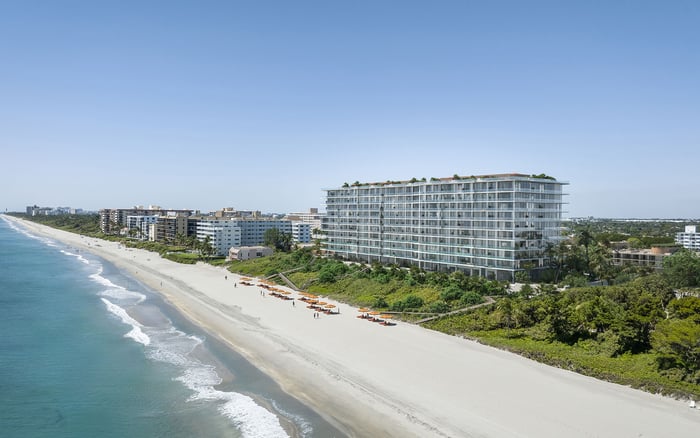
For buyers relocating from Munich to Hillsboro Beach, a waterfront purchase requires more than a compelling residence. Contract review, assignment limits and a resilient funding plan should shape the decision before signing, not become urgent questions before closing.

Leaving Munich for Hillsboro Beach changes the setting, but choosing a residence and committing capital remain separate decisions. The Atlantic outlook may settle the first. The purchase agreement should govern the second, particularly when construction milestones and a relocation timetable do not align.
For a buyer considering Rosewood Residences Hillsboro Beach, the essential question is not simply whether the home suits the next chapter. It is whether the buyer can complete the purchase if available cash changes, construction takes longer or transferring the contract proves impractical. A sound plan treats closing as the base case and any early exit as conditional.
Rosewood occupies approximately 12 acres between the Atlantic Ocean and Intracoastal Waterway. In November 2024, the project comprised 70 oceanfront condominiums and 22 Intracoastal villas, with asking prices starting at $5.5 million. Those figures provide historical context, not current pricing or availability.
Architectural appeal and contractual flexibility answer different questions. More than 50% of the residences were under contract in December 2024, but that historical sales snapshot establishes neither a liquid secondary market nor a right to assign a purchase agreement.
For a Broward search that also includes The Ritz-Carlton Residences® Pompano Beach, compare the applicable purchase documents separately. Neither proximity nor a luxury name establishes equivalent transfer rights, deposit requirements or remedies.
Rosewood’s November 2024 deposit schedule called for 10% at signing, 10% after 60 days, 10% at groundbreaking and 10% at topping off. Together, those installments represented 40% of the purchase price before closing. Treat that schedule as a historical planning example, not a current offer or a statement of today’s requirements.
The practical lesson is that capital commitments can accumulate well before possession. Build a funding calendar that identifies each contractual payment trigger, the funds intended to meet it and the resources reserved for closing. Separate money already available from proceeds dependent on a future sale or another uncertain event.
Stress-test the plan against two scenarios: expected funds arrive late, or they become unavailable. Neither scenario should assume that the developer will approve an assignment. Nor should the historical 40% figure be read as proof that every deposited dollar would necessarily be forfeited. Default exposure requires its own contractual analysis.
An assignment transfers the buyer’s contractual position before closing. Whether that route exists, and on what terms, depends on the agreement. South Florida developer contracts commonly require prior written consent, but that does not mean every agreement prohibits assignment or every consent request is likely to succeed.
Ask counsel to identify who grants approval, which conditions must be satisfied and whether the agreement specifies a decision timetable. Review transfer costs alongside permission. Permitted assignments may carry fees around 1% of the purchase price in some South Florida transactions, but the actual charge is agreement-specific. That is not a confirmed Rosewood term.
Marketing rights deserve equal attention. Some developers require assignments or resales to proceed through their own sales team. Others may restrict public advertising while developer inventory remains for sale. Such provisions can protect the developer’s pricing strategy while limiting the buyer’s ability to reach a replacement purchaser.
The practical question is not merely whether assignment is allowed. It is whether an approved, marketable and financially workable transfer could occur before the buyer must close. Ask counsel whether an approved transfer would also release the original buyer from further obligations.
If St. Regis® Residences Bahia Mar Fort Lauderdale enters the shortlist, apply the same discipline without carrying over assumptions from another project. Evaluate the residence on its appeal and the agreement on its own language.
Before signing, request a concise written review that considers assignment consent, transfer costs, deposit exposure, delay extensions and outside-date remedies together. These provisions interact. A transfer route may offer limited help if advertising is constrained; an outside date may offer less certainty if permitted extensions move it substantially.
Keep the review focused on decisions: what must be paid, what can change, what constitutes default and which documented steps are required to exercise any available remedy. Resolve open questions before committing rather than relying on an informal expectation of accommodation later.
A 15-day statutory cancellation period can apply to Florida developer condominium purchases, tied to contract execution and receipt of required condominium documents. Counsel should confirm whether it applies to the transaction, the event that starts the clock and the precise deadline. It is not a universal cancellation right for every condominium buyer.
An outside-date provision addresses a different issue. It may permit termination and a deposit refund after a specified completion deadline, but its protection depends on the wording. Force majeure and other delay provisions can extend deadlines rather than automatically create a cancellation right.
Rosewood’s topping off was announced on February 23, 2026. That is a dated construction milestone, not a guaranteed closing date. For a household moving from Munich, relocation arrangements should remain separate from assumptions about when the residence will become available. Ask counsel to map the contractual completion framework, including permitted extensions and any notice requirements for termination.
A personal liquidity change does not automatically entitle a purchaser to a refund. Failing to close can expose the buyer to deposit forfeiture or liquidated damages under the agreement’s default provisions. Understand the scope of that exposure before signing, rather than discovering it when funds become difficult to access.
The prudent approach is to plan for closing even if assignment is unavailable. Identify the remaining purchase obligation, preserve an appropriate funding reserve and determine which assumptions would warrant an early conversation with legal and financial advisers if they change. If circumstances do change, seek advice before a payment or closing deadline passes.
For buyers leaving Munich, this is the quieter side of a successful waterfront acquisition: the freedom to enjoy the residence rests on a commitment that remains manageable under less convenient circumstances. Contract review should bring those circumstances into focus while there is still time to decide.
Explore Hillsboro Beach and your broader South Florida residential shortlist with MILLION.
If branded residences are on your mind — as a home or as an allocation — we would be glad to share what we are seeing, privately.
Begin a quiet conversationThe agreement determines payment obligations, transfer options and remedies if circumstances change. Relocation plans should not depend on an assumed assignment right or closing date.
The November 2024 schedule called for four 10% installments: at signing, after 60 days, at groundbreaking and at topping off. The resulting 40% preclosing commitment is a historical example, not a current offer.
Possibly, but the agreement determines whether assignment is permitted and which conditions apply. Prior written developer consent is common and should not be assumed.
No. Fees around 1% may apply in some South Florida transactions, but any Rosewood transfer charge must be established from the applicable agreement.
Yes. An agreement may permit assignment while restricting public advertising or requiring the transaction to proceed through the developer’s sales team.
No. Historical sales absorption and luxury branding do not establish assignment availability or a liquid secondary market.
No blanket assumption is appropriate. A 15-day statutory period can apply to developer condominium purchases, and counsel should confirm applicability, document-receipt triggers and the deadline.
No. The February 23, 2026 topping-off announcement establishes a dated construction milestone, not a guaranteed closing date.
An outside-date provision may provide that remedy, depending on its wording. Force majeure and other permitted extensions can move the deadline without automatically granting a cancellation right.
A personal liquidity change does not automatically create a refund right. Failure to close can lead to deposit forfeiture or liquidated damages under the agreement’s default provisions.