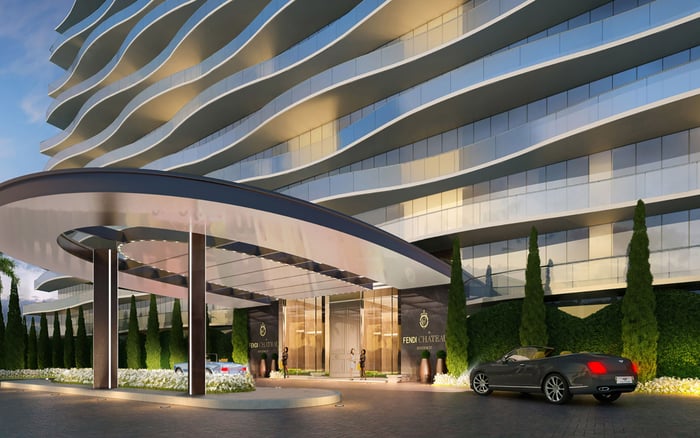
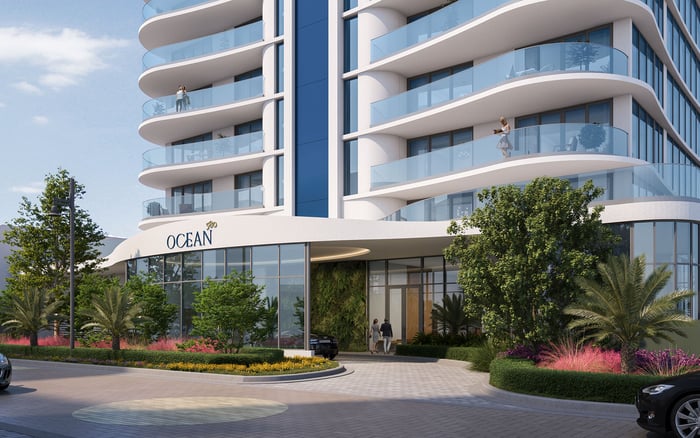
Rivage’s current 2027 delivery guidance is not the same as a guaranteed closing or legal occupancy date. Buyers coordinating domicile and school plans should define each construction milestone, examine contract protections and retain a workable interim housing option.
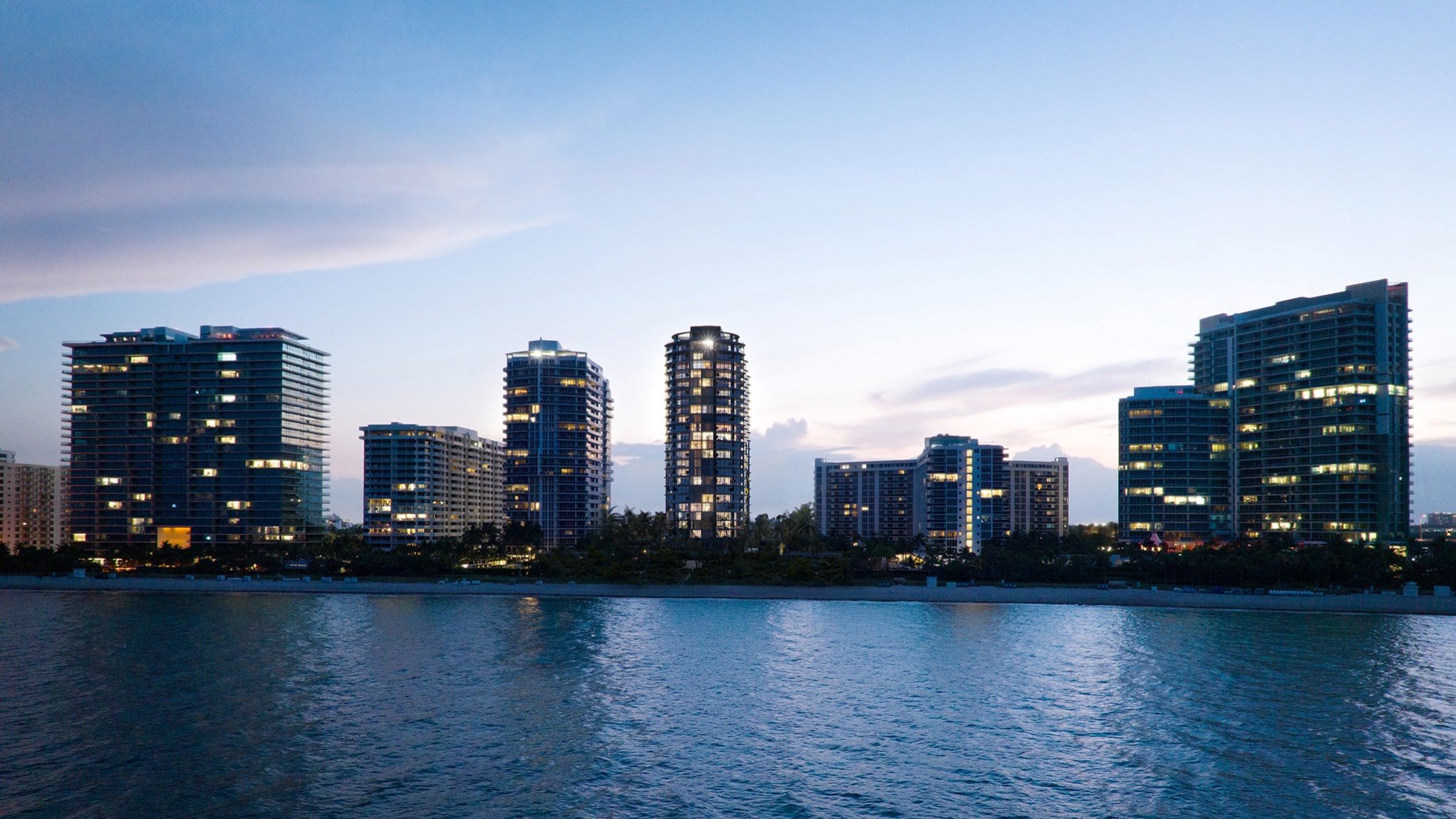
For buyers considering Rivage Bal Harbour as a primary South Florida residence, construction timing is more than a development update. It can determine when a family can close, legally occupy the home, establish a practical base in Florida and coordinate a school transition without an unwanted midyear move.
The oceanfront condominium is under construction at 10245 Collins Avenue in Bal Harbour. Plans call for a 24-story ultra-luxury tower, although the stated residence count varies between 56 and 61. The homes are expected to span approximately 3,300 to nearly 13,000 square feet, complemented by more than 25,000 square feet of shared amenities. Those proportions reinforce the concept of a full-scale sky villa designed for substantive residential use, not merely occasional weekends.
A marketing completion year is not the same as a firm legal occupancy date.
That distinction is central to this buyer’s guide. A new-construction purchase can be perfectly suited to a long-range move while remaining unsuitable as the sole trigger for a time-sensitive domicile or private-school strategy.
Construction began in September 2024. The development team-Related Group, Two Roads Development and Rockpoint-subsequently secured approximately $424 million in construction financing. These are meaningful signs of momentum, but they do not settle the closing calendar.
Current guidance generally centers on completion in 2027, with one estimate specifying December 2027. Another date lists 2026, while earlier projections anticipated closings in late 2025 or early 2026. The range has therefore shifted materially, and each date may describe a different milestone rather than the moment every buyer receives keys.
Ask the sales team to reconcile these dates in writing and identify the current target quarter for substantial completion, the certificate of occupancy and first closings. Also ask whether the stated completion date applies to the entire property, selected residences or a phase sufficient to begin closings. Precision matters because an estimated year is guidance, not a guaranteed appointment.
A sophisticated review separates at least four events. Substantial completion generally concerns the stage at which the project is largely built. A certificate of occupancy addresses legal occupancy. First closings mark the beginning of buyer transfers, but not necessarily the closing date for a particular residence. Final completion may extend to remaining homes, common areas or finishing work.
A buyer should request the expected sequence and timing of these events, then determine which one matters to the family’s plan. If furniture delivery, household staffing or school commuting depends on possession, first closings elsewhere in the tower may have limited relevance. If domicile planning depends on an actual Florida home the family can legally use, a broad “2027 completion” statement is not a sufficient operational trigger.
The discipline is familiar in pre-construction acquisitions: translate a headline date into residence-specific dependencies, documentary milestones and contingency dates.
Counsel should review the purchase agreement’s outside completion date, developer extension rights, force-majeure provisions, deposit terms and remedies for delay. The objective is not to predict a problem, but to understand who controls the calendar, what notice is required when timing changes and what options remain if occupancy extends beyond a family deadline.
Request regular evidence of construction progress, including major milestones such as topping off, building enclosure, mechanical installation and interior fit-out. No single milestone guarantees delivery, yet a sequence of completed work can provide a more useful planning picture than a repeatedly cited calendar year.
Buyers should also ask whether completion of their residence’s interiors could follow the building’s broader occupancy milestone and whether common areas are expected to be fully operational at closing. These questions are especially relevant for a large-format home whose installation and move-in may require careful coordination.
A domicile strategy tied specifically to Rivage should use the actual closing and legal occupancy dates as its operational trigger, not the advertised completion year. Tax and legal advisers can determine which actions and evidence are relevant to a buyer’s circumstances, but the real-estate plan should not assume access before it is legally available.
If the family needs to relocate to Florida before Rivage is occupiable, a temporary South Florida residence may preserve flexibility. It should be selected early enough to function as a genuine home rather than an improvised response to a delayed closing. The budget should account for overlap, moving logistics and the possibility of transitioning twice.
For buyers who prefer an established Bal Harbour reference point, Oceana Bal Harbour can be considered separately, with availability, occupancy and suitability independently verified. The comparison is not only architectural; it also weighs each family’s desired address against its required move date.
With Rivage currently targeting 2027, a move dependent entirely on the new residence aligns more naturally with the 2027-28 school year than with 2026-27, unless updated construction evidence supports earlier legal occupancy. This is a planning inference, not a promise that a residence will be ready before any particular school opening.
School applications should proceed independently of the condominium schedule. Families can identify enrollment decisions, deposits, orientation obligations and preferred move windows, then work backward to establish a housing contingency date. If certainty is required before Rivage can provide it, interim housing may be preferable to a rushed transfer during the academic year.
Geographic flexibility can broaden that contingency discussion. A family may examine The Delmore Surfside and The Ritz-Carlton Residences® Miami Beach as distinct residential possibilities while verifying each property’s availability and occupancy status. The essential question is which address can support the daily routine when the family actually needs it.
The strongest plan contains a preferred timeline and a fallback timeline. The preferred version uses written milestone targets, contract terms and current construction evidence to coordinate closing, occupancy and the move. The fallback version activates temporary housing by a predetermined decision date if Rivage cannot support the required school- or tax-year objective.
Construction financing and experienced development partners reinforce confidence in project momentum, but neither converts an estimate into a guaranteed closing date. At this level of purchase, calendar diligence belongs beside design, view and floor-plan analysis. The residence may define the next chapter, yet the transition should not depend on a single, undefined word: completion.
For discreet guidance on aligning a Rivage purchase with your residential timeline, connect with MILLION.
If branded residences are on your mind — as a home or as an allocation — we would be glad to share what we are seeing, privately.
Begin a quiet conversationYes. Construction began in September 2024 at 10245 Collins Avenue in Bal Harbour.
Current guidance generally targets 2027, and one published estimate specifies December 2027. Neither should be treated as a guaranteed closing date.
Publicly available dates have ranged from late 2025 or early 2026 to 2026 and 2027. They may also refer to different project milestones.
Buyers should request written target quarters for substantial completion, the certificate of occupancy and first closings, plus clarity on what the stated completion date represents.
Not necessarily. Legal occupancy, the buyer’s actual closing and residence-specific readiness may occur at different times.
Counsel should review the outside completion date, extension rights, force-majeure language, deposit provisions and remedies for delay.
No. A Rivage-dependent strategy should use actual closing and legal occupancy dates as its operational trigger.
Based on the current 2027 target, the 2027–28 school year is a more natural planning fit than 2026–27 unless updated evidence supports earlier occupancy.
They can arrange a temporary South Florida residence and coordinate school applications independently of the condominium schedule.
No. The approximately $424 million construction loan indicates project momentum, but it does not eliminate uncertainty around delivery and closings.