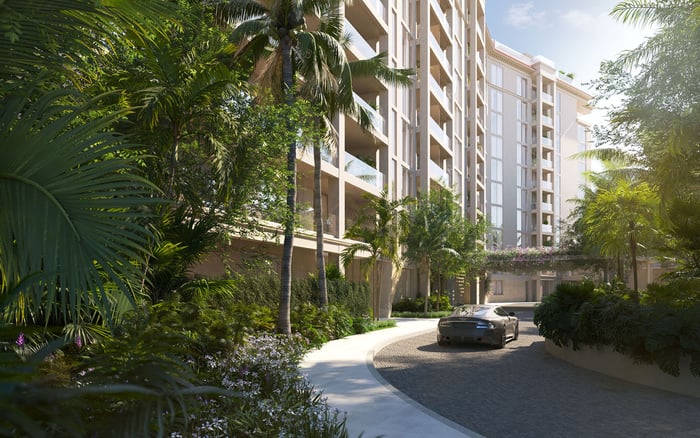
At Palazzo del Sol, an assessment figure is only the beginning. Buyers should connect every charge to authorized work, current pricing, funding sources, allocation rules, and cash collected, while reviewing condominium and island-wide obligations separately.

At Palazzo del Sol, a boutique condominium with 47 residences at 7000 Fisher Island Drive, the scale of ownership makes association-level capital decisions especially consequential. A project cost distributed across a limited number of residences can become material to an individual buyer, depending on the allocation method established in the governing documents.
The essential question is not simply whether a special assessment exists. It is whether the amount can be traced from an identified need through engineering scope, competitive or accepted pricing, formal authorization, funding, billing, and cash collection. Each link matters. A seemingly precise assessment may still rest on an early estimate, an expired bid, an incomplete scope, or expected collections that have not arrived.
An assessment is understood only when its scope, pricing, funding, and collections reconcile.
For a resale acquisition, this review should occur before the contractual document-review window closes and should be refreshed near closing. The final estoppel certificate provides a unit-specific balance, but it does not replace an analysis of the association's broader financial position.
Fisher Island ownership involves distinct financial relationships. Buyers should separate Palazzo del Sol condominium charges, Fisher Island Community Association assessments, commonly called FICA assessments, and Fisher Island Club costs. One category should never be treated as a proxy for another.
Request a complete package from the condominium association, including budgets, audited financials, reserve schedules, assessment history, engineering materials, contracts, debt schedules, and recent board records. Then obtain and review FICA's budget, assessment schedule, financial statements, and special-assessment history independently. Authority, allocation, timing, and collection can differ between the two entities.
This discipline is useful when considering other island options, including Palazzo della Luna or The Residences at Six Fisher Island. The comparison should focus not only on stated recurring charges but also on which entity controls each obligation and what capital commitments sit behind it. That separation is a core principle for evaluating complex condominium ownership.
A special assessment is generally a one-time charge or series of installments outside regular dues, often used when reserves cannot absorb a major project or unexpected cost. Typical scopes can include roofs, elevators, seawalls, concrete restoration, and work arising from structural inspections. A buyer should identify precisely which components are included, which are excluded, and whether the work is preventive, required, or still under study.
Ask for the engineering recommendation, board resolution, owner notice, project schedule, and reserve classification. Confirm whether the scope has changed since approval and whether change orders have been authorized. If several projects have been grouped into one assessment, separate them by component, cost, contingency, and timeline.
The governing documents should then be read alongside the approval record. Condominium boards can generally approve special assessments without a full owner vote unless the documents require one. Due diligence should therefore establish which board had authority, what approval threshold applied, and whether the recorded process was followed.
An assessment budget should reconcile to contractor bids or executed contracts, not merely to a rounded planning estimate. Buyers should compare the total authorized amount with current bids, signed agreements, professional fees, permits, contingency, and financing costs. Bid-validity periods matter because stale pricing can produce a shortfall before work begins.
The practical test is to reconcile five figures: total project cost, reserve contribution, assessment proceeds, loan proceeds, and collections received to date. If the sources do not equal the planned uses, determine whether the difference reflects an approved contingency, an unfunded gap, or work deferred to a later phase.
Association loans and credit facilities require separate attention. Borrowing can make a capital program appear manageable by spreading its cost across future budgets. Buyers should identify principal, interest, maturity, and debt service embedded in regular dues. The absence of a newly billed assessment does not necessarily mean the capital cost has disappeared.
A board may levy an assessment in full while collecting it through installments. That distinction affects liquidity. Request a collection ledger or owner-by-owner aging summary showing amounts billed, amounts received, overdue balances, and approved payment schedules. When contractors must be paid, cash collected is more consequential than assessments receivable.
The unit estoppel should confirm what the subject residence owes, including unpaid regular and special assessments. Association financials should be reviewed separately for delinquencies elsewhere in the building. Material nonpayment by other owners can pressure liquidity and potentially shift the timing or burden of future funding decisions.
Florida condominium buyers can become jointly liable with sellers for unpaid regular and special assessments that came due before transfer. A purchase agreement may allocate payment between buyer and seller, but that private allocation does not necessarily prevent the association from pursuing the new owner. Closing documents should therefore align the contract, estoppel, payoff mechanics, and any escrow.
Allocation can be as important as total cost. The declaration and bylaws should state whether an obligation is divided by percentage interest, original unit, lot, another formula, or a combination of methods. Do not assume that physical size, current configuration, or purchase price determines the owner's share.
An $11 million Fisher Island lawsuit illustrates the point. Owners alleged that combined units paid one master assessment rather than an assessment for every original unit. The allegations included annual overpayments of approximately $1,491 to $1,608 for owners of uncombined units, while combined-unit owners allegedly should have paid about $60,753 rather than $30,376 in 2021. The dispute is relevant as an allocation lesson, not as a substitute for reading the documents governing the specific residence.
The same caution applies when comparing condominium ownership with estate offerings such as The Links Estates at Fisher Island. Different ownership structures can carry different allocation frameworks, even within the same island setting.
The strongest forward-looking test compares Structural Integrity Reserve Study recommendations with the reserve contributions actually included in the budget. A funding gap can indicate that identified work may later require higher dues, borrowing, or a special assessment. Confirm whether each recommended component is fully funded, partly funded, or unfunded, and whether scheduled contributions match the study.
Review at least 12 months of board agendas and minutes. Florida's standard condominium rider calls for disclosure of assessments that are levied, pending, or identified in agendas or minutes during the preceding 12 months. Discussion of engineering proposals, bids, financing, reserve changes, or deferred work can be significant even before a formal levy appears on an account statement.
Newer construction does not eliminate this inquiry. Older Fisher Island buildings generally merit heightened inspection and reserve scrutiny, but every condominium should be evaluated under current structural and reserve obligations. For a waterfront property in Miami Beach, seawall and other water-adjacent scopes may also warrant careful document review when they appear in the association's plans.
The finished file should connect each obligation to its scope, authorization, allocation formula, executed price, contingency, funding plan, collection status, and unit balance. It should also distinguish condominium, FICA, and club expenses without blending them into a single annual estimate.
Before waiving contingencies, buyers and their advisers should resolve discrepancies among minutes, notices, budgets, contracts, ledgers, and the estoppel. The goal is not to avoid every capital project. Well-defined and adequately funded work can protect the quality of a luxury property. The goal is to understand who approved it, what it costs, who pays, and whether the cash is available.
For discreet guidance on evaluating Palazzo del Sol and other exceptional South Florida residences, connect with MILLION.
If branded residences are on your mind — as a home or as an allocation — we would be glad to share what we are seeing, privately.
Begin a quiet conversationIt is generally a one-time charge or series of installments outside regular dues, often used when reserves cannot cover a major project or unexpected cost.
Palazzo del Sol has 47 residences, so association-level capital costs may be significant per residence depending on the governing allocation formula.
Review Palazzo del Sol condominium charges, FICA assessments, and Fisher Island Club costs as distinct expense categories.
Request the engineering recommendation, board resolution, owner notice, project schedule, reserve classification, bids, and executed contracts.
Reconcile total project cost, reserve contribution, assessment proceeds, loan proceeds, and collections received to date.
An amount billed is not the same as cash received. Delinquencies can weaken association liquidity when project invoices become due.
It should confirm the subject unit's unpaid regular and special assessment balance, but broader association delinquencies require separate financial review.
A Florida condominium buyer can become jointly liable with the seller for unpaid assessments that came due before title transfer.
Buyers should review at least 12 months of board agendas and minutes for levied, pending, or discussed assessments and capital work.
Compare Structural Integrity Reserve Study recommendations with the reserve contributions actually included in the association budget.