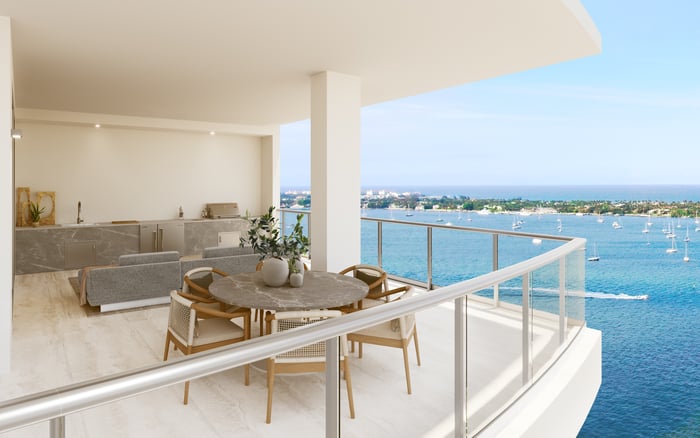
Low density can enhance privacy without reducing the cost of operating a luxury residential property. Buyers should examine the draft budget, staffing assumptions, reserves, insurance, brand charges, service classifications and marine cost allocations before estimating total ownership expenses.

At Mandarin Oriental Residences, West Palm Beach, buyers evaluating the appeal of a low-density residential setting should separate privacy from operating efficiency. Fewer residences may support a more exclusive atmosphere, but they can also leave a smaller ownership group responsible for shared building expenses.
Elevators, life-safety systems, security, management, common areas and mechanical equipment create costs that do not necessarily decline in proportion to the number of homes. The relevant question is therefore not whether a property is low density, but how its fixed and variable expenses are allocated among owners.
Exclusivity and operating efficiency are separate considerations.
This distinction is particularly important when evaluating a branded residential experience. Buyers should determine what level of service and infrastructure the association is expected to support, which expenses are mandatory and which offerings are paid for only when used.
A prospective buyer should request the draft operating budget and examine each major category rather than relying on a quoted monthly total. The underlying documents should identify expected spending for management, staffing, utilities, maintenance, insurance, reserves and shared facilities.
A base association figure may represent only part of the ownership-cost picture. Buyers should ask whether separate charges could apply to selected services, marine components, exclusive-use areas or other programs. Taxes, personal insurance and expenses billed directly to an owner should also be considered separately from association obligations.
The most useful review converts every recurring and potential expense into an annual ownership estimate. That estimate should distinguish predictable common charges from optional consumption, direct owner expenses and possible assessments. Legal and financial advisers can then test whether the allocation language and budget assumptions align.
Staffing can be one of the most consequential components of a service-oriented property. Buyers should request a schedule showing the positions assumed in the budget, shift coverage, outsourced roles, payroll treatment and management oversight. Any around-the-clock post should be reviewed in light of the coverage required to maintain it.
Brand-related charges deserve a separate review. The governing agreements should explain whether management or licensing costs are fixed, variable or calculated through another formula. Buyers should also identify provisions that allow charges, standards or required services to change.
Because projections can evolve before operations stabilize, sensitivity analysis is valuable. A buyer can ask how the association obligation would respond if major categories such as labor, insurance, utilities or reserves differ from the initial assumptions.
A polished service menu does not establish that every offering is covered by common charges. Buyers should request a written service matrix separating benefits included in association expenses from those billed by use or delivered through an outside provider.
The matrix should also identify additional labor charges, gratuities, minimums, cancellation terms and third-party pricing where applicable. Owners should determine whether they pay only when selecting a service or whether the association funds the staffing and infrastructure needed to keep that service available.
This distinction matters for second-home ownership. Spending less time in residence may reduce personal consumption, but it does not necessarily change an owner’s allocated share of fixed building operations. The governing documents-not frequency of use-should explain how common obligations are assigned.
Amenity spaces should be assessed not only for their design but also for their operating requirements. Pools, wellness areas, food-and-beverage spaces, lounges, children’s areas, pet facilities and transportation programs can involve staffing, cleaning, utilities, equipment servicing, insurance and eventual replacement costs when included in a project’s final program.
Buyers should compare the amenity schedule with the operating budget and reserve assumptions. This helps identify whether each component has been accounted for and whether a service that appears optional still creates shared overhead.
For context within West Palm Beach, the same document-driven review can be applied to The Ritz-Carlton Residences® West Palm Beach, Forté on Flagler West Palm Beach and Alba West Palm Beach. These properties should not be treated as direct cost substitutes; the useful comparison is how each property’s residence count, staffing, facilities, reserves and included services relate to its ownership obligations.
If marine infrastructure or boat access forms part of the final property documents, buyers should establish who owns it, who may use it and how its costs are funded. Routine maintenance, insurance, storm-related repairs and replacement reserves may be handled differently from general building expenses.
The allocation method can be especially important when a property contains homes or facilities with different rights of use. Buyers should request the exact formula governing operating expenses and reserves and ask how it applies to marine components, exclusive-use areas and services benefiting only some owners.
Written documents should also clarify whether users pay direct charges, whether expenses flow through the broader association or whether a combination applies. Marketing descriptions should not replace the governing allocation provisions.
The reserve schedule should identify the components covered, their assumed useful lives and the basis for projected contributions. Buyers should look for exclusions and determine how major repairs or replacements would be funded if reserves prove insufficient.
Insurance warrants a similarly detailed review. Request projected premiums, deductibles, coverage limits and the division of responsibility among the association, individual owners and any separately operated components. Buyers should also ask how an uninsured loss, major deductible or budget shortfall could be allocated.
The goal is not simply to minimize each expense. A service-oriented residence may involve meaningful operating costs when its management and amenities support the intended ownership experience. The goal is to understand which costs are fixed, variable, optional or capable of shifting over time.
Low density is a luxury characteristic, not a promise of low carrying costs. Before signing, buyers should review the draft budget, staffing schedule, reserve assumptions, insurance structure, brand provisions, service matrix and any marine cost-sharing language with qualified legal and financial advisers. The resulting annual estimate should then be weighed against the privacy, service and residential experience being considered.
For discreet guidance on evaluating South Florida’s finest residences, connect with MILLION.
If branded residences are on your mind — as a home or as an allocation — we would be glad to share what we are seeing, privately.
Begin a quiet conversationNo. A smaller ownership group may still need to support substantial fixed building, management and service expenses.
Review staffing, management, utilities, maintenance, insurance, reserves and shared-facility expenses by category.
It shows which positions and coverage assumptions support the budget. Buyers should also check whether roles are in-house or outsourced.
No. Some services may be billed by use, provided by third parties or subject to additional charges.
It is a written breakdown of services included in common charges, billed by use or supplied by outside providers.
Compare the final amenity schedule with projected staffing, maintenance, insurance and reserve expenses.
Confirm ownership, access rights, maintenance duties, insurance responsibility and the formula used to allocate costs.
Reserve assumptions help show how major repairs and replacements are expected to be funded. Buyers should identify exclusions and potential shortfalls.
Examine projected premiums, deductibles, coverage limits and the division of responsibility between the association and individual owners.
Prioritize the draft budget, staffing schedule, reserve assumptions, insurance terms, brand provisions, service matrix and marine cost-sharing language.