A buyer’s guide to reading 57 Ocean’s association funding documents, distinguishing pooled from straight-line reserves, and testing whether projected contributions match future capital obligations.
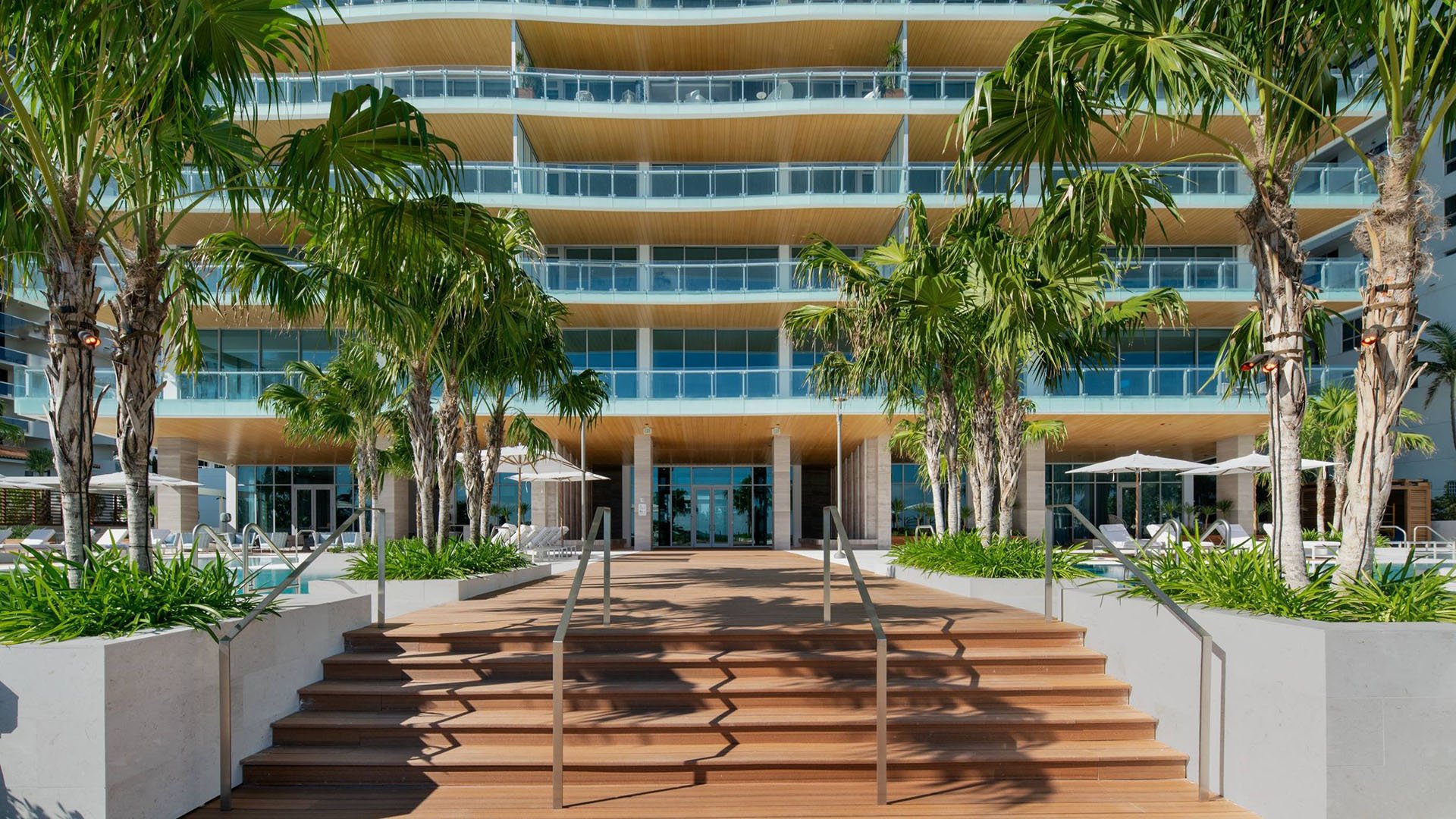
At 57 Ocean Miami Beach, the ownership decision extends beyond architecture and amenities to the association’s long-term funding commitments. The 18-story Arquitectonica-designed tower at 5775 Collins Avenue sits in Mid-Beach, on Millionaire’s Row. Its holistic spa, wellness pavilion, thermal suite and relaxation areas make the capital-maintenance inventory an important part of a buyer’s review.
The central question is not whether pooled or straight-line reserves sound more conservative. It is whether the adopted funding plan can meet the association’s obligations when work comes due. A lower annual reserve contribution does not, by itself, establish stronger finances.
Treat the reserve method, balances, structural findings and any assessment plans as matters to confirm in association documents. Presume neither a switch to pooling nor a funding deficiency. Begin with records for 57 Ocean Condominium Association Inc., then reconcile the budget, reserve study and financial statements before drawing conclusions.
Straight-line reserves, also called the component method, calculate and track funding separately for major components. Roofs, pavement and painting are examples of categories that may have individual funding calculations. Buyers can examine each component’s estimated cost, timing and assigned funding rather than rely on an aggregate balance.
Pooled reserves, also called the cash-flow method, combine eligible components into a shared funding plan. The test is whether projected cash remains sufficient to cover scheduled expenditures throughout the study horizon-not whether every component reaches an individually earmarked target.
Pooling can reduce near-term contributions by aligning funding with project timing. It does not remove the repair or replacement obligation. A well-supported pooled plan can represent responsible financial management; the method itself is not evidence of weakness.
For a buyer also considering Faena House Miami Beach, the comparison principle is straightforward: evaluate what each association’s contributions fund, not simply which annual reserve line is smaller. That requires separate documents for each property, not assumptions about shared practices.
Request the current adopted budget, audited financial statements, complete reserve and Structural Integrity Reserve Study documents, and relevant board records. Identify whether the association uses straight-line funding, pooling or a combination. Florida’s authorization of pooling does not establish that 57 Ocean has adopted it.
Read the budget alongside the study’s recommended contribution schedule. Where annual funding differs, request a specific explanation. Determine whether the difference reflects updated costs, changed timing, a method change or another documented assumption. An unexplained variance warrants follow-up, not an immediate conclusion of underfunding.
If the method changed, request the before-and-after schedules. Compare annual contributions, the allocation of existing balances and projected cash levels, using the same component inventory where possible. Otherwise, a funding reduction may be impossible to distinguish from a change in scope or assumptions.
The objective is a clear reconciliation: what the study anticipates, what the budget collects and how any difference will be addressed. A verbal description of the method is no substitute for that comparison.
Florida’s 2025 HB 913 changes allow condominium associations to choose pooling for some or all reserve components without a unit-owner vote, subject to applicable statutory requirements. That flexibility must be read alongside the Structural Integrity Reserve Study framework, which addresses specified components and imposes mandatory funding requirements and restrictions on waivers.
Structural-integrity reserve components may be pooled, but non-structural reserves must remain in a separate pool. Request the component list and accounting allocation for each pool, along with the study’s date and preparer. Have condominium counsel and a reserve specialist confirm the classifications and applicable requirements.
Do not automatically classify painting, waterproofing or pool-related work as non-structural. Classification depends on the component, statutory requirements and professional assessment. Likewise, the spa and wellness spaces should prompt an inventory check-not an assumption that every associated system belongs in one reserve category.
If an existing mixed pool was separated, examine how its balance was allocated. An apparently substantial total can conceal a shortfall within a required category when obligations and funds are divided incorrectly. Verify the allocation before treating the combined figure as available funding.
A pooled account’s current balance cannot establish adequacy. The more revealing document is the year-by-year cash-flow projection, showing contributions, scheduled expenditures and remaining cash across the study horizon.
Identify the lowest projected balance and the projects scheduled around that period. Ask whether the plan retains enough cash when major obligations cluster, rather than focusing only on its final-year position. A comfortable ending balance does little to explain an earlier funding squeeze.
Then ask a reserve specialist to test higher construction costs and earlier repair dates. A projection with little cash cushion is more sensitive to changed assumptions. The purpose is not to predict failure, but to understand how much adjustment the funding plan can absorb.
Buyers comparing 57 Ocean with Setai Residences Miami Beach should apply the same timing test to each property’s own records. Neither amenity presentation nor a headline reserve balance substitutes for a schedule connecting cash to obligations.
Determine whether the funding schedule depends on regular assessments, future special assessments or borrowing. Each carries different future payment obligations for owners. They should not be treated as interchangeable simply because each can appear in a funding plan.
Ask management to distinguish adopted obligations from projected funding assumptions. If future special assessments or borrowing are contemplated, request the relevant documentation and have your advisers assess the implications for ownership costs. Do not infer that either is planned at 57 Ocean without confirmation.
When the method changes, the decisive question is whether lower contributions reflect better alignment with expenditure timing or greater reliance on future payments. The answer belongs in the schedules and board records, not in the label attached to the reserve account.
Before proceeding, seek three connected answers: which components require funding, when their costs are expected and where the money will come from. The budget, reserve study, pool allocations and financial statements should provide a coherent explanation.
The standard is not a preference for one accounting method. It is a documented funding plan with clear classifications, defensible assumptions and an understandable payment path for owners. That is the financial counterpart to a considered Miami Beach purchase.
For a considered approach to South Florida luxury ownership, connect with MILLION.
If branded residences are on your mind — as a home or as an allocation — we would be glad to share what we are seeing, privately.
Begin a quiet conversationConfirm the method in the current adopted budget and reserve documents. Do not assume that the association uses pooling simply because Florida permits it.
Straight-line reserves calculate and track funding separately for major components. Each component has an individual funding calculation rather than sharing a pooled funding target.
Pooled reserves combine eligible components into a shared cash-flow plan. Adequacy depends on whether projected cash can cover scheduled expenditures throughout the study horizon.
No. Pooling can reduce near-term contributions by aligning funding with project timing, but the underlying repair and replacement obligations remain.
Florida’s 2025 HB 913 changes allow associations to choose pooling for some or all reserve components without a unit-owner vote, subject to applicable statutory requirements. Counsel should confirm the requirements for the association.
Under the updated framework, structural-integrity reserve components may be pooled, but non-structural reserves must remain in a separate pool. Buyers should verify component classifications and balance allocations.
Request the adopted budget, audited financial statements, complete reserve and Structural Integrity Reserve Study documents, and relevant board records. If pooling is used, obtain each pool’s component list and accounting allocation.
It identifies where the funding plan has its smallest projected cushion. Review the expenditures around that period and whether cash will be available when projects are scheduled.
No. Pool-related work, painting and waterproofing require classification based on the component, statutory requirements and professional assessment.
Compare contributions, component inventories, pool allocations and projected balances before and after the change. Also identify any reliance on future special assessments or borrowing.