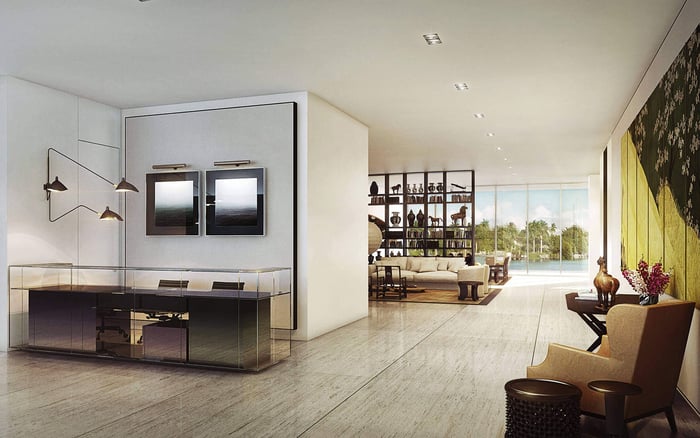
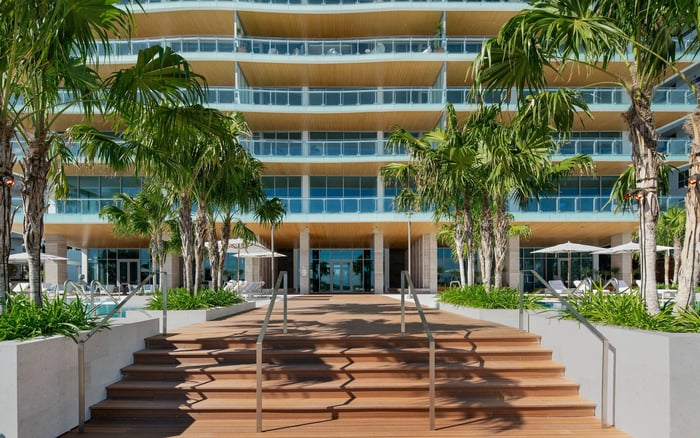
Faena House’s advertised hospitality services should be distinguished from contractual care of an unoccupied residence. Seasonal buyers should seek written inspection duties, emergency authority, storm procedures, reporting standards, and a complete fee schedule before committing.

A seasonal residence should feel effortless on arrival. The more consequential test is what happens while its owner is elsewhere. At Faena House Miami Beach, the oceanfront setting at 3315 Collins Avenue, Miami Beach, is paired with advertised services that include a private residents’ concierge, multilingual staff, a 24-hour doorman, valet, and security surveillance.
Those offerings promise hospitality, not an automatic commitment to inspect an empty apartment. Before buying, distinguish assistance available to residents from responsibility accepted for the residence itself. A staffed lobby is not a documented absence-care agreement.
The buying standard should be precise: identify who enters the apartment, what they check, how they document findings, and what authority they hold when an owner cannot be reached. The recommendations below are requirements to negotiate and confirm-not descriptions of an established Faena House program.
Faena House’s advertised amenities include an attended private residential beach club with cabanas, a wellness spa, and an ocean-view fitness center, along with preferred status and access to Faena Hotel services. These are meaningful lifestyle considerations, but none establishes a specific obligation to monitor an unoccupied home.
Treat “five-star” concierge language as a description of the intended experience, not a measurable service standard. Request current written confirmation of which services are included, which require separate arrangements, and which are unavailable.
If your search also includes Setai Residences Miami Beach, apply the same distinction. Compare written care obligations rather than letting a hospitality identity substitute for an operating agreement.
Require a responsibility schedule that distinguishes the roles of building management, concierge staff, any private home-watch provider, and specialist contractors. Each task should have a named responsible party, a backup contact, and an escalation route. Avoid an arrangement in which everyone can receive a request but no one has accepted responsibility for completing it.
Before departure, establish an authorized-access protocol. Ask how keys or credentials are held, who may release them, how contractor entry is approved, and whether entries and departures are logged. Any private provider’s procedures should be compatible with current building rules.
Give the provider primary and alternate owner contacts, preferred communication channels, and instructions for periods when neither contact is reachable. Confirm how those instructions will be acknowledged and updated. Address privacy as well: specify who can view interior photographs and how access records will be retained.
An absence-care agreement should define inspection frequency rather than rely on “regular visits.” Set the cadence with the provider and review it with your insurer or adviser; do not assume a universal schedule applies.
Ask for a room-by-room checklist covering agreed visual checks for water intrusion, visible moisture, unusual odors, and apparent equipment issues. Include temperature and humidity readings if those services are available. Define whether the provider merely observes conditions or is authorized and qualified to test specific equipment.
Require a dated visit record with photographs where appropriate, identified exceptions, and assigned follow-up. The record should distinguish a completed visit from an attempted visit that failed because access was unavailable.
Establish a departure baseline as well: appliance instructions, approved climate settings, existing defects, and sensitive finishes or possessions requiring special handling. The provider should flag deviations from that baseline, not improvise maintenance decisions in your absence.
“Available 24 hours” leaves important questions unanswered. Request separate commitments for acknowledging an alert, assessing it, arranging authorized access, contacting a qualified contractor, and communicating the outcome. Ask when each commitment applies and what conditions may prevent performance.
Test the arrangement with a hypothetical leak. Who receives the first call? Who can enter? Who determines whether immediate protective action is permitted? Who coordinates with building management? A useful answer identifies the sequence and the people responsible, rather than simply promising that someone will handle it.
Set a written spending limit for urgent work and an escalation procedure for costs above that limit. Define what may proceed without fresh approval, subject to building rules and applicable requirements. Request an incident record documenting observations, contact attempts, actions, photographs where appropriate, and unresolved work.
For life-safety events, the agreement should make clear that private care services do not replace public emergency responders.
Request the current building storm procedures and reconcile them with the proposed private care agreement. Establish who handles permitted terrace preparation, when the work must be completed, and what happens if the owner requests assistance after the provider’s cutoff. Do not assume staff can work through unsafe conditions or restricted access.
Faena House’s advertised secure private underground parking with valet service does not establish vehicle relocation duties during an emergency. If leaving a car, seek written instructions addressing keys, movement authority, owner notification, and any separate arrangements or charges.
Require a post-event inspection procedure tied to safe, authorized reentry. It should identify who checks the residence, how findings reach the owner, and how follow-up repairs are coordinated. Distinguish an initial visual assessment from specialist evaluation. Avoid a fixed return-to-normal promise that ignores access restrictions or contractor availability.
References to smart building technology and custom mobile applications do not establish specific in-unit emergency-alert capabilities. Ask which functions are currently available to the apartment, who receives notifications, and whether anyone has accepted responsibility for acting on them. If additional devices are contemplated, confirm permissions, maintenance responsibilities, and how the devices behave during connectivity or power interruptions.
Request a complete fee schedule covering routine visits, after-hours attendance, storm preparation, contractor supervision, and preparation for the owner’s return where offered. Identify minimum charges, exclusions, cancellation terms, and any markup on third-party work.
A buyer also considering The Perigon Miami Beach should ask the same questions without presuming equivalent services. The meaningful comparison is the scope of responsibility each party will actually accept.
Before committing, seek current service terms, applicable access rules, a sample inspection record, emergency authorization forms, and written confirmation that the intended provider can serve the residence. Have the relevant advisers review contractual limits and insurance compatibility.
The objective is not a promise that nothing will happen. It is a clear plan for recognizing a problem, authorizing an appropriate response, and keeping the owner informed. That is the practical foundation of an effortless seasonal arrival.
For a considered approach to South Florida seasonal ownership, explore MILLION.
If branded residences are on your mind — as a home or as an allocation — we would be glad to share what we are seeing, privately.
Begin a quiet conversationFaena House is an oceanfront condominium at 3315 Collins Avenue, Miami Beach, FL 33140, in the Mid-Beach/Faena District area.
No. Advertised concierge services do not establish an obligation to inspect an unoccupied apartment or manage repairs; those duties should be confirmed separately in writing.
No specific program or inspection schedule is established here. Buyers should request current terms and confirmation that the proposed care arrangement is available for their residence.
It should define visit frequency, the inspection checklist, documentation, access arrangements, and follow-up responsibilities. It should distinguish visual observation from equipment testing or specialist work.
The owner should agree on authorized personnel and credential handling with management and the care provider. Entry procedures should comply with current building rules and include appropriate access records.
Separate alert acknowledgment, assessment, access, contractor coordination, and owner updates. Ask for written commitments and the conditions that may prevent performance.
Consider a written limit for defined urgent work, with an escalation process for larger costs. Any authorization should remain subject to building rules and applicable requirements.
Faena House advertises underground parking with valet service, but that does not establish relocation duties. Owners leaving a vehicle should confirm movement authority, notification procedures, and charges.
No specific emergency-alert or leak-response capability is established by the general technology description. Verify current apartment-level functions, notification recipients, and responsibility for acting on alerts.
Request current service terms, access rules, a sample inspection record, emergency authorization forms, and a complete fee schedule. Relevant advisers should review contractual limitations and insurance compatibility.