A discreet South Florida acquisition begins with a precise ownership file. For executives establishing a primary residence, title, homestead eligibility, county documentation, financing, insurance and privacy should be reviewed together without treating them as interchangeable protections.

For an executive establishing a South Florida primary residence, discretion is only one part of a well-structured purchase. The proposed title holder must also align with the buyer’s homestead goals, financing arrangements and insurance plan. Coordinate these decisions before closing rather than correcting them afterward.
Whether considering 2200 Brickell or a residence elsewhere in South Florida, distinguish the person who will live in the home from the person, trustee or entity that will hold title. They are not necessarily interchangeable for homestead-tax purposes.
Begin with a concise ownership memorandum identifying the intended title holder, each ownership percentage, the proposed permanent resident, the reason for the structure and the benefits sought. Ask counsel to assess those objectives together. Privacy, estate planning, tax treatment and creditor protection should not be compressed into a single promise of “homestead.”
Florida homestead-tax eligibility generally requires legal or beneficial title and permanent-residence status as of January 1 of the tax year. Eligibility also extends to a qualifying owner’s property used as the permanent residence of a legal or natural dependent.
The file should therefore document both ownership and residence. Retain the title documents and, where relevant, the trust provisions establishing the claimed beneficial interest. Identify whose permanent residence is involved and ask the property appraiser which supporting evidence is appropriate for the application. Planned occupancy is not a substitute for documenting the relevant January 1 status.
Applications are generally due by March 1 and must be submitted to the property appraiser in the property’s county, which determines exemption eligibility. Calendar that deadline separately from closing and moving dates. If the buyer owns less than 100% of the property, a partial exemption may apply; state ownership percentages explicitly rather than leaving them to inference.
An LLC or other business entity generally cannot claim the ordinary homestead-tax exemption merely because its individual owner lives in the property. For a buyer seeking both entity ownership and a primary-residence exemption, this is a central decision, not an administrative detail.
Ask counsel to document the consequences of each proposed structure before authorizing the deed. If business-entity ownership remains the preference, the file should acknowledge the potential conflict with ordinary homestead-tax eligibility. Do not treat a later transfer into an LLC as harmless housekeeping.
Trust ownership requires a different analysis. It may preserve eligibility when the arrangement satisfies the applicable beneficial-ownership and residence requirements, but trust title alone does not establish qualification. Identify the qualifying beneficial owner and the relevant right to use and occupy the residence, then confirm the county’s submission requirements.
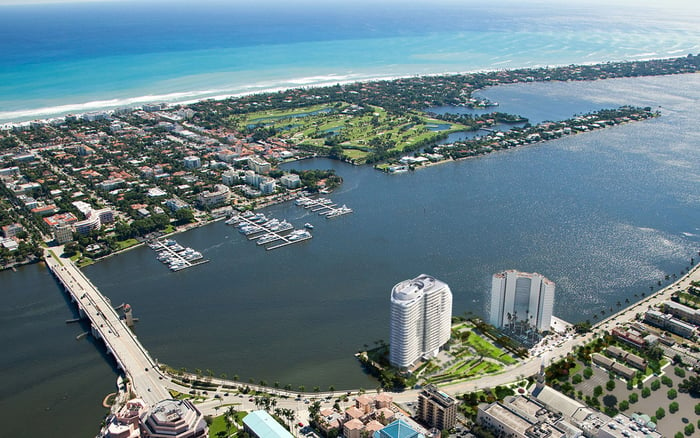
For a West Palm Beach purchase, including a residence under consideration at Alba West Palm Beach, address county-specific trust documentation early. In Palm Beach County, a Certificate of Trust may be submitted instead of the complete trust agreement when property with an existing or pending homestead exemption is placed in a trust.
The certificate identifies who holds the beneficial interest and who is entitled to use and occupy the property. It provides a narrower submission option in those circumstances-not automatic qualification or a statewide documentation rule.
The distinction also matters when evaluating Alina Residences Boca Raton. For a Boca Raton acquisition, confirm whether the certificate option applies to the proposed transaction rather than assuming every trust purchase follows the same path.
County requirements differ. Confirm the applicable document package before choosing a structure partly for its disclosure profile.
A certificate that avoids submitting the entire trust instrument to one office does not establish anonymity across public records. Define the privacy objective precisely: which information the buyer wants to limit, who would otherwise receive it and what counsel can lawfully accomplish.
Request a disclosure map covering the contemplated title documents, any entity filings and the materials proposed for the homestead application. Ask counsel to distinguish public-facing records from information supplied to transaction participants. Do not assume a trust or LLC removes the buyer’s identity from every relevant record.
Retain that advice with the ownership memorandum. A defined privacy objective is more useful than an assurance of confidentiality with no stated boundaries.
Coordinate financing and insurance with the proposed ownership structure, and confirm how each will be handled in the specific transaction. For an executive evaluating Andare Residences Fort Lauderdale, present the intended title holder and occupancy plan to the lender and insurance adviser before finalizing ownership instructions.
For financing, request written answers on whether the proposed borrower and title arrangement are acceptable, which supporting documents are requested and how a contemplated later transfer would be handled. Keep those answers with the loan documents rather than relying on a general assurance about trust or entity ownership.
For insurance, ask how the proposed owner, resident and any trust or entity should be reflected in the policy. Request confirmation of the documents and policy wording appropriate to the arrangement, including whether a later title change would call for further review. These are coordination questions, not universal lender or carrier requirements.
Transferring an individually owned home into an LLC can affect homestead eligibility and may constitute a change of ownership for property-tax purposes. In Palm Beach County, a qualifying change of ownership triggers reassessment at just value on January 1 of the following year. Do not assume every proposed transfer will have the same result.
Before any later conveyance, request separate advice on the homestead-tax exemption, Save Our Homes assessment treatment and portability. Keep the conclusions distinct. Homestead creditor protection is a separate legal issue; business-entity ownership should not be assumed to preserve it.
A decision-ready executive file brings together the ownership memorandum, proposed and final title documents, qualifying-interest evidence, residence documentation, county submission instructions and filing calendar. Include the transaction-specific financing and insurance responses, the privacy review and counsel’s assessment of any contemplated transfer.
Assign responsibility for unresolved questions and retain copies of submissions and determinations. The objective is not paperwork for its own sake, but a residence whose ownership structure reflects the buyer’s priorities without relying on assumptions about tax benefits, protection or discretion.
For a considered approach to your South Florida residence search, connect with MILLION.
If branded residences are on your mind — as a home or as an allocation — we would be glad to share what we are seeing, privately.
Begin a quiet conversationLegal or beneficial title and permanent-residence status generally must exist as of January 1 of the tax year.
Applications are generally due by March 1 to the property appraiser in the county where the property is located. That office determines exemption eligibility.
Generally, no. An individual owner’s occupancy does not by itself qualify an LLC or other business entity for the ordinary homestead-tax exemption.
It may, when the arrangement satisfies the applicable beneficial-ownership and residence requirements. Holding title in a trust alone does not establish eligibility.
Palm Beach County allows a Certificate of Trust instead of the complete agreement when property with an existing or pending homestead exemption is placed in a trust. The certificate identifies beneficial interests and rights to use and occupy the property.
No. Limiting disclosure of the complete trust instrument to one office does not establish anonymity across public records.
The homestead statute recognizes a qualifying owner’s property used as the permanent residence of a legal or natural dependent. The applicable ownership and eligibility requirements still matter.
Yes. An applicant who owns less than 100% of the property may receive only a partial homestead exemption.
Review homestead eligibility and potential change-of-ownership consequences, including reassessment where applicable. Seek separate advice on assessment treatment, portability, creditor protection, financing and insurance.
Request transaction-specific written guidance on the proposed title holder, borrower arrangement, occupancy and policy treatment. Ask how any contemplated later transfer would be handled rather than assuming universal requirements.