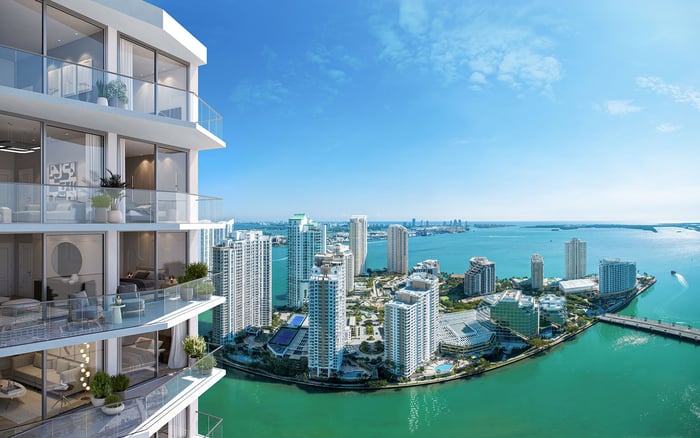
A five-project South Florida briefing agenda for buyers planning extended absences, focused on water oversight, humidity management, access permissions, and emergency decision-making. Project-specific capabilities and current status require verification.
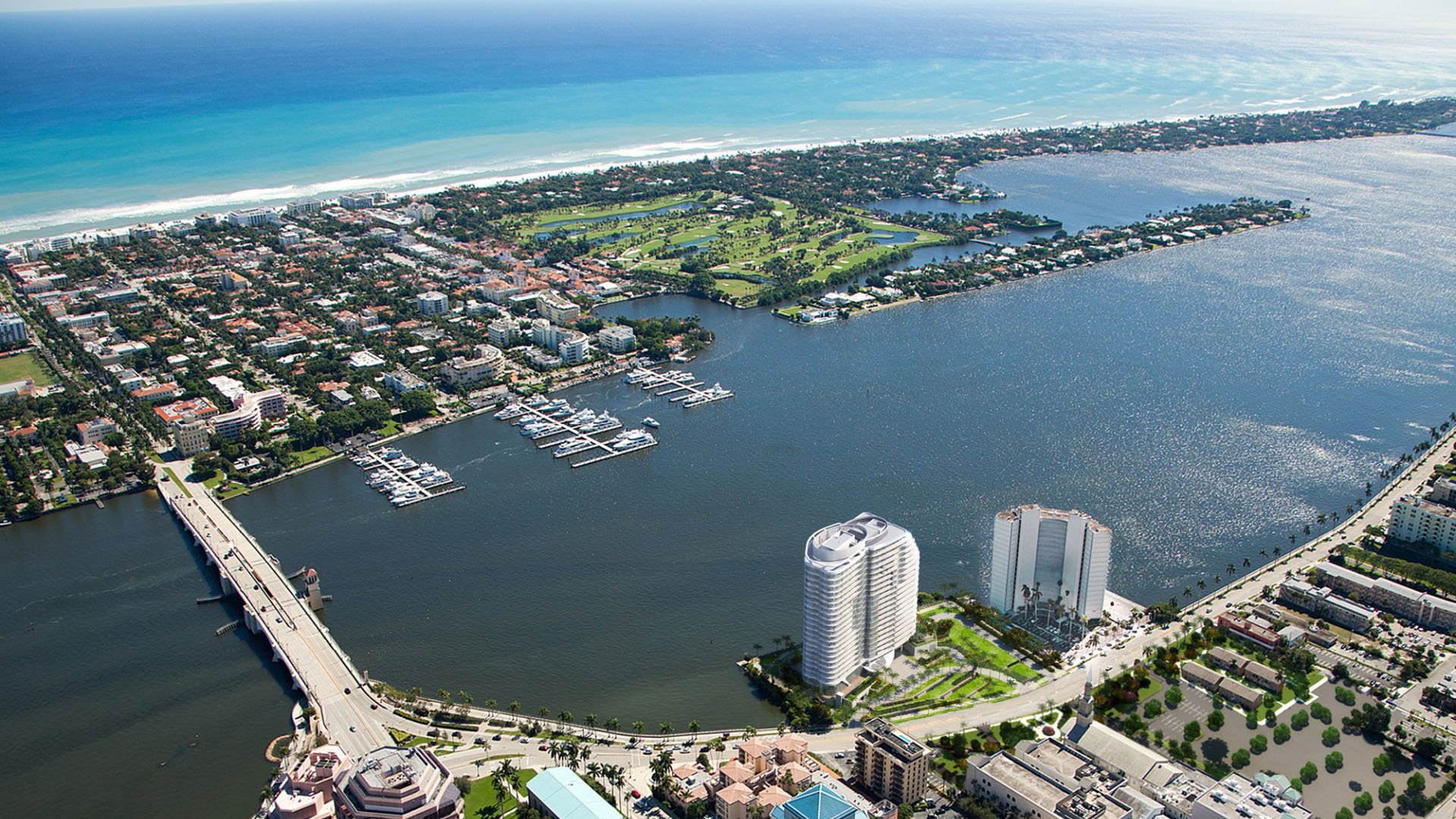
A South Florida residence should remain a pleasure even when its owner is elsewhere. For a private client preparing for weeks or months away, the essential questions are operational: who checks for water intrusion, who tracks the indoor environment, and who may act when an alarm arrives overnight?
The five residential projects below provide a framework for that conversation. This is a due-diligence shortlist, not a verified ranking of long-absence services. Current project status and availability have not been established here; neither have installed monitoring systems, management policies, or provider affiliations. Confirm each directly before relying on it in a purchase decision.
The most useful absence plan connects observation, documentation, and permission to act.
Apply the same four-part review to every residence: water oversight, humidity and HVAC management, access arrangements, and emergency authority. The focus assigned to each project below is a briefing prompt, not a claim that one building offers a particular capability.
For a buyer considering Alina Residences Boca Raton, begin with what an absence inspection would actually cover. Ask the prospective manager to identify the fixtures, accessible plumbing connections, interior conditions, and mechanical equipment included in each visit.
Request a sample inspection report and agree on a visit schedule appropriate to the residence. A report should make it clear what was checked, what could not be accessed, and which observations need follow-up. Confirm who receives it and who is responsible for closing out unresolved items.
When evaluating The Residences at 1428 Brickell, ask what water oversight is available within the particular residence. Separate visual inspections, continuous sensing, and any shutoff capability rather than treating them as interchangeable protections.
If sensors are proposed or already present, establish who receives alerts and how those alerts reach someone authorized to respond. Ask how a private monitoring arrangement would interact with building procedures, including entry and contractor access. None of these questions establishes that a system is installed or that a particular response policy applies.
For a residence under consideration at The Perigon Miami Beach, request a property-specific humidity and HVAC protocol. Ask an appropriate specialist to define operating settings, maintenance needs, and thresholds for further investigation rather than assuming a thermostat setting is a complete absence plan.
The briefing should identify how conditions will be recorded, who reviews changes, and who arranges corrective work. Clarify whether the proposed arrangement relies on readings taken during visits or a separate monitoring system. Require those distinctions in the service scope before departure.
For buyers assessing Alba West Palm Beach, use the ownership briefing to define decision-making when the owner is unavailable. Identify a primary representative, a backup contact, approved vendors, and any spending limits.
Confirm applicable building procedures separately from the private manager's agreement. Ask which actions require fresh approval and which may proceed under standing instructions. Access permissions, contractor appointment, and repair expenditure should each be addressed explicitly rather than inferred from a promise of emergency availability.
Include The Bristol Palm Beach in the same residence-specific review, with particular attention to the handoff between departure, ongoing oversight, and return. Request a written checklist showing which responsibilities sit with the owner, a private representative, or building management, subject to confirmation of each party's actual scope.
Before leaving, identify open maintenance items and agree on how their completion will be documented. Before returning, request a condition review and a summary of any incidents or repairs during the absence. These are proposed briefing requirements, not verified services at the project.
Use one comparison sheet across all five projects. For each residence, record the proposed inspection scope, monitoring arrangements, response contacts, access requirements, and approval limits. Mark unknown items as unconfirmed rather than filling gaps with assumptions about luxury ownership.
Keep water oversight in three separate categories: what someone inspects, what equipment may detect between visits, and what can stop the water. Confirm any automatic shutoff capability for the specific installation, including who is responsible for testing and maintenance.
For humidity oversight, ask for records that support follow-through. A measurement should have an identified reviewer and an agreed escalation path. Have the relevant specialist set the operating parameters; do not substitute a generic target for a property-specific assessment.
Before departure, reconcile the private service agreement with the building's confirmed procedures. Ask how access will be maintained, what happens when the owner cannot be reached, and what documentation follows an urgent intervention. Include storm preparation in the discussion without assuming any particular service is provided.
The strongest briefing outcome is not a broad assurance that someone will look after the residence. It is a written allocation of tasks and authority, with unresolved questions clearly identified before the owner leaves.
For a discreet conversation about South Florida ownership and the questions that matter before purchase, connect with MILLION.
If branded residences are on your mind — as a home or as an allocation — we would be glad to share what we are seeing, privately.
Begin a quiet conversationThey are residential projects used as contexts for an ownership briefing. The article does not establish any home-watch provider affiliation.
No; current status and availability have not been established here. Confirm both directly before making a purchase decision.
No; the order organizes the briefing rather than comparing verified services. Apply the same due-diligence questions to every residence.
Ask it to identify the visit schedule, inspection scope, reporting format, and follow-up responsibilities. Record any areas or systems excluded from inspection.
No; a visual inspection records conditions during a visit. Continuous monitoring requires a separate system whose operation and response arrangements should be confirmed.
No automatic shutoff installation is verified here. Confirm the specific equipment, operating scope, and maintenance responsibilities for the residence.
Ask an appropriate specialist to define residence-specific settings, maintenance needs, and escalation thresholds. Identify who reviews readings and arranges follow-up.
Do not assume it does. Confirm access, contractor appointment, and spending authority explicitly in the applicable agreement.
The written plan should designate a backup contact and define actions permitted under standing instructions. Agree on approval limits and the documentation required afterward.
Request a condition review and a summary of incidents, repairs, and unresolved maintenance items. Confirm which party is responsible for each remaining task.